


How to Help a Dog Lose Weight Safely
Many UK dogs are overweight, and it creeps up quietly. A safe, practical plan: check condition, cut calories sensibly, rethink treats, build activity and track progress.
The quick answer
Slowly and steadily — think months, not weeks. Crash-dieting a dog is harmful, so your vet should set a safe target weight and rate of loss. Track the trend over time rather than reacting to daily weigh-ins.
If you've been told your dog is overweight — or you've started to suspect it yourself — you're far from alone. A large share of UK dogs carry extra weight, and it creeps up so slowly that it's easy to miss. The good news is that it's very fixable with a steady, sensible approach.
This is general guidance, not veterinary advice — ask your vet before starting a weight-loss plan, as they can rule out medical causes and set a safe target.
First, check honestly
Before changing anything, assess your dog's body condition. On an ideal-weight dog you can feel the ribs easily without pressing, see a waist from above, and see the tummy tuck up from the side. If the ribs are buried and the waist has gone, there's weight to lose. It helps to weigh your dog too, so you have a baseline — our weight tracker is built for exactly this.
See your vet first
This matters more than people think. Sudden or unexplained weight gain can occasionally have a medical cause, and your vet can confirm a safe target weight and a healthy rate of loss. Crash-dieting a dog is genuinely harmful, so a vet-backed plan keeps it safe. Many practices also run free weight clinics with nurses, which are brilliant for support and accountability — find a local one via our vet directory.
Get the calories right
Weight loss comes down to feeding fewer calories than your dog burns, done gradually. Feed to your dog's target weight rather than their current weight, weigh the food on scales rather than guessing with a scoop, and consider whether a specific weight-control or light formula suits them — these are designed to feel filling on fewer calories. Use the calorie calculator and how many calories does my dog need to set a sensible amount, then adjust with your vet.
The treats are usually the problem
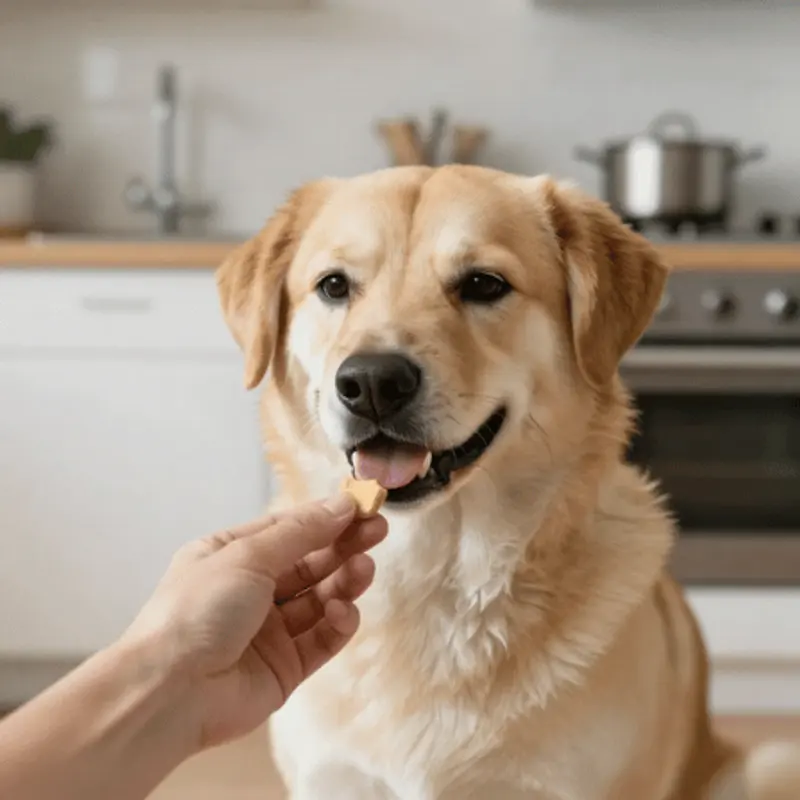
In most overweight dogs, hidden extras are doing the damage — treats, chews, dental sticks, leftovers and "just a little bit" of human food. Swap to low-calorie treats like small pieces of carrot or green beans, use part of the daily food ration as training rewards rather than adding extra, and get the whole household on the same page so nobody's secretly topping up. Check any human food is safe first with can my pet eat this.
Build activity gently
More movement helps, but build it up gradually, especially if your dog is very overweight or older, to protect their joints. Extra short walks, gentle play and sniffy enrichment all add up without overdoing it. If your dog has stiffness or any health issues, check with your vet on suitable exercise.
Track and stay patient
Safe weight loss is slow — think months, not weeks — so track the trend rather than obsessing over daily readings. Regular weigh-ins keep you honest and let you tweak the plan.
Getting the whole household on board
Weight-loss plans fail more often from kind hearts than from bad food. If one person sticks to the plan while another slips the dog scraps under the table or hands out chews "because they looked sad", the maths never adds up — and it's nobody's fault in particular, which makes it hard to fix. The cure is honesty: agree as a household exactly what the dog gets and who gives it, and consider keeping the day's treat allowance in a single pot so everyone draws from the same supply. Dogs are masters at looking starved; staying firm is genuinely kind.
Beating the begging
The hardest part of a diet is often the pleading eyes, not the calorie counting. A few tricks help: spread meals into more frequent, smaller portions so there's less time feeling empty, use slow feeders or puzzle toys to make food last and engage the brain, and redirect that "I'm hungry" energy into a walk, a game or a training session instead of a snack. Bulking meals with a little dog-safe vegetable can add volume for very few calories. Often the dog wants attention as much as food, and a fuss or a game scratches the same itch.
Why crash diets backfire
It's tempting to cut food hard for fast results, but with dogs that's both unsafe and counterproductive. Dropping calories too aggressively can leave a dog hungry, miserable and short on nutrients, and very rapid weight loss carries its own health risks — which is exactly why a vet should set the target and pace. Steady loss is also more likely to stick, because you're building habits the household can keep up rather than enduring a sprint that collapses the moment it ends. Slow and boring is the goal here.
Browse suitable foods in dog food & treats, and once your dog is at a healthy weight, how much should I feed my dog helps you hold it there.
Sources
Common questions
How quickly should my dog lose weight?
Slowly and steadily — think months, not weeks. Crash-dieting a dog is harmful, so your vet should set a safe target weight and rate of loss. Track the trend over time rather than reacting to daily weigh-ins.
Do I need special diet food?
Not always, but a weight-control or light formula can help because it's designed to feel filling on fewer calories. Often, simply measuring portions accurately and cutting treats makes a big difference. Ask your vet what suits your dog.
What can I give as a low-calorie treat?
Small pieces of dog-safe vegetables like carrot or green beans work well, or use part of the daily food ration as training rewards rather than adding extra. Always check any human food is safe before offering it.
About the author
Matt Garnett — founder, Giddy Pets
Matt started Giddy Pets to make getting pets the good stuff simpler and fairer. Everything in these guides comes from real life with pets and a lot of trial and error — it's practical guidance, not veterinary advice. If a guide gets something wrong, tell him directly.
Advice & planning
Free tools & more guides
Practical calculators and trusted guides relevant to this product.
Read next

How Much Should I Feed My Dog? (Adult Dogs)
For adult dogs, the right amount is calorie- and condition-based, not just whatever the bag says. How to read pack guides, check body condition, and adjust.
How Many Calories Does My Dog Need?
What drives a dog's calorie needs — size, age, activity, neutering and metabolism — why pack guides are estimates, and how to use body condition to get it right.
The Best Food for Senior Dogs: An Honest Guide
Older dogs don't all need the same thing. What changes with age, when senior food helps, calories, protein, joints and tempting fussy old dogs to eat.
Best dog food for neutered dogs
How neutering changes your dog's metabolism and appetite, and what to look for in a food that keeps them a healthy weight