



Best dog food for neutered dogs
How neutering changes your dog's metabolism and appetite, and what to look for in a food that keeps them a healthy weight

The quick answer
Not a completely different food, but most do need fewer calories and benefit from a higher-protein, lower-fat formula. Neutering slows metabolism and can increase appetite, so a food designed for reduced energy needs, fed in a controlled portion, helps prevent weight gain.
Shop the guide

Forthglade Cold Pressed Small Dog Turkey
Cold-pressed grain-free dry food for small dogs and puppies, built on turkey
£16.99

Harringtons Just 6 Dry Dog Food Lamb
Grain-free lamb dry dog food in 2KG and 12KG sizes, with size-specific formulas
From£13.99

Harringtons Adult Dog Salmon & Potato
Complete salmon and potato dry dog food with 21% protein in a 1.7KG bag
£6.25

Lily's Kitchen Dog Lean Machine
Lily's Kitchen's lowest-calorie wet recipe for adult dogs, in a 150G foil
£1.69
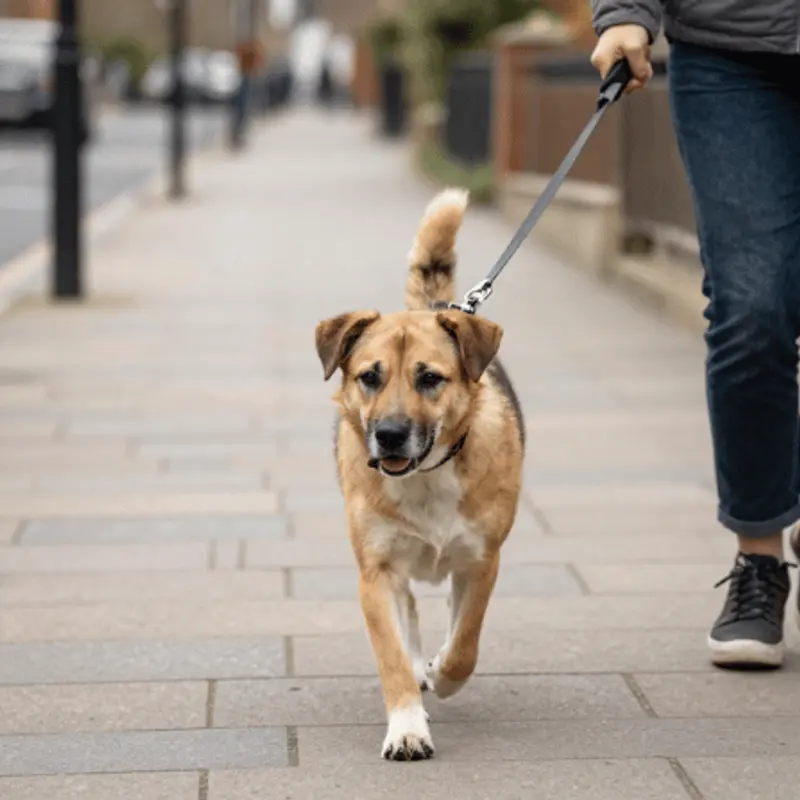
If you've just had your dog neutered, or you're weighing up the decision, one of the most common questions is what to feed afterwards. It's a fair question — neutering is one of the biggest hormonal changes your dog will ever go through, and it genuinely does change how their body uses energy. The good news is that weight gain after neutering isn't inevitable. With the right food, the right portions, and a bit of regular checking, most neutered dogs stay a perfectly healthy weight for life.
This guide walks through why neutering changes your dog's nutritional needs, what to actually look for on a food label, how much to feed, and how to keep track of whether it's working. None of this is about strict diets or deprivation — it's about matching what goes into the bowl to what your dog's body now needs.
It's worth saying up front: neutering itself doesn't make a dog fat. What it does is remove the reproductive hormones that used to help regulate appetite and metabolism, and if feeding habits don't adjust to match, the calories that used to be burned off now get stored instead. That's a manageable, well-understood problem — not a life sentence of chubbiness.
Why neutering changes your dog's calorie needs
Neutering (castration in males, spaying in females) removes the organs that produce the sex hormones oestrogen and testosterone. Those hormones do more than control reproduction — oestrogen in particular has an appetite-suppressing effect, and both hormones influence how efficiently the body burns energy at rest.
Once they're removed, two things tend to happen at once: your dog's resting metabolic rate drops, meaning they burn fewer calories just existing, and their appetite can increase, because the natural brake on food intake has gone. Put those together and you get a dog who wants to eat the same amount (or more) while needing noticeably less — a recipe for weight gain if the food and portions stay exactly the same.
A controlled study of spayed female dogs, published via the National Institutes of Health, measured this directly. In the twelve weeks after spaying, the dogs' maintenance energy requirement fell from roughly 115 kcal per kg of bodyweight (to the power of 0.75) down to around 109 — a real, measurable drop in how many calories they needed to hold a stable weight. The same study found that dogs left on ad-lib feeding after spaying went on to gain noticeably more body fat than dogs kept on controlled, higher-protein diets, which is exactly why "just feed the same amount" doesn't work once a dog is neutered.
This isn't a minor, ignorable effect. According to the PDSA, obesity is one of the most common health problems seen in UK dogs, and nearly half of dogs seen by vets in the UK are estimated to be overweight. Neutering is a well-recognised contributor to that, not because the surgery itself is harmful, but because most owners simply keep feeding the pre-neutering amount.
How much less should you feed?
There's no single number that fits every dog, but the Royal Kennel Club's veterinary guidance gives a sensible starting point: reduce your dog's food by around 10% in the weeks after neutering, then reassess. Some vets recommend going further — cutting daily calories by 20–30% — particularly if your dog was already a little generous around the middle before the operation, or if they're a breed known to pile on weight easily (Labradors and Beagles are classic examples).
The key phrase is "starting point." No feeding guideline on a food packet or vet leaflet knows your individual dog — their exact activity level, their metabolism, or how many biscuits they charm out of the rest of the household. Treat the 10% figure as day one of an experiment, then let your dog's actual body condition tell you whether to feed more or less. Our Pet Calorie Calculator is a useful way to get a personalised starting estimate based on your dog's weight, age and activity level, which you can then fine-tune against what you see on the scales.
What to look for in a food for a neutered dog
Once you know roughly how many calories your dog needs, the next question is what kind of food delivers them. Several commercial ranges are now marketed specifically as "neutered" or "sterilised" formulas, and while you don't have to buy one of these to feed your dog well, the nutritional profile they're built around is genuinely useful to understand and look for on any label.
Protein
Protein matters more after neutering, not less. In the spayed-dog study mentioned above, dogs fed a high-protein, high-fibre diet (around 42% crude protein on a dry-matter basis) maintained their lean muscle mass and had significantly less increase in body fat than dogs fed a standard, lower-protein diet (around 22% crude protein). Muscle is metabolically active tissue — the more of it your dog keeps, the more calories they burn at rest, which works in their favour for weight control. Look for a food where a good, named meat source appears near the top of the ingredients list.
Fat and calories
Fat is the most energy-dense part of any diet, so foods designed for neutered or less active dogs are typically lower in fat than standard adult formulas, while keeping protein, vitamins and minerals at full strength. The Royal Kennel Club describes these as "light" diets — reduced in energy, primarily through fat, without shortchanging the dog on everything else they need. Check the kcal/100g figure on the packaging and compare it against your current food; a genuinely lower-calorie formula will show a clearly lower number.
Fibre
Higher fibre content helps in two ways: it slows digestion so your dog feels fuller for longer on fewer calories, and — as the spayed-dog study also found — diets higher in fibre were linked to better cholesterol and triglyceride levels after neutering. This doesn't mean piling on filler; a well-formulated food uses fibre sources like beet pulp or vegetable fibre to add bulk and satiety without diluting the actual nutrition.
Neutering doesn't cause weight gain on its own — feeding the same amount to a body that now needs less does.
Reading the label properly
UK pet food labelling is legally regulated, and understanding a few key terms makes it much easier to compare products fairly. According to UK Pet Food, the trade body for the pet food industry, all information on a label must be truthful and not misleading, and every complete food must declare its percentages of crude protein, crude oils and fats, crude fibre, and crude ash.
The word "complete" has a specific legal meaning: a complete food is formulated to meet all of your dog's nutritional needs on its own, fed according to the guidelines on the pack. A "complementary" food is not nutritionally complete by itself and needs to be fed alongside something else. For everyday feeding, you want a complete food appropriate to your dog's life stage (adult, senior, or "all life stages") — not a treat, topper or complementary product used as the whole diet.
When comparing two "neutered" or "light" formulas, don't just look at the marketing on the front of the bag — flip it over and compare the actual protein, fat and kcal/100g figures against each other and against your current food. That's the only reliable way to know you're actually reducing calories rather than just paying more for the same thing with a different label.
Feeding routine and treats
How you feed matters almost as much as what you feed. Splitting the daily ration into two or three smaller meals, rather than one large one, tends to help with satiety and can reduce begging behaviour between meals. A slow feeder or puzzle bowl can also help dogs who wolf their food and seem hungry again minutes later — slowing eating down gives the body more time to register fullness.
Treats deserve special attention here. Once a dog's daily calorie budget has dropped by 10–30%, treats stop being a rounding error and start being a meaningful chunk of total intake. A few training treats or a shared bit of toast can easily undo a carefully calculated reduction in main meals. If you treat regularly, either:
- Weigh treats into the daily allowance rather than adding them on top
- Switch to very low-calorie treats (a small piece of carrot or green bean works well for most dogs)
- Use a portion of the dog's actual daily kibble ration as training rewards
Checking it's working: body condition scoring
Scales alone don't tell the whole story, because muscle and fat weigh differently and breed-standard "ideal weights" vary hugely. The more reliable method, used by vets worldwide, is body condition scoring (BCS) — a hands-on and visual check recommended by the World Small Animal Veterinary Association (WSAVA).
On the standard 9-point WSAVA scale, an ideal score sits at 4 or 5 out of 9. To check your own dog:
- Ribs: You should be able to easily feel each rib with light pressure, with only a slight covering of fat — not press hard to find them, and not see them clearly through the coat.
- Waist: Looking down from above, there should be a visible waist behind the ribs. From the side, the tummy should tuck up behind the ribcage rather than hanging level or sagging.
- Spine and hips: You should be able to feel the spine and hip bones without them being sharply visible.
The PDSA recommends this same look-and-feel check as part of routine home health monitoring, alongside regular weigh-ins — either on the vet practice's scales (most will let you pop in and use them free of charge) or on accurate home scales for smaller dogs. Checking monthly for the first six months after neutering, then every few months after that, catches gradual weight creep long before it becomes a real problem.
Common mistakes to avoid
A few patterns come up again and again with neutered dogs who put on weight:
- Not adjusting the amount at all — continuing to scoop out the same cup of food used before surgery, without accounting for the drop in metabolic rate.
- Following pack guidelines blindly — the feeding chart on a bag is a generic starting point based on an "average" dog, not your dog's actual activity level or metabolism.
- Free-feeding — leaving food down all day works against portion control, since it's hard to know exactly how much has been eaten.
- Forgetting treats and scraps — the biggest hidden source of extra calories, especially in multi-person households where everyone treats "just a little."
- Reducing food but not checking body condition — cutting calories without ever confirming it's having the right effect, in either direction.
Breed, age and size variations
Smaller breeds and toy breeds tend to be particularly prone to weight gain after neutering, partly because their total calorie budget is already small, so even modest overfeeding shows up quickly as a percentage of their needs. Larger and giant breeds carry the opposite risk if calories are cut too aggressively too fast, since rapid weight change can put strain on joints already working hard to support a bigger frame.
Puppies neutered before they're fully grown have different needs again — they still need enough calories, protein and calcium/phosphorus balance to support proper skeletal development, so a full adult "light" diet isn't usually appropriate straight after early neutering. The Royal Kennel Club's guidance is clear that puppy feeding after neutering should be worked out with your vet based on your individual puppy's breed and expected adult size, rather than switched to a generic adult weight-control food.
Older dogs neutered later in life, or those neutered many years ago who are now creeping into their senior years, may need yet another recalculation, since activity naturally drops further with age on top of the earlier post-neutering metabolic change.
When to see your vet
Talk to your vet before making any significant diet change around the time of neutering, and definitely if:
- Your dog is losing or gaining weight noticeably despite a consistent feeding plan
- You're not confident interpreting body condition scoring on your own dog
- Your dog has an existing health condition (joint problems, diabetes, pancreatitis) that affects what they can safely eat
- You want a genuinely tailored calorie target rather than a general estimate
Most practices run free weight clinics, usually led by a veterinary nurse, which are a great low-pressure way to get your dog weighed and body-condition-scored by someone experienced, and to catch any drift in the right direction before it becomes a bigger problem.
*This is general guidance, not a substitute for advice from your vet, who can assess your individual pet.*
Sources
- PDSA — obesity in dogs, causes and body condition scoring (pdsa.org.uk).
- National Institutes of Health (PMC) — peer-reviewed study on diet, body weight and metabolic status in dogs after spay surgery (pmc.ncbi.nlm.nih.gov).
- The Kennel Club — feeding after neutering, veterinary guidance (royalkennelclub.com).
- WSAVA — 9-point body condition score chart for dogs (wsava.org).
- UK Pet Food — understanding pet food labels and the legal meaning of "complete" food (ukpetfood.org).
Common questions
Do neutered dogs really need a different food?
Not a completely different food, but most do need fewer calories and benefit from a higher-protein, lower-fat formula. Neutering slows metabolism and can increase appetite, so a food designed for reduced energy needs, fed in a controlled portion, helps prevent weight gain.
How much should I reduce my dog's food after neutering?
Vets commonly suggest starting with around a 10% reduction in food after neutering, then adjusting based on regular weight and body condition checks. Some dogs need a bigger cut, around 20-30%, especially breeds prone to weight gain. Your vet can help set an individual target.
Is weight gain after neutering inevitable?
No. Neutering changes hormone levels in ways that reduce metabolic rate and can increase appetite, but it does not directly cause obesity. Dogs whose food and portions are adjusted to match their new calorie needs, with regular exercise, generally maintain a healthy weight.
What should I look for on the label of a neutered dog food?
Check the kcal per 100g figure against your current food, look for a named meat protein source near the top of the ingredients, and check the food is labelled 'complete' for your dog's life stage. Foods for neutered dogs are typically lower in fat but keep protein levels high.
How do I know if my neutered dog is at a healthy weight?
Use body condition scoring rather than the scales alone: you should be able to feel (not see) the ribs easily, see a waist from above, and see a tummy tuck from the side. If you are unsure, your vet or vet nurse can body-condition-score your dog for free at most weight clinics.
About the author
Matt Garnett — founder, Giddy Pets
Matt started Giddy Pets to make getting pets the good stuff simpler and fairer. Everything in these guides comes from real life with pets and a lot of trial and error — it's practical guidance, not veterinary advice. If a guide gets something wrong, tell him directly.
Advice & planning
Free tools & more guides
Practical calculators and trusted guides relevant to this product.