




English vs American Cocker Spaniel: Key Differences
The quick answer
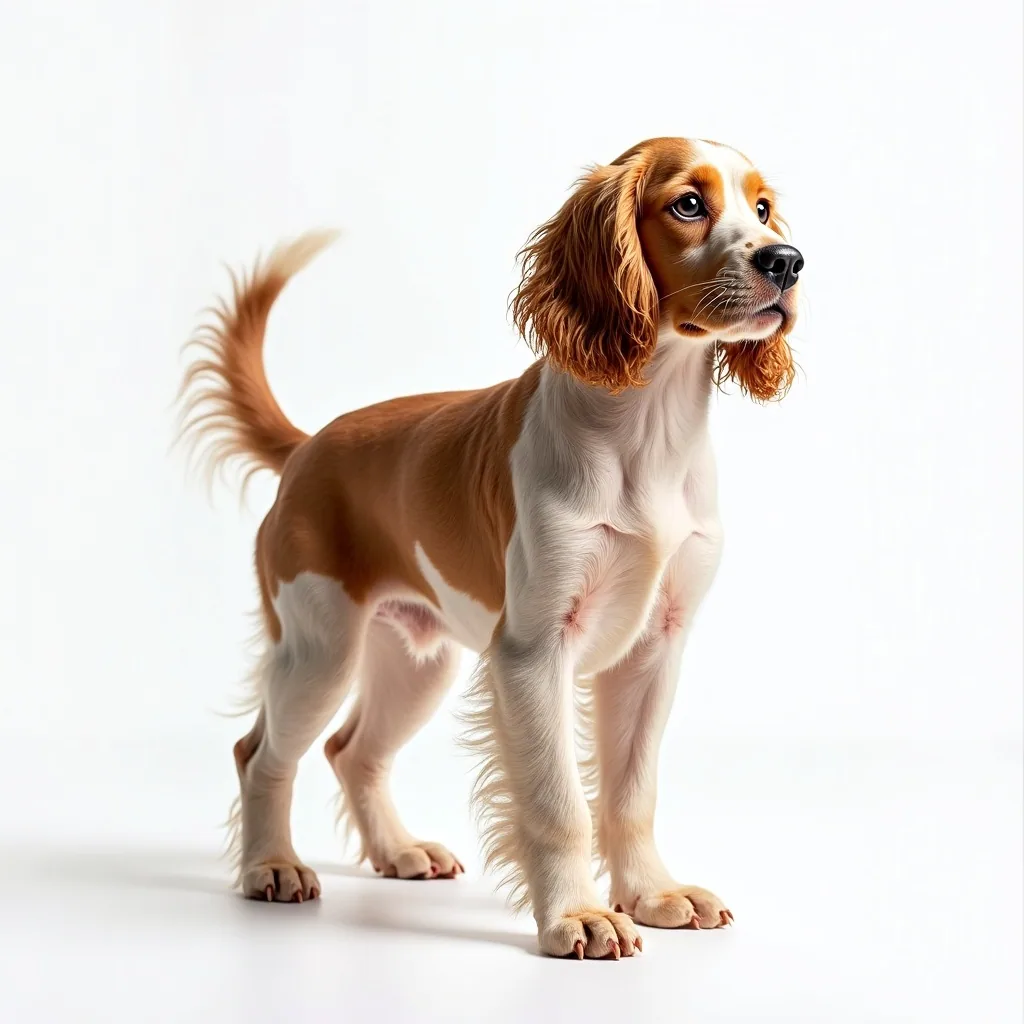
The English (or standard UK) Cocker Spaniel is taller with a longer, chiselled muzzle, a flatter more moderate coat and a stronger working drive. The American Cocker Spaniel is smaller, with a rounded domed skull, short muzzle, large eyes and a fuller, more profuse coat that needs heavier grooming. They are two separate breeds recognised by the Royal Kennel Club, both merry and affectionate but with different exercise and coat demands.
Mentioned in this guide

Self-Cleaning Slicker Deshedding Brush
Handheld deshedding brush with a one-push retracting head that lifts loose fur from the pins and locks it for easy disposal. Glides through coats to reduce shedding on cats and dogs.
£11.99

Dog Paw Cleaner Cup
A portable paw cleaner with soft silicone bristles that scrub away mud and debris using just water — easy to use, easy to clean.
£14.99

Kenchii Scorpion 8-Inch Grooming Scissors
High-performance everyday grooming scissors in superior Japanese alloy stainless steel, designed to glide cleanly through all coat types.
£82.99
In the UK, "Cocker Spaniel" almost always means the English Cocker — the merry, working-rooted gundog you see everywhere. The American Cocker Spaniel is a separate, less common breed with its own Royal Kennel Club standard, and once you know what to look for, the two are easy to tell apart. Here's how they differ in size, coat, temperament, grooming and health, so you can choose the right one.
Two breeds, not one
Both descend from the same spaniel stock, but they split into distinct breeds during the 20th century — American breeders selected for a smaller dog with a very different head and coat, and the two were formally separated. The Royal Kennel Club lists them individually as "Spaniel (Cocker)" and "Spaniel (American Cocker)," each with its own breed standard. So this isn't a case of one dog with two names; they're genuinely different dogs.
A quick note on naming: in Britain, an unqualified "Cocker Spaniel" means the English type. You'll also hear English Cockers split into working and show lines — that's a separate distinction within the same breed, covered in our guide to working vs show spaniels.
Size and appearance at a glance
| Feature | English Cocker Spaniel | American Cocker Spaniel |
|---|---|---|
| Height (dogs) | 39–41 cm | 37–39 cm |
| Height (bitches) | 38–39 cm | 34–37 cm |
| Weight | Around 13–14.5 kg | Generally lighter |
| Skull | Cleanly chiselled, not domed | Rounded, well-developed, pronounced stop |
| Muzzle | Square and longer | Short, deep, square |
| Eyes | Moderate | Large and rounded, prominent |
| Coat | Flat, silky, not too profuse | Fuller, longer feathering |
The figures come straight from the Royal Kennel Club breed standards. The American is the smaller dog — noticeably shorter than the English Cocker, and one of the smallest breeds in the gundog group. But size is the least of it: the head is what really sets them apart.
The head: the giveaway
Stand the two side by side and the difference is obvious. The English Cocker has a longer, square muzzle and a cleanly chiselled skull that isn't domed. The American Cocker has a distinctly rounded skull, a pronounced stop (the step between forehead and muzzle), a much shorter muzzle and large, round, forward-looking eyes. It gives the American its softer, doll-like expression, while the English keeps a more classic gundog look.
Coat and grooming
Both carry the long, pendulous ears and leg feathering spaniels are known for, but the coats differ in demand.
The English Cocker's standard coat is "flat, silky in texture… not too profuse and never curly," with feathering on the legs and body. It's a real grooming commitment, but a manageable one.
The American Cocker is famous for a much fuller, longer, glamorous coat — abundant feathering on the ears, chest, belly and legs that sweeps toward the floor on a well-kept show dog. That look comes at a price: it mats quickly and needs frequent, thorough grooming to stay comfortable. Many pet owners keep American Cockers in a shorter "puppy clip" precisely to make the coat liveable.
Either way, grooming is not optional. The PDSA describes Cocker Spaniels as high-maintenance for grooming, recommending a daily brush to prevent matting and a professional clip roughly every three months. Our spaniel grooming guide covers the routine, which applies to cockers too. A good slicker brush and a proper ear cleaner earn their keep here.
Reality check: if you can't commit to daily brushing plus regular clips, the American Cocker's heavier coat will become a welfare problem, not just a cosmetic one.
Temperament and energy
Both are, in the Royal Kennel Club's words, "merry" — cheerful, affectionate, people-oriented dogs with the ever-wagging cocker tail. The PDSA calls them lively, sociable and very people-focused, which also means they don't like being left alone for long and can develop separation anxiety.
The practical difference is drive. The English Cocker, especially from working lines, keeps a strong hunting instinct: a busy, scent-driven, high-energy dog that's fearless in heavy cover and genuinely needs a job to do. The American Cocker was bred more toward companionship and the show ring, so while still active and playful, it's typically a touch less intense than a working English Cocker. Neither is a couch potato, but if you want a keen, outdoorsy dog for long muddy walks, the English Cocker leans that way more strongly.
Exercise needs
The PDSA recommends a minimum of an hour of exercise a day for a Cocker Spaniel, including off-lead time in a secure area to burn off energy. Treat that as the floor, not the target, for an English Cocker from working stock — many want considerably more, plus mental stimulation like scent work or training games. An American Cocker will happily take good daily walks and play, but generally suits a slightly less demanding routine. Under-exercised cockers of either type get bored and can become noisy or destructive.
Health considerations
Both breeds share the spaniel Achilles' heel: long, hairy, floppy ears that trap moisture and are prone to infection. Routine ear checks and cleaning — especially after swimming or bathing — are essential for either dog.
Beyond the ears, the PDSA lists common English Cocker Spaniel concerns including hip dysplasia, atopy (itchy-skin allergies), inherited eye conditions, and several inherited conditions such as familial nephropathy, adult-onset neuropathy and acral mutilation syndrome — many of which have BVA/Kennel Club screening schemes available. There's also a long-debated behaviour issue sometimes called "rage syndrome," reported more in solid-coloured English Cockers.
American Cockers are particularly associated with eye problems (including conditions like cherry eye, cataracts and glaucoma) alongside the same ear and skin vulnerabilities, and their fuller coat can make skin issues harder to spot. For either breed, the single best safeguard is buying from a breeder who health-tests the parents. The PDSA specifically recommends looking for a Kennel Club Assured Breeder, who must meet extra health-screening requirements.
Which is right for you?
Work through these:
- Want a keen, outdoorsy dog for long active walks and training? English Cocker (working lines especially).
- Prefer a smaller, softer-looking companion dog? American Cocker.
- Can you commit to heavy grooming — daily brushing and regular clips? Either; the American demands more.
- Only want moderate exercise? American Cocker suits better than a working English Cocker.
- Buying in the UK and want an easier dog to find from health-tested lines? English Cockers are far more common here.
- Have young children and want a friendly family dog? Both can be excellent with supervision, socialisation and enough exercise.
If you want a lively, biddable, active family gundog and can meet the exercise, the English Cocker is the natural UK choice. If you're drawn to the American's looks and calmer profile, go in clear-eyed about the coat commitment and the harder search for a well-bred, health-tested puppy.
Common mistakes to avoid
- Assuming they're the same breed. They have separate standards, sizes and coats.
- Underestimating the coat. Both need real grooming; the American especially will mat without it.
- Skipping ear care. Both are highly prone to ear infections — check and clean regularly.
- Buying on looks alone. Prioritise a breeder who health-tests parents (ask to see the results).
- Not budgeting enough exercise. An under-worked cocker, particularly a working-line English, gets bored and noisy.
- Leaving them alone too long. Both are people-oriented and prone to separation anxiety.
Sources
Common questions
Is an English Cocker Spaniel bigger than an American Cocker Spaniel?
Yes. Per the Royal Kennel Club standards, English Cocker dogs stand 39–41 cm and bitches 38–39 cm, while American Cocker dogs are 37–39 cm and bitches just 34–37 cm. The American Cocker is the smaller of the two and one of the smallest breeds in the gundog group.
How can I tell an English and American Cocker Spaniel apart?
Look at the head. The English Cocker has a longer, square muzzle and a flatter, chiselled skull. The American Cocker has a distinctly rounded, domed skull, a short muzzle, a pronounced stop and large round eyes, giving a softer expression. The American also tends to carry a fuller, longer coat.
Which Cocker Spaniel needs more grooming?
The American Cocker Spaniel, because of its fuller, longer coat that mats easily and often needs professional clipping. Both breeds are high-maintenance, though — the PDSA recommends a daily brush and a clip roughly every three months. Many owners keep American Cockers in a shorter puppy clip to make grooming manageable.
Which Cocker Spaniel is calmer?
American Cockers are often a little calmer, as they were bred more for companionship and showing. English Cockers, especially from working lines, keep a strong hunting drive and typically need more exercise and mental stimulation. Both are merry and affectionate, so neither is truly low-energy.
Are Cocker Spaniels good family dogs?
Yes, both types can make excellent family dogs. They're merry, affectionate and very people-oriented. They do need at least an hour of daily exercise, regular grooming and company, as they dislike being left alone and can develop separation anxiety. Supervise interactions with young children as with any dog.
Do both Cocker Spaniels get ear infections?
Both are prone to ear infections because of their long, hairy, pendulous ears that trap moisture. Regular ear checks and cleaning with a vet-approved cleaner are important, particularly after swimming or bathing. Catching problems early keeps the ears healthy and comfortable.
Which Cocker Spaniel is more common in the UK?
The English Cocker Spaniel is far more common in Britain and is what people mean by "Cocker Spaniel" here. American Cockers are relatively rare in the UK, so you may have a longer search to find a well-bred, health-tested puppy from a reputable breeder.
About the author
Matt Garnett — founder, Giddy Pets
Matt started Giddy Pets to make getting pets the good stuff simpler and fairer. Everything in these guides comes from real life with pets and a lot of trial and error — it's practical guidance, not veterinary advice. If a guide gets something wrong, tell him directly.
Advice & planning
Free tools & more guides
Practical calculators and trusted guides relevant to this product.
Read next

Working vs Show Springer Spaniel: What's the Difference?
Working and show Springer Spaniels share a name and a Kennel Club registration, but they can look and behave like two different dogs. Here's the honest difference between the lighter, driven field-bred type and the heavier, calmer show-bred type, and how to tell which one suits your home.
Springer Spaniel Grooming Guide
Springer Spaniels carry a medium double coat with silky feathering that mats, soaks up mud and traps grass seeds — and ears that are prone to infection. Here's a practical, lived-experience UK guide to brushing, ear care, trimming, bathing and post-walk checks, written for owners (not as veterinary

Are Cavalier King Charles Spaniels Good Family Dogs?
What Cavaliers are really like to live with — temperament, children, other pets, exercise, and the one big caveat to plan for.

Cavalier King Charles Spaniel Health Problems
Cavaliers are devoted, gentle companions, but the breed carries two serious inherited health problems every owner should understand: mitral valve disease (a heart condition that affects most Cavaliers with age) and syringomyelia. Here's an honest, welfare-focused look at the conditions, the UK healt