
Working vs Show Springer Spaniel: What's the Difference?
Working and show Springer Spaniels share a name and a Kennel Club registration, but they can look and behave like two different dogs. Here's the honest difference between the lighter, driven field-bred type and the heavier, calmer show-bred type, and how to tell which one suits your home.
The quick answer
Yes. They're both English Springer Spaniels, registered together under one Kennel Club breed. They've simply been bred for different purposes over the decades, working lines for field performance and show lines to the written Breed Standard, until they began to look and behave noticeably differently.
If you've started looking into English Springer Spaniels, you'll quickly hit a fork in the road: working type versus show type. They're the same breed on paper, registered together with the Kennel Club, yet they can look and behave so differently that newcomers sometimes assume they're two separate breeds. Knowing the difference before you commit saves a lot of heartache, because the wrong match between dog and household is one of the most common reasons Springers end up needing rehoming.
Why the split happened
The English Springer is the most popular of the spaniels for working in the field, bred originally to spring forward and flush game for the gun, then retrieve it. Over the decades, breeders split into two camps. Working (or field-trial) lines were bred purely for performance in the field. Show (or bench) lines were bred to the written Kennel Club Breed Standard, prioritising conformation and a steady temperament. The two have drifted far enough apart that the English Springer is often cited as having one of the widest working/show divergences of any British breed.
Build and appearance
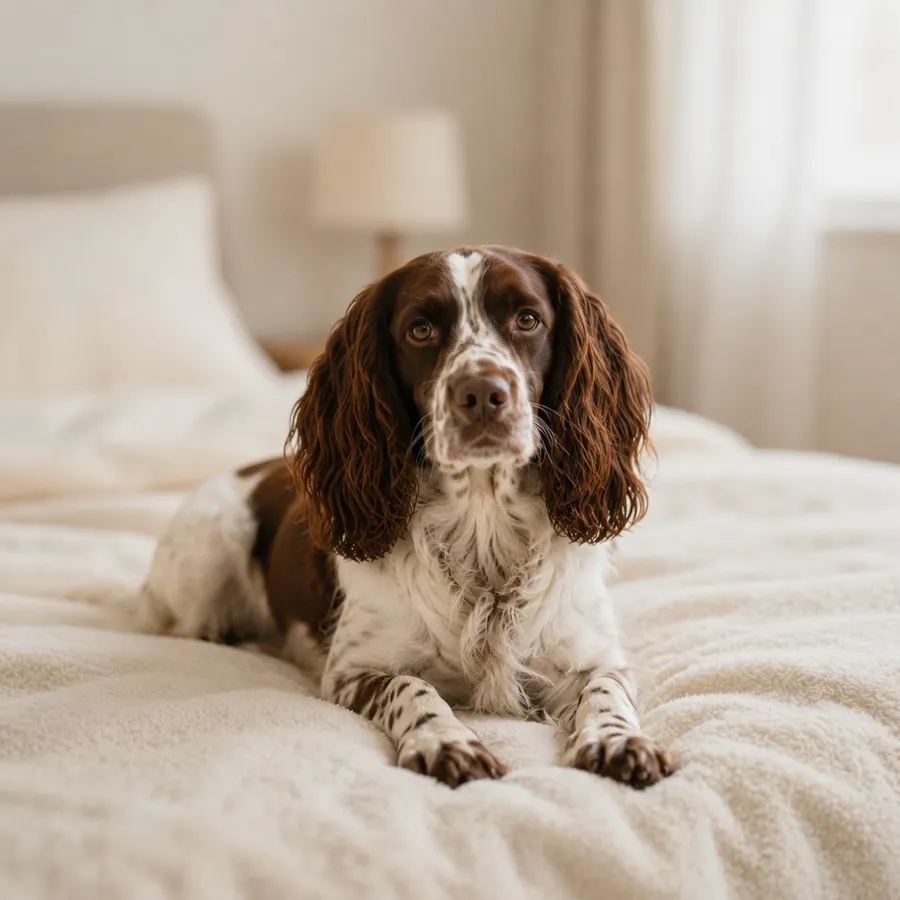
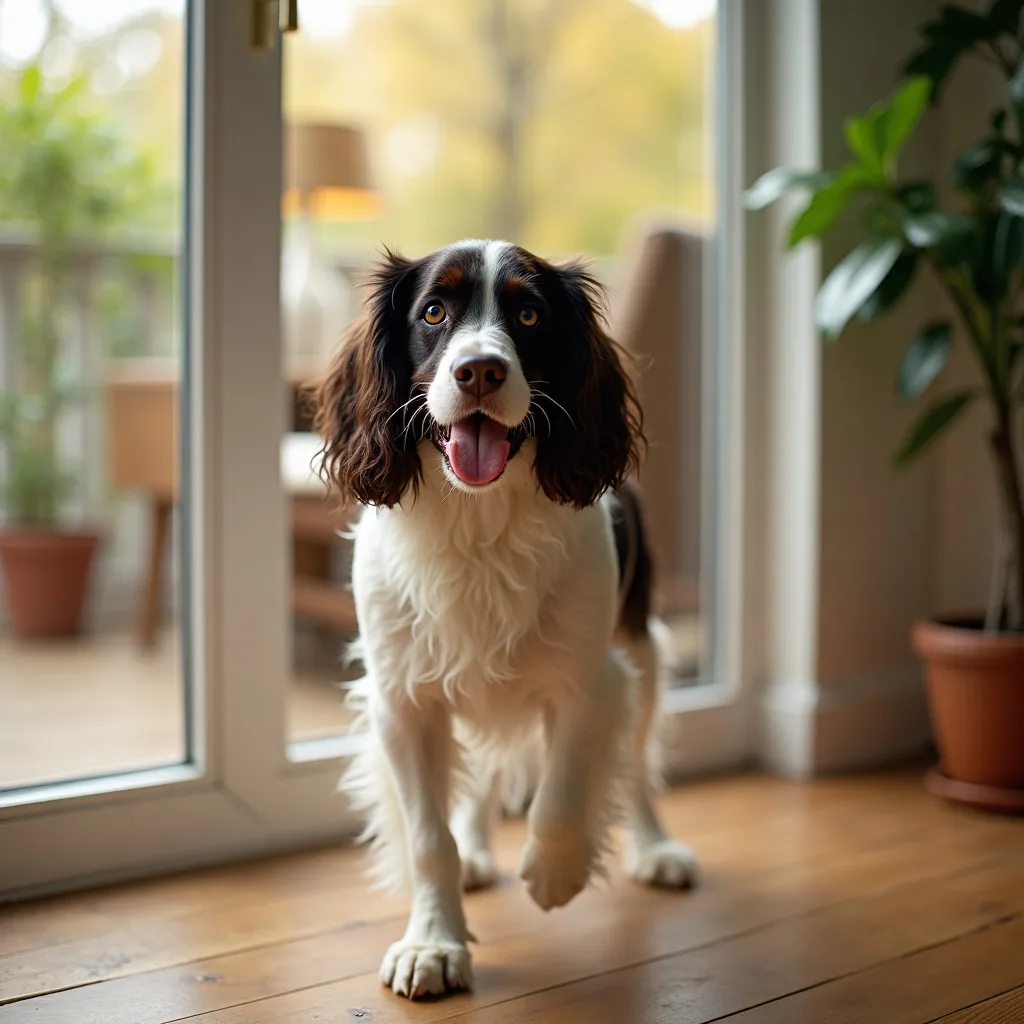
The quickest visual tells are in the head, ears and overall frame. The show type is generally a little larger, with more substance, heavier bone and a fuller body. It carries longer, lower-set, pendulous ears, a more developed coat and softer, more flowing lines. The working type is finer and lighter, often with shorter legs, less bone, a flatter skull and higher-set ears that look shorter. Put a typical worker next to a typical show dog and you'd be forgiven for thinking they're cousins rather than littermates' kin.
Coat and grooming
The show coat is the showier of the two: longer feathering on the legs, ears, chest and belly, which looks lovely but needs commitment. Expect to brush more than once a week to stay ahead of knots, plus regular trimming and attention to those long ears, which can pick up mud and moisture. Working dogs tend to carry a shorter, harder, more practical coat with far less feathering, partly by breeding and partly because heavy feathering is a liability in brambles and wet cover. They're lower-maintenance, though no Springer is wash-and-go, and both types shed.
Energy and drive
This is where the real difference lives. The Kennel Club rates the breed as needing more than two hours of exercise a day, and that's a baseline for any Springer. Working lines sit well above it. Bred to hunt all day, they have very high drive, enormous stamina and a brain that genuinely needs a job. A working Springer that is under-stimulated will usually invent its own work, and you may not like the results: chewing, barking, escaping, obsessive ball-fixation. Show lines are typically calmer and less intensely driven, though still active, sociable dogs that want a proper walk and some mental engagement every day.
Temperament and trainability
Both types share the classic Springer character: friendly, happy, biddable and people-focused. The Breed Standard explicitly marks timidity or aggression as unacceptable, which is one reason the breed earns its reputation as an all-round family dog. The difference is intensity. Working dogs are highly trainable, often dazzlingly so, but that sharp, fast-learning brain demands a handler who'll channel it through gundog training, scent work, agility or similar. Show dogs are also trainable and tend to settle more easily into a quieter rhythm at home, making them generally the more forgiving choice for a first-time or busier owner.
Which type suits which home
There's no better or worse here, only fit. A working-bred Springer is a brilliant match for an active, outdoorsy household, someone who shoots, competes, or is genuinely keen to take up a dog sport and pour hours into it. Drop that same dog into a quiet flat with one short walk a day and you'll both be miserable. A show-bred Springer suits a family that wants an affectionate, lively companion for good daily walks and weekend adventures without a competitive workload, though it still needs more than most breeds.
The honest summary: both are wonderful dogs with the right people. Be ruthlessly realistic about your own lifestyle, talk to breeders about exactly what their lines are bred for, and ask to meet the parents. Match the dog to your life, not your daydream, and a Springer of either type will repay you tenfold.
Sources
- The Royal (Kennel) Club, Spaniel (English Springer) breed information and Breed Standard, royalkennelclub.com
- The Kennel Club, Field trials and working gundogs / Spaniel Championship, thekennelclub.org.uk
- English Springer Spaniel Club (UK), About the Breed, englishspringer.org
- Show Bred v Working Bred English Springer Spaniels, showbredess.co.uk
Common questions
Are working and show Springer Spaniels the same breed?
Yes. They're both English Springer Spaniels, registered together under one Kennel Club breed. They've simply been bred for different purposes over the decades, working lines for field performance and show lines to the written Breed Standard, until they began to look and behave noticeably differently.
How can you tell a working Springer from a show Springer?
Look at the head, ears and frame. Working types are typically lighter and finer with shorter legs, a flatter skull, higher-set shorter-looking ears and a shorter, less feathered coat. Show types are usually larger and heavier-boned with longer, lower-set pendulous ears and a fuller, more feathered coat.
Which type makes a better family pet?
For a typical family, the show-bred type is often the easier fit because it tends to be calmer and less intensely driven. Working-bred dogs make superb family members too, but only in active homes that can meet their high exercise and mental-stimulation needs every single day.
Do working Springers need more exercise than show Springers?
Generally yes. The Kennel Club lists the breed as needing more than two hours of exercise daily as a baseline, and working lines usually need more than that, plus a genuine job such as gundog training or a dog sport. Show lines are still active but tend to settle more readily after a good walk.
Is one type harder to groom?
Show-bred dogs usually need more grooming because of their longer feathering on the ears, legs, chest and belly, requiring brushing more than once a week plus trimming. Working coats are shorter and more practical, so they're lower-maintenance, but both types shed and neither is truly low-effort.
About the author
Matt Garnett — founder, Giddy Pets
Matt started Giddy Pets to make getting pets the good stuff simpler and fairer. Everything in these guides comes from real life with pets and a lot of trial and error — it's practical guidance, not veterinary advice. If a guide gets something wrong, tell him directly.
Advice & planning
Free tools & more guides
Practical calculators and trusted guides relevant to this product.
Read next
How Long Do English Springer Spaniels Live? Lifespan & Health
How long Springer Spaniels live, the ear, eye and inherited conditions the breed is prone to, and how to help yours stay healthy.
How Much Exercise Does a Springer Spaniel Need?
Springer Spaniels are tireless working dogs that need a lot of exercise and mental work. Exactly what that looks like, and whether the breed suits you.
Are Springer Spaniels Good Family Dogs?
Springer Spaniels are warm, people-loving family dogs that adore children and bond hard — but they're high-energy gundogs that need real exercise, company and grooming. Here's the honest picture of who they suit.
Springer Spaniel Grooming Guide
Springer Spaniels carry a medium double coat with silky feathering that mats, soaks up mud and traps grass seeds — and ears that are prone to infection. Here's a practical, lived-experience UK guide to brushing, ear care, trimming, bathing and post-walk checks, written for owners (not as veterinary