
How to tell if your dog likes their food
The real behavioural signs of food enjoyment, how to compare two foods fairly, and when fussy eating needs a vet check
The quick answer
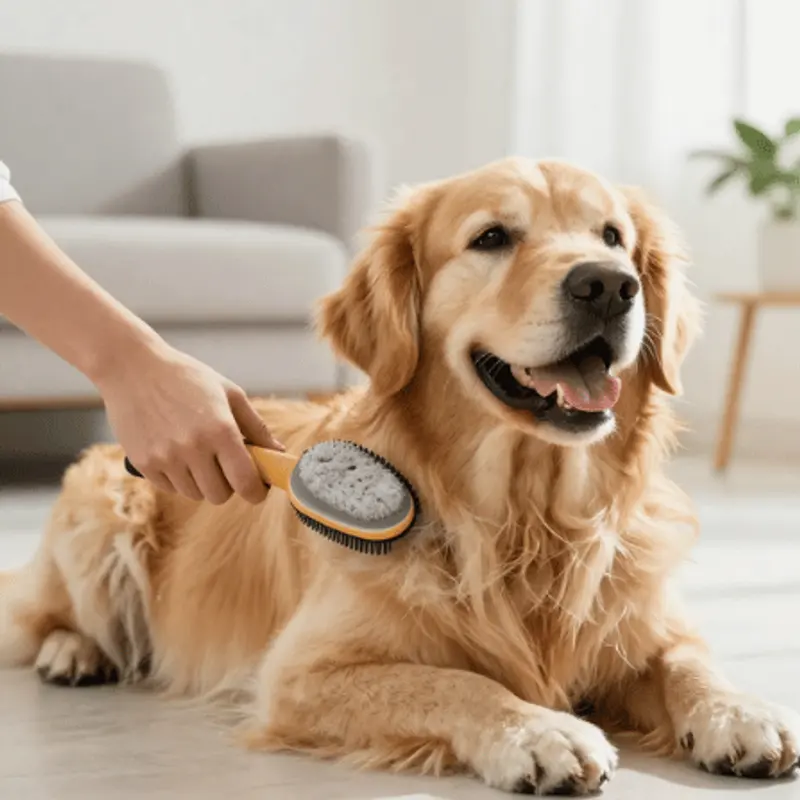
Look for consistent signs over several meals rather than a single reaction: eager anticipation before you put the bowl down, going straight to the bowl, finishing the meal within a reasonable time, and settling calmly afterwards. Cherry-picking certain pieces or walking away and returning suggests they're less keen.
Shop the guide

LickiMat OH Bowl for Dogs — Slow Feeder with Tongue-Cleaning Tips
A vet-developed dog feeding bowl with raised rubber tips that clean the tongue as your dog licks — calming, dishwasher safe, and available in three sizes.
From£12.99

Tarhong Paw Ikat Teal Pet Placemat – BPA-Free PVC & EVA
A vibrant teal ikat placemat with paw print accents — BPA-free, wipe-clean, and 29 × 48 cm for protecting floors under pet bowls.
£8.49

Tarhong Country Orchard Melamine Pet Saucer
A pretty fruit and floral orchard-print melamine saucer for pets — BPA-free, non-slip, shatterproof, and dishwasher safe at 13.2 cm.
£9.49

Moderna Gusto Bowl Warm
Dog bowl with more than 98% recycled plastic and rounded edges, with its limits set out clearly
From£0.99
If your dog wolfs down every meal in seconds, it's easy to assume they love their food. But speed isn't the same as enjoyment, and plenty of dogs eat quickly out of habit, anxiety or simple hunger rather than genuine relish. Working out whether your dog actually *likes* what's in the bowl takes a bit more observation than watching how fast it disappears.
The good news is that dogs are fairly transparent about their food preferences once you know what to look for. Their body language, the way they approach the bowl, and how consistently they finish a meal all tell you something useful. It's also entirely normal for preferences to shift over time, so a dog who used to demolish a food and now picks at it isn't necessarily being difficult — something may genuinely have changed.
This guide covers the real signs of food enjoyment, how to compare two foods fairly if you're trying to work out which one your dog prefers, and the difference between a fussy eater and a dog who might need a vet check. We've grounded this in advice from UK veterinary and welfare charities, plus the methodology the pet food industry itself uses to test palatability.
Signs your dog genuinely enjoys their food
A dog who likes their food usually shows a consistent, low-drama pattern at mealtimes rather than a single dramatic tell. Look out for:
- Anticipation before the bowl goes down. Tail wagging, following you to the feeding spot, pacing or a bit of excited vocalising as you prepare the meal are all classic signs a dog is looking forward to what's coming.
- A prompt, steady approach. A dog who likes their food tends to go straight to the bowl rather than hesitating, sniffing and wandering off.
- Finishing the bowl within a reasonable time. A dog with a healthy appetite for a food will generally clear the bowl fairly promptly rather than leaving a trail of picked-over kibble.
- Lip licking and calm settling afterwards. Many owners report their dog licking their lips or the bowl once finished, then settling contentedly — a good sign the meal was satisfying rather than merely tolerated.
- No cherry-picking. A dog who is genuinely keen on a mixed meal (say, kibble with a wet food topper) will eat all of it, rather than hoovering up the tasty bits and leaving the rest.
None of these signs are foolproof on their own — a very hungry dog might rush any food, liked or not — but together, over several meals, they build a reliable picture.
Signs your dog isn't that keen
The flip side is just as telling. According to veterinary guidance on picky eating, dogs who aren't keen on a food often show a distinctive pattern: they'll come to the bowl, but then walk away, sniff and leave, or nudge the food around with their nose rather than eating it. Other signs to watch for include cherry-picking certain pieces (often a particular texture or protein) while leaving the rest, or not finishing the bowl within about 20 minutes of it being put down.
It's also worth noticing whether your dog eats readily from your hand or accepts treats and human scraps eagerly, but turns their nose up at their own bowl. That combination usually points to a preference issue rather than a lack of appetite altogether — a dog who is hungry but simply doesn't rate what's on offer.
If your dog happily wolfs down a treat but ignores their dinner, that's usually a preference problem, not a loss of appetite.
How to compare two foods fairly
If you're trying to work out which of two foods your dog actually prefers — perhaps you're switching brands, or wondering if a pricier food is worth it — a single side-by-side comparison tells you more than swapping foods every few days and going on memory. The pet food industry itself uses a version of this test to measure palatability scientifically, and you can borrow a simplified version at home:
- Offer both foods at the same time, in identical bowls, in similar amounts. Put them down side by side.
- Note which bowl your dog goes to first. This "first choice" mainly reflects how appealing the food smells to them, rather than how much they'll actually eat.
- Watch how much of each they actually eat, not just which they sniff first. A dog might sniff one food out of curiosity but eat more of the other.
- Swap the left/right position of the bowls on repeat tries. Some dogs have a side preference that has nothing to do with the food itself, so alternating which side each food sits on over a couple of sessions gives a more accurate picture.
- Repeat over two or three separate meals, not just once. A single test can be thrown off by hunger levels, mood, or what happened five minutes earlier on a walk.
This is a scaled-down version of the "two-bowl" or "two-pan" preference test used in professional pet food palatability research, where researchers measure both which food an animal chooses first and the proportion of each food actually consumed, and specifically control for bowl-position bias by alternating sides across repeat trials. You obviously don't need lab-level rigour at home, but the same basic principle — comparing directly, more than once, controlling for position — gives you a genuinely useful answer rather than a guess.
Common reasons dogs go off their food that have nothing to do with taste
Before concluding your dog simply doesn't like a food, it's worth ruling out other explanations, because a lot of "fussy" behaviour isn't really about flavour at all.
They may be getting extra calories elsewhere. Treats used generously for training, particularly high-value ones like cheese or meat, can fill a dog up between meals without you realising quite how much they add up to. If treat-giving has crept up, or a well-meaning family member or neighbour has been feeding your dog through the fence or on walks, that alone can explain a sudden loss of enthusiasm for mealtimes. Our Pet Calorie Calculator can help you work out how many calories your dog actually needs in a day, so treats and meals add up sensibly rather than by guesswork.
Stress and environmental change. A change in routine, a new pet or person in the house, building work, or even moving the food bowl to a new spot can all dampen appetite temporarily. Dogs are creatures of habit, and disruption to their environment is a commonly cited trigger for picky eating.
Boredom with the same food. Some dogs genuinely do get bored of eating the identical meal day after day, especially if it's been unchanged for a long time. This is different from a food being actively disliked — it's more that novelty itself has become appealing.
Physical discomfort at the bowl. Larger dogs sometimes find it more comfortable to eat from a raised bowl rather than bending a long way down, and older dogs with arthritis may find any awkward eating posture uncomfortable enough to put them off finishing a meal. Bowl placement — away from busy walkways, other pets, or a noisy washing machine — can matter more than owners expect.
Underlying dental or medical issues. Dental disease is a common and painful cause of reduced eating that's easy to miss, since a dog can look and behave normally otherwise. Other medical causes such as gastrointestinal upset, kidney disease, or general soreness (arthritis in older dogs, for instance) can all suppress appetite and get mistaken for pickiness.
How to introduce a new food without upsetting their stomach
If you do decide to switch foods — whether because your current dog food isn't going down well or you want to try something new — doing it gradually matters more than most owners expect. UK veterinary and welfare advice consistently recommends transitioning over about a week: start by mixing in a small proportion of the new food with the old, and gradually increase that proportion each day until your dog is eating the new food entirely. A switch that's too abrupt is a common cause of digestive upset, including vomiting or diarrhoea, which can itself put a dog off a perfectly good food by association.
A rough week-long guide looks like this:
- Days 1–2: roughly a quarter new food, three-quarters old food
- Days 3–4: around half and half
- Days 5–6: roughly three-quarters new food, a quarter old food
- Day 7 onwards: fully switched to the new food
If your dog has a sensitive stomach or any ongoing digestive condition, it's worth slowing this down further and checking with your vet before you start. Watch stools and general behaviour throughout the switch, and if anything looks off, ease back to the previous ratio for a couple more days rather than pushing on.
Common mistakes that create fussy eaters
A surprising amount of "fussiness" is unintentionally trained into dogs by their owners, however well-meaning. A few patterns worth avoiding:
- Offering endless alternatives. If a dog learns that refusing one meal reliably produces a tastier replacement, they have every incentive to hold out. Too much variety, offered too readily, can teach a dog to wait for something better rather than eat what's given.
- Leaving food down all day. A bowl that's always available loses its urgency. Vets commonly recommend putting food down for a set period — around 15 to 20 minutes — and then removing it whether it's been eaten or not, rather than leaving it out indefinitely.
- Free feeding treats. As above, treats are useful for training, but they should stay a small proportion of a dog's daily calories rather than a parallel meal.
- Table scraps. Feeding from your own plate teaches dogs that holding out at their own bowl is often rewarded with something better later. It also risks foods that are unsuitable or even toxic for dogs — our Can My Pet Eat This? tool is a quick way to check before you share anything from your plate.
None of this means treats or variety are bad in themselves — just that consistency at mealtimes tends to produce a dog who eats readily, while an inconsistent approach tends to produce one who holds out for something better.
Breed, age and life-stage differences
Appetite and food preference genuinely shift across a dog's life. Puppies typically need several smaller meals a day and often eat with real enthusiasm simply because they're growing fast and burning energy quickly. As dogs move into adulthood, feeding usually settles into one or two meals a day, and individual appetite becomes more a matter of personality than life stage.
Senior dogs are where changes are most worth watching closely. A gradual decline in interest in food can be a normal part of ageing, but it can equally be the first visible sign of dental pain, joint discomfort making the usual eating posture uncomfortable, or an underlying illness that hasn't shown itself in any other way yet. If you're not sure whether your dog's eating pattern is normal for their age, our Dog Age Calculator can help put their life stage into context — a dog entering their senior years benefits from more attentive monitoring of appetite, weight and general demeanour than a young, healthy adult.
Breed and size play a role too. Deep-chested, large breeds are sometimes more comfortable eating from a raised bowl, while smaller breeds can be more prone to true fussiness, in part because owners of small dogs often supplement meals with more treats relative to their size, tipping the calorie balance without realising it.
When to see your vet
Most fluctuations in enthusiasm for food are behavioural rather than medical, but there are clear lines where a vet visit is the right call rather than trying another food. Get in touch with your vet if your dog:
- Refuses food entirely for more than 24 hours
- Shows other signs alongside reduced appetite, such as lethargy, vomiting, diarrhoea, or reluctance to drink water
- Has bad breath, visible tartar, or seems reluctant to chew — all possible signs of dental disease
- Is losing weight despite eating a similar amount, or losing weight alongside reduced appetite
- Is an older dog with a new or worsening reluctance to eat, particularly if it's a sudden change rather than a gradual one
A vet can rule out dental pain, gastrointestinal problems, kidney disease and other medical causes that can look, from the outside, exactly like ordinary fussiness. It's always worth erring on the side of a check-up if a change in eating persists for more than a day or two, rather than assuming it's simply a preference issue.
*This is general guidance, not a substitute for advice from your vet, who can assess your individual pet.*
Sources
- PDSA — advice on pets going off their food, fussy eating and appetite loss (pdsa.org.uk).
- Dogs Trust — dog diet and nutrition advice, including feeding schedules and treat guidance (dogstrust.org.uk).
- RSPCA — how to feed your dog a healthy diet, including portioning and mealtime routine (rspca.org.uk).
- Battersea Dogs & Cats Home — advice on gradually transitioning dogs to a new food (battersea.org.uk).
- VCA Animal Hospitals — feeding canine picky eaters, including medical causes and management strategies (vcahospitals.com).
- Aldrich & Koppel, "Pet Food Palatability Evaluation: A Review of Standard Assay Techniques" — methodology behind the two-bowl/two-pan food preference test (pmc.ncbi.nlm.nih.gov).
Common questions
How can I tell if my dog actually likes their food?
Look for consistent signs over several meals rather than a single reaction: eager anticipation before you put the bowl down, going straight to the bowl, finishing the meal within a reasonable time, and settling calmly afterwards. Cherry-picking certain pieces or walking away and returning suggests they're less keen.
Is it normal for a dog to walk away from food and come back?
Occasionally, yes, especially if they're not very hungry or something distracted them. But if it happens at most meals, it usually points to the food not being that appealing, or to overfeeding via treats and scraps between meals rather than a medical problem. If it becomes frequent or is paired with weight loss, ask your vet to check.
What is the fairest way to compare two dog foods?
Offer both in identical bowls, side by side, at the same meal, and note which your dog eats more of rather than just which they sniff first. Repeat over two or three separate meals and swap which side each bowl sits on, since some dogs have a side preference that has nothing to do with the food itself.
Could my dog be off their food because of treats?
Yes, this is one of the most common causes. Generous treat-giving, particularly high-value treats like cheese or meat, can fill a dog up between meals without you realising. Try tightening up treats for a few days and see if their interest in mealtimes picks back up.
When should I take a fussy eater to the vet?
See your vet if your dog refuses food entirely for more than 24 hours, shows other symptoms like lethargy, vomiting or diarrhoea, seems reluctant to chew, or is losing weight despite eating a similar amount. These can all point to dental disease or another underlying medical cause rather than simple pickiness.
About the author
Matt Garnett — founder, Giddy Pets
Matt started Giddy Pets to make getting pets the good stuff simpler and fairer. Everything in these guides comes from real life with pets and a lot of trial and error — it's practical guidance, not veterinary advice. If a guide gets something wrong, tell him directly.
Advice & planning
Free tools & more guides
Practical calculators and trusted guides relevant to this product.