






Should cats be kept in at night?
Why most UK welfare charities recommend a night-time curfew for outdoor cats, and how to introduce one without causing stress.

The quick answer
No. Most UK welfare charities, including Cats Protection and the RSPCA, recommend a night-time curfew for cats with outdoor access, because it reduces the risk of road accidents and fights. As long as your cat has litter, water, food and things to do indoors, an overnight curfew isn't considered cruel, it's considered good practice.
If your cat spends part of the day outdoors, you've probably wondered whether it's safe to let them stay out after dark, or whether you should be calling them in before bed. It's a genuinely common question, and the major UK cat welfare charities are fairly consistent in their answer: for most cats with outdoor access, being kept in overnight is safer than being left to roam.
That doesn't mean every cat needs to be shut in the moment the sun goes down, or that outdoor access itself is a problem. It's about understanding what actually changes for a cat once it's dark, and making a sensible, informed choice for your own cat, your own street, and your own household.
This guide looks at what the evidence says about cats and night-time risk, why some owners choose to keep their cats in overnight and others don't, and how to introduce a curfew gradually if you decide it's right for your cat.
Why night-time is riskier for outdoor cats
Cats Protection, the UK's largest cat welfare charity, notes that cats are naturally crepuscular - meaning they're most active at dawn and dusk rather than in the dead of night - but that doesn't mean night-time roaming is risk-free. According to Cats Protection's guidance on cats at night, the main dangers are road traffic injuries and confrontations with other cats, both of which become more likely after dark.
A few things combine to make night-time genuinely more dangerous for a cat that's outdoors:
- Reduced visibility for drivers. A black or dark-coloured cat crossing a quiet road at midnight is very hard for a driver to see until the last moment, particularly on unlit rural or suburban roads.
- Faster traffic. Roads that are busy and slow-moving in the day are often much quieter, and driven faster, late at night, giving both driver and cat less time to react.
- Territorial disputes. Cats are more likely to encounter unfamiliar cats defending territory at night, increasing the risk of fights, bite wounds and abscesses.
- Disorientation from headlights. A cat's eyes are extremely good in low light, but sudden bright headlights can dazzle and disorientate them in a way that daylight doesn't.
What the evidence says about cats and road accidents
The scale of the road traffic problem for cats is worth taking seriously. Reporting on research from the University of Bristol, the veterinary emergency service Vets Now states that an estimated 630 cats are run over on Britain's roads every single day, and that almost 54% of these road traffic accidents happen in the dark. The same research found that young cats, particularly those between around seven months and two years old, are at the greatest risk, with risk falling by roughly 16% for every extra year of age as cats become more streetwise. Two other patterns stand out: most accidents happen close to the cat's own home, and a disproportionate number involve cats living on long, straight stretches of road where traffic tends to travel faster. Sadly, when cats are hit by cars, the outcome is frequently serious - the same data reported around three-quarters of these accidents as fatal.
This is why so many charities single out young, newly-neutered cats and cats living on busier or faster roads as the group who benefit most clearly from a night-time curfew, even if you allow more daytime freedom as they mature.
Almost 54% of feline road traffic accidents happen after dark, according to research reported by Vets Now, making night-time the single riskiest window for an outdoor cat.
The case for a night-time curfew
Beyond road safety, there are two other welfare reasons commonly cited for keeping cats in overnight.
The first is disease and injury from fighting. The RSPCA explains that feline immunodeficiency virus (FIV) is spread mainly through deep bite wounds sustained during fights, particularly between unneutered males defending territory, exactly the kind of encounter that's more likely at night when cats are more likely to cross paths with unfamiliar animals. Neutering reduces a male cat's urge to roam, mate and fight, and the RSPCA recommends it from around four months old regardless of whether a curfew is also in place.
The second is the impact on local wildlife. Research summarised by the Mammal Society estimates that the UK's roughly 7.45 million outdoor-access cats bring home somewhere in the region of 140 million prey items between them each year, with a large share of that predation happening on nocturnal hunting trips. A night-time curfew is one of the few interventions the Mammal Society highlights as genuinely effective at reducing this, because it removes the opportunity to hunt during cats' most active hunting window, alongside measures like feeding a meat-rich diet and providing plenty of daytime play to satisfy the hunting instinct in a safer way.
Put together, these three factors, traffic, fighting and disease, and wildlife impact, are why Cats Protection, the RSPCA and PDSA all recommend keeping cats in overnight where it's practical to do so.
Is there a downside to keeping a cat in at night?
A curfew isn't entirely without trade-offs, and it's worth being honest about them rather than assuming confinement is automatically stress-free. The RSPCA points out that restricting a cat's access, especially one used to roaming freely, can lead to boredom, frustration and even weight gain if the change isn't managed thoughtfully. A cat that's used to being active at night can become restless, vocal, or prone to scratching at doors and windows if it's suddenly shut in with nothing to do.
The answer isn't to abandon the idea of a curfew, but to treat the indoor hours as something to actively plan for rather than simply shutting the cat flap and hoping for the best. That means providing:
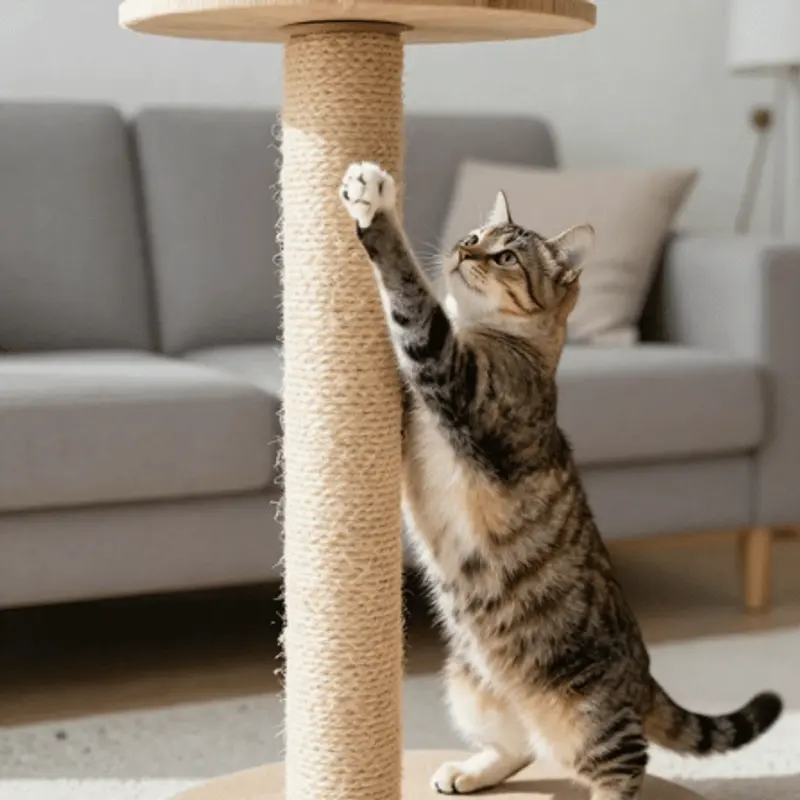
- Tall, sturdy scratching posts for claw maintenance and stress relief.
- Interactive play with a fishing-rod-style toy, ideally in the early evening before settling for the night, to burn off the hunting energy a cat would otherwise use outdoors.
- Puzzle feeders or treat balls to keep mealtimes mentally engaging.
- A quiet, private spot for the litter tray, well away from food and water.
- Multiple resting and perching spots, including somewhere elevated, so an indoor evening doesn't feel restrictive.
How to introduce a night curfew without stress
If your cat is used to roaming freely after dark, switching to a curfew overnight, in every sense, can cause more stress than a gradual transition. A few approaches that welfare charities suggest work well:
Feed at dusk. Both PDSA and Cats Protection suggest timing your cat's evening meal for just as it's getting dark. Cats are creatures of habit, and a cat that knows dinner appears at dusk will naturally start coming home at that time on their own, making it much easier to bring them in for the night without a chase around the neighbourhood.
Use a timed microchip cat flap. Cats Protection notes that microchip-linked cat flaps with a timed curfew function, such as those made by Sure Petcare, let a cat come and go freely during the day, then automatically stop them leaving again after a time you set. If your cat is already out when the curfew kicks in, they can still get back inside, they just can't head out again.
Bring the curfew in gradually. Start half an hour or an hour earlier than your eventual target time for the first week or two, rather than jumping straight to a much earlier curfew. This gives your cat time to adjust its own internal routine.
Keep the last hour calm. A short play session followed by food tends to help a cat wind down for the evening in the same way it would after a natural hunting-and-eating cycle outdoors.
Kittens, elderly cats and cats that are already indoor-only
A night-time curfew matters most for cats that already have outdoor access, but age and lifestyle change the picture slightly.
Kittens shouldn't be given outdoor access at all until they're fully vaccinated and, in most cases, neutered, so the question of a curfew doesn't really arise until they're already an adolescent or adult cat with supervised outdoor access.
Older cats often naturally roam less and stay closer to home, but frailer senior cats can be more vulnerable in a fight or a fall, so many owners choose to keep senior cats in earlier in the evening as a matter of course.
Indoor-only cats face none of the traffic or fighting risks discussed here, but the RSPCA is clear that they still need daily interactive play, scratching opportunities, and mental stimulation to avoid the stress and inactivity that can come from a fully enclosed lifestyle. A curfew conversation doesn't apply to them, but the enrichment principles above very much do.
Common mistakes when starting a curfew
A few avoidable missteps come up again and again:
- Changing the routine overnight with no warning. A cat that's suddenly shut in after weeks of free roaming may cry at the door, scratch furnishings, or toilet inappropriately out of stress rather than defiance.
- Forgetting the litter tray. Even a cat that's reliably used the garden for years will need a litter tray available once they're confined overnight, don't assume they'll simply hold on until morning.
- No water or food access overnight. A curfew shouldn't mean anything is withheld, only that the door is shut.
- Skipping the microchip check. If a cat does slip out before a curfew is fully established, an up-to-date microchip is by far the best way of being reunited quickly, collars can and do come off.
- Ignoring signs of distress. Persistent, escalating vocalising, toileting outside the tray, or attempts to bolt out of doors are all signs the transition needs to slow down, not signs the cat needs to get used to it faster than it's ready to.
A practical checklist for a safer night-time routine
- Cat is neutered (reduces roaming, fighting and FIV risk).
- Microchip details are current and registered to your address.
- If your cat wears a collar, it has a quick-release/breakaway fastening, with a reflective strip if they're out after dusk.
- Evening meal timed for dusk to encourage a natural return home.
- Litter tray, fresh water and a comfortable resting spot available indoors overnight.
- Scratching post and a few toys accessible for any restless energy.
- Timed microchip cat flap considered if you want the curfew to run itself.
- Curfew time introduced gradually rather than as a sudden change.
When to see your vet
Contact your vet promptly if your cat comes home with a wound, limp, swelling or any sign of having been in a fight or a road traffic incident, even if they otherwise seem fine, bite wounds in particular can look minor at first and abscess several days later. You should also speak to your vet if your cat suddenly starts crying persistently at night, seems distressed by a new curfew despite a gradual introduction, or shows any change in litter tray habits once confined overnight, as these can occasionally point to an underlying medical cause rather than simple unsettledness. If your cat goes missing overnight and doesn't return by the following day, contact local vets, your microchip database, and neighbours as soon as possible.
*This is general guidance, not a substitute for advice from your vet, who can assess your individual pet.*
Sources
- Cats Protection - advice on cats and night-time safety (cats.org.uk).
- Cats Protection - keeping cats safe outside, microchipping and road safety (cats.org.uk).
- RSPCA - keeping cats indoors, enrichment and welfare needs (rspca.org.uk).
- RSPCA - feline immunodeficiency virus (FIV), transmission and neutering advice (rspca.org.uk).
- PDSA - keeping your cat safe outdoors, night-time and road safety advice (pdsa.org.uk).
- Vets Now - road traffic accident research findings, based on University of Bristol data (vets-now.com).
- The Mammal Society - domestic cats and UK wildlife predation, curfew effectiveness (mammal.org.uk).
Common questions
Is it cruel to keep a cat in at night?
No. Most UK welfare charities, including Cats Protection and the RSPCA, recommend a night-time curfew for cats with outdoor access, because it reduces the risk of road accidents and fights. As long as your cat has litter, water, food and things to do indoors, an overnight curfew isn't considered cruel, it's considered good practice.
What time should I bring my cat in at night?
There's no fixed rule, but bringing your cat in around dusk, rather than late at night, captures the period when road traffic accidents become more likely. Many owners time their cat's evening meal for dusk, since cats often return home for food, which makes the timing easier to manage consistently.
Will my cat be stressed if I start a night curfew?
It can be if the change happens suddenly. Introducing the curfew gradually, keeping a litter tray and water available indoors, and providing play and scratching opportunities in the evening all help. Persistent crying, scratching at doors, or toileting outside the tray are signs to slow the transition down.
Do indoor cats need anything different at night?
Cats that are already indoor-only don't face the traffic or fighting risks a curfew addresses, but the RSPCA notes they still need daily interactive play and mental stimulation to avoid boredom or stress, so an enriched evening routine is worth keeping regardless of whether your cat goes outside at all.
Does keeping cats in at night actually reduce accidents?
The evidence points that way. Research reported by Vets Now found that almost 54% of feline road traffic accidents happen in the dark, and that young cats are at the highest risk, which is why UK welfare charities specifically flag night-time as the period where confinement makes the biggest safety difference.
About the author
Matt Garnett — founder, Giddy Pets
Matt started Giddy Pets to make getting pets the good stuff simpler and fairer. Everything in these guides comes from real life with pets and a lot of trial and error — it's practical guidance, not veterinary advice. If a guide gets something wrong, tell him directly.
Advice & planning
Free tools & more guides
Practical calculators and trusted guides relevant to this product.
Read next

Should cats be free-fed?
Weighing up the pros and cons of free feeding versus scheduled meals for cats, including weight control, indoor cats and multi-cat homes
Why Is My Cat Being Sick? Vomiting Causes and What to Do
The common reasons cats vomit, how to care for a sicky cat at home, and the red flags that mean you should ring your vet.

Diabetes in Cats: Signs, Diagnosis and Management