
Munchkin Cat Personality & Behaviour
What Munchkin cats are really like day to day — their friendly, playful, confident temperament, how they move and play, and what they need to be content.
The quick answer
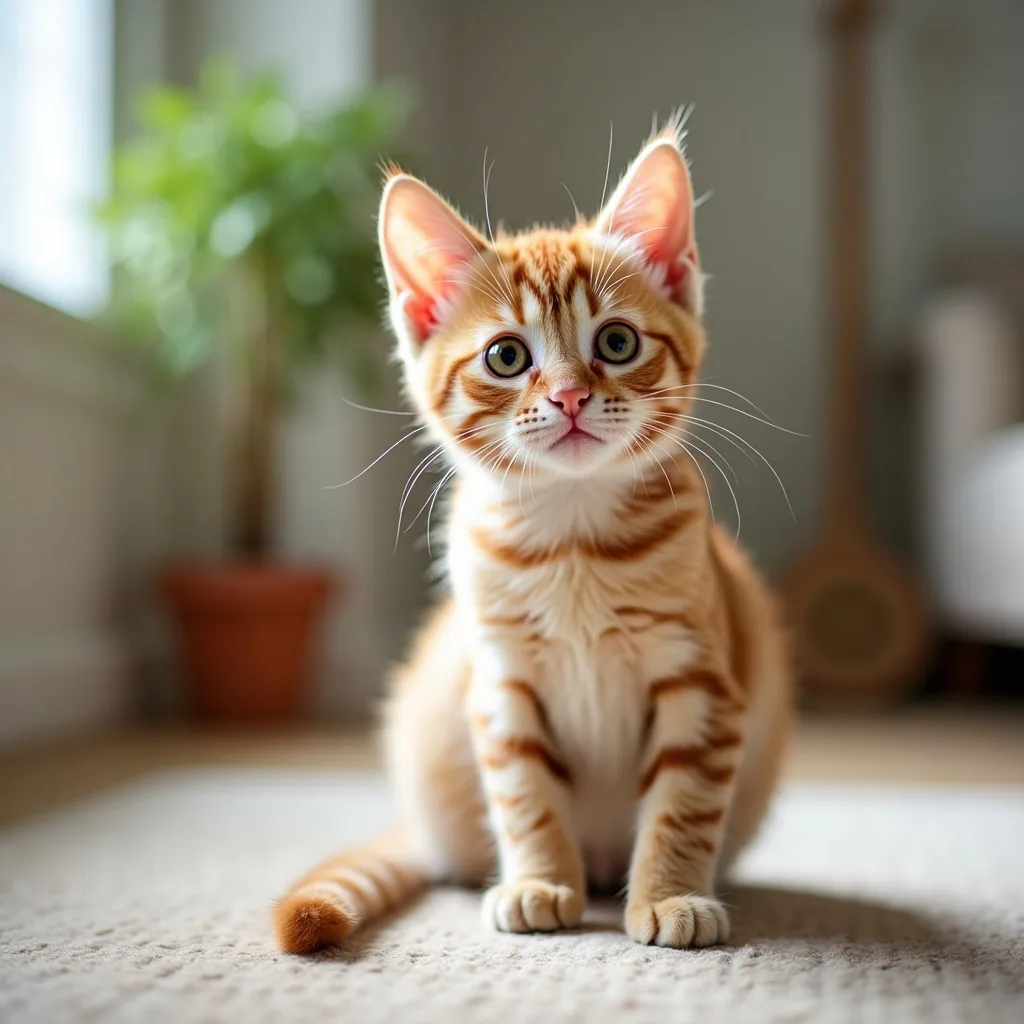
Munchkin cats are typically friendly, confident, curious and playful, often keeping a kitten-like enthusiasm for games well into adulthood. They tend to be sociable and people-focused, settling quickly into family life and getting on with children and other pets when introductions are calm.
Beyond the famously short legs, the Munchkin cat has a personality that wins people over quickly. They are often described as friendly, confident and playful — busy little cats with a lot of character packed into a small frame. Here is an honest look at Munchkin personality and behaviour, what to expect day to day, and how to keep one happy and well.
The typical Munchkin temperament
Munchkins are usually outgoing, sociable and people-focused. Many are confident cats that settle quickly into a new home, follow their owners around, and enjoy being involved in whatever is going on. They tend to be playful well into adulthood, keeping a kitten-like enthusiasm for games, toys and exploration for years. Owners often describe them as curious and a little mischievous, with a knack for investigating cupboards, bags and anything new that appears in the house.
As always, temperament varies between individuals — early socialisation, the parents' nature and how a kitten is reared all shape the adult cat. Meeting the mother and seeing how the kittens behave is the best guide to what a particular cat will be like.
Sociable with people and pets
Munchkins generally get on well with children and other animals, including other cats and cat-friendly dogs, when introductions are done slowly and calmly. Their easy-going, confident nature suits a busy family household, provided children are taught to handle them gently and to respect the cat's need for quiet rest. Because they are so sociable, many Munchkins do not love being left alone for long stretches, so a second pet for company or plenty of enrichment helps if your household is often out.
How Munchkins move and play
The short legs do shape behaviour. Many Munchkins are active and agile — they run (sometimes with a distinctive, scurrying gait), chase toys and climb — but they generally cannot jump as high as a long-legged cat, and may reach a sofa or windowsill in stages rather than a single leap. Some owners note they are happiest playing at floor level and on low surfaces. This is part of the breed's appeal for some, but it also means you should make their environment work for them rather than expecting them to vault to high perches.
A word of honesty: how freely an individual Munchkin moves varies, and the long-term effect of short legs on the joints and spine is still debated rather than fully resolved by research. Watching for any reluctance to move, stiffness or change in how your cat gets around is sensible — see our health problems guide for what to look out for.
Enrichment for a busy little cat
Munchkins are intelligent and curious, so mental stimulation matters as much as physical play:
- Floor-level play. Wand toys, balls and chase games suit a cat that plays low to the ground — browse our cat toys.
- Puzzle feeders and enrichment. These engage their problem-solving side and slow down enthusiastic eaters; see puzzle and enrichment toys and slow feeders.
- Accessible scratching and perching. Provide stepped or low cat trees and scratchers so they can climb and scratch without big jumps.
- Cosy resting spots at floor level, such as a soft cat bed, that are easy to get into.
The chatty, curious side
Munchkins are often described as inquisitive 'magpies' — some have a reputation for collecting and hiding small objects, and many love investigating high cupboards by climbing up in stages. They tend to be interactive with their people, enjoying games and attention, and some are quite vocal. None of this is universal, since personality is shaped as much by the individual cat and its early life as by the breed, but the general picture is of a busy, engaged little cat that wants to be involved. Channelling that curiosity into safe play and exploration — rather than leaving it to find its own entertainment in your wardrobe — keeps both of you happier.
Common behaviour questions
Like any cat, Munchkins can develop unwanted behaviours — scratching furniture, over-grooming, or hiding — usually in response to boredom, stress or an unmet need rather than "naughtiness". Plenty of play, predictable routines, vertical and horizontal space they can actually use, and a calm home go a long way. If your cat seems anxious, calming and anxiety products and a settled environment can help, but any sudden behaviour change is worth a vet check to rule out pain or illness, which short-legged cats are no more immune to than any other.
Keeping a Munchkin content
In short, a happy Munchkin is one with company, accessible enrichment, a healthy weight and a home arranged around how they actually move. Get those right and you have a friendly, playful, characterful companion. For the bigger picture on the breed, read our honest guide to whether Munchkins make good pets and our lifespan and health guide.
*This is general guidance. Every cat is an individual, so meet the parents and kittens before choosing, and speak to your vet about your specific situation.*
Sources
- International Cat Care — cat behaviour and environmental needs (icatcare.org).
- Blue Cross — understanding cat behaviour (bluecross.org.uk).
- PDSA — cat companionship, play and enrichment (pdsa.org.uk).
- Governing Council of the Cat Fancy (GCCF) — breed information and policy (gccfcats.org).
Common questions
What is a Munchkin cat's personality like?
Munchkin cats are typically friendly, confident, curious and playful, often keeping a kitten-like enthusiasm for games well into adulthood. They tend to be sociable and people-focused, settling quickly into family life and getting on with children and other pets when introductions are calm. Temperament varies between individuals, so meeting the mother and seeing how the kittens behave is the best guide to a particular cat.
Are Munchkin cats playful and active?
Yes — most Munchkins are lively and love to play, run and explore, though they tend to play low to the ground and cannot jump as high as a long-legged cat. They enjoy wand toys, chase games and puzzle feeders. Provide floor-level play and stepped, accessible perches so they can be active without big jumps, and watch for any stiffness or reluctance to move.
Do Munchkin cats get on with other pets and children?
Generally yes. Their confident, sociable nature means they often do well with children and with other cats and cat-friendly dogs, provided introductions are gradual and calm and children are taught to handle them gently. As sociable cats, many dislike being left alone for long, so a companion pet or plenty of enrichment helps if the home is often empty.
About the author
Matt Garnett — founder, Giddy Pets
Matt started Giddy Pets to make getting pets the good stuff simpler and fairer. Everything in these guides comes from real life with pets and a lot of trial and error — it's practical guidance, not veterinary advice. If a guide gets something wrong, tell him directly.
Free tools & more guides
Read next
Are Munchkin Cats Good Pets? The Honest Picture
Munchkin cats are friendly and playful, but the breed is genuinely controversial. The honest picture: temperament, the welfare and recognition debate, and the homes they suit.
Munchkin Cat Health Problems: An Honest Guide
An honest, factual guide to Munchkin cat health: chondrodysplasia, lordosis, pectus excavatum, the homozygous-lethal gene, GCCF non-recognition, and where the evidence is still debated.

How Long Do Munchkin Cats Live? Lifespan & Health
How long Munchkin cats live, the inherited conditions tied to their chondrodysplasia, and the practical things that help yours stay well — with an honest note on limited data.
How Much Does a Munchkin Cat Cost? (and the ethics)
What a Munchkin cat costs to buy and keep in the UK — and an honest look at the ethics of buying a breed defined by a dwarfism gene that the GCCF does not recognise.