
Munchkin Cat Health Problems: An Honest Guide
An honest, factual guide to Munchkin cat health: chondrodysplasia, lordosis, pectus excavatum, the homozygous-lethal gene, GCCF non-recognition, and where the evidence is still debated.
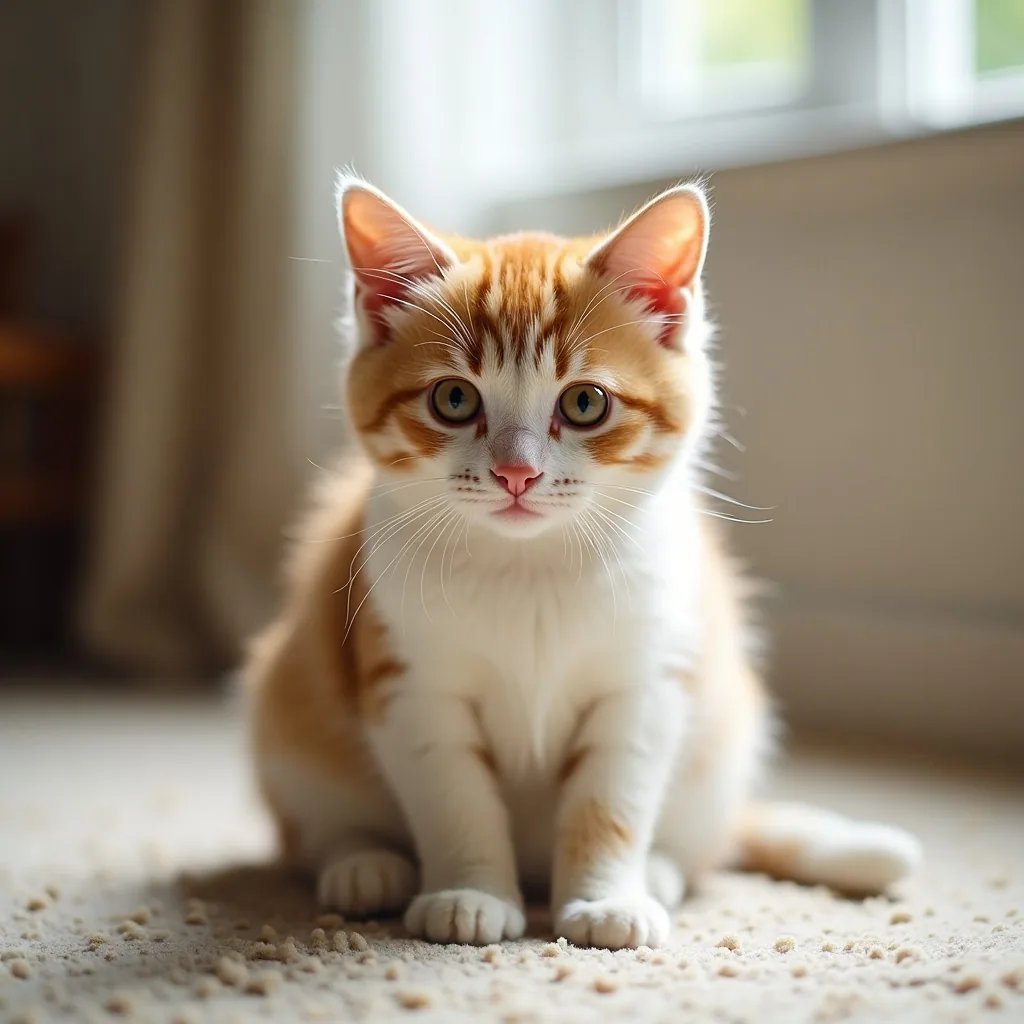
The quick answer
The breed's defining feature is chondrodysplasia (dwarfism), which causes the short legs. Reported associated conditions include lordosis (an exaggerated inward spinal curve), pectus excavatum (a sunken chest), and a tendency towards degenerative joint disease, though the long-term joint and spinal impact is still debated.
The Munchkin cat is defined by one feature — very short legs — and that feature is the root of the breed's health debate. This guide gives an honest, factual account of Munchkin cat health problems: what causes the short legs, the conditions they may predispose to, why the breeding gene is lethal in one form, why the GCCF does not recognise the breed, and — just as importantly — where the evidence is genuinely limited or debated. We've tried to be balanced rather than alarmist or dismissive.
Chondrodysplasia: the root of it all
The Munchkin's short legs are caused by a chondrodysplasia gene — a form of skeletal dysplasia, or dwarfism, that affects how the cartilage and long bones of the limbs grow. The result is disproportionate dwarfism: all four legs are short while the body and head are of normal size. It is an autosomal dominant trait, meaning a cat needs only one copy of the gene to have short legs.
This is the crucial point about the breed: the defining look is not a healthy natural variation but a deliberately bred skeletal abnormality. Everything else in the health discussion flows from that.
The homozygous-lethal gene
The chondrodysplasia gene is homozygous-lethal. When a kitten inherits two copies — one from each short-legged parent — the combination is not compatible with life, and the kitten does not survive to birth. This is why responsible breeders never mate two Munchkins together: a short-legged cat is always paired with a normal-legged cat, so that surviving kittens carry at most one copy of the gene. It also means that the breeding of the trait inherently involves the loss of homozygous embryos, which is part of why the breed is ethically contested.
Lordosis
Lordosis is an exaggerated downward, inward curve of the spine, producing a sway-backed appearance. It is reported in Munchkins and other cats, and in severe cases the curvature can reduce the space in the chest, potentially affecting the heart and lungs and, in serious instances, breathing. Mild lordosis may cause no obvious problem, while more pronounced cases can be serious. Responsible breeders avoid breeding from affected cats.
Pectus excavatum
Pectus excavatum is a malformation of the breastbone and ribs that gives the chest a sunken, hollowed appearance. Depending on severity, it can range from a cosmetic dip to a condition that presses on the heart and lungs, causing breathing difficulty, exercise intolerance or poor growth, and some cases need surgical correction. It is not unique to Munchkins, but it is among the conditions discussed in relation to the breed.
Joints and spine: where the evidence is debated
It is intuitive to assume that very short legs must place abnormal strain on the spine and joints, and the breed is reported to be prone to degenerative joint disease. However, the honest scientific position is that the long-term effect of the Munchkin's conformation on its joints and spine is still debated and not fully resolved by high-quality, large-scale research. Some sources report that many Munchkins move and play actively without obvious problems; others raise concern about cumulative strain and arthritis over a lifetime. Where the evidence is genuinely limited, we think it's more useful to say so plainly than to overstate certainty in either direction. What is sensible regardless is to keep a Munchkin lean, arrange the home to avoid heavy jumps, and have any change in movement checked by a vet. Our cat portion control and obesity guide and the pet calorie calculator help with weight.
Why the GCCF does not recognise the Munchkin
The UK's Governing Council of the Cat Fancy (GCCF) does not recognise the Munchkin, and several other registries worldwide have declined to as well. Their reasoning is rooted in welfare: they are reluctant to endorse a breed whose defining characteristic is a bred-in skeletal deformity, particularly given the unresolved questions about its long-term effects. Other registries do recognise the breed, so this is a real disagreement between credible bodies rather than a settled fact — but the position of a body as significant as the GCCF deserves serious weight.
Everyday health, like any cat
Beyond the breed-specific issues, Munchkins are affected by the same everyday problems as other cats: obesity (especially worth avoiding here), dental disease, kidney issues with age, parasites and the usual infectious diseases prevented by vaccination. Routine preventive care — vaccination, parasite control, dental attention via dental care, neutering, and the legally required microchipping in England — applies just as much to a Munchkin.
Caring responsibly for a Munchkin
- Keep them lean and feed measured portions.
- Make the home accessible — low, stepped routes and easy-entry litter trays.
- Monitor movement and seek a vet promptly for stiffness, reluctance to move, or breathing changes.
- Insure early, before any condition can be excluded as pre-existing.
- If buying, choose a breeder who screens and never pairs two short-legged cats — see our cost and ethics guide.
For the wider picture, read our honest guide to whether Munchkins make good pets and our lifespan guide, and find a clinic via our vet finder.
*This is general guidance, not a substitute for advice from your vet, who can assess your individual cat.*
Sources
- International Cat Care — inherited disorders and conformational welfare in cats (icatcare.org).
- Governing Council of the Cat Fancy (GCCF) — breed recognition and welfare policy (gccfcats.org).
- RVC VetCompass — UK cat health research (rvc.ac.uk/vetcompass).
- PDSA — cat health, weight and preventive care (pdsa.org.uk).
- Blue Cross — inherited conditions and choosing a healthy cat (bluecross.org.uk).
Common questions
What health problems are Munchkin cats prone to?
The breed's defining feature is chondrodysplasia (dwarfism), which causes the short legs. Reported associated conditions include lordosis (an exaggerated inward spinal curve), pectus excavatum (a sunken chest), and a tendency towards degenerative joint disease, though the long-term joint and spinal impact is still debated. Like all cats they are also affected by obesity, dental disease and kidney issues. Screening and keeping your cat lean reduce avoidable risk.
Why is breeding two Munchkin cats together dangerous?
Because the chondrodysplasia gene is homozygous-lethal. A cat needs only one copy to have short legs, but a kitten that inherits two copies — one from each short-legged parent — does not survive to birth. For this reason responsible breeders never mate two short-legged Munchkins together, always pairing a short-legged cat with a normal-legged cat so surviving kittens carry at most one copy.
Do short legs cause Munchkin cats joint and spine problems?
It is often assumed they must, and the breed is reported to be prone to degenerative joint disease, but the honest position is that the long-term effect of their conformation on joints and the spine is still debated and not fully resolved by large-scale research. Some Munchkins move and play actively without obvious issues. Keeping them lean, avoiding heavy jumps and having any change in movement checked by a vet are sensible precautions.
About the author
Matt Garnett — founder, Giddy Pets
Matt started Giddy Pets to make getting pets the good stuff simpler and fairer. Everything in these guides comes from real life with pets and a lot of trial and error — it's practical guidance, not veterinary advice. If a guide gets something wrong, tell him directly.
Free tools & more guides
Read next
Are Munchkin Cats Good Pets? The Honest Picture
Munchkin cats are friendly and playful, but the breed is genuinely controversial. The honest picture: temperament, the welfare and recognition debate, and the homes they suit.
How Long Do Munchkin Cats Live? Lifespan & Health
How long Munchkin cats live, the inherited conditions tied to their chondrodysplasia, and the practical things that help yours stay well — with an honest note on limited data.
How Much Does a Munchkin Cat Cost? (and the ethics)
What a Munchkin cat costs to buy and keep in the UK — and an honest look at the ethics of buying a breed defined by a dwarfism gene that the GCCF does not recognise.
Munchkin Cat Personality & Behaviour
What Munchkin cats are really like day to day — their friendly, playful, confident temperament, how they move and play, and what they need to be content.