
Labradoodle Sizes & Coat Types (F1, F1b, Multigen)
Labradoodle sizes (miniature, medium, standard) and coat types (fleece, wool, hair) explained, plus what F1, F1b and multigen really mean — honestly.
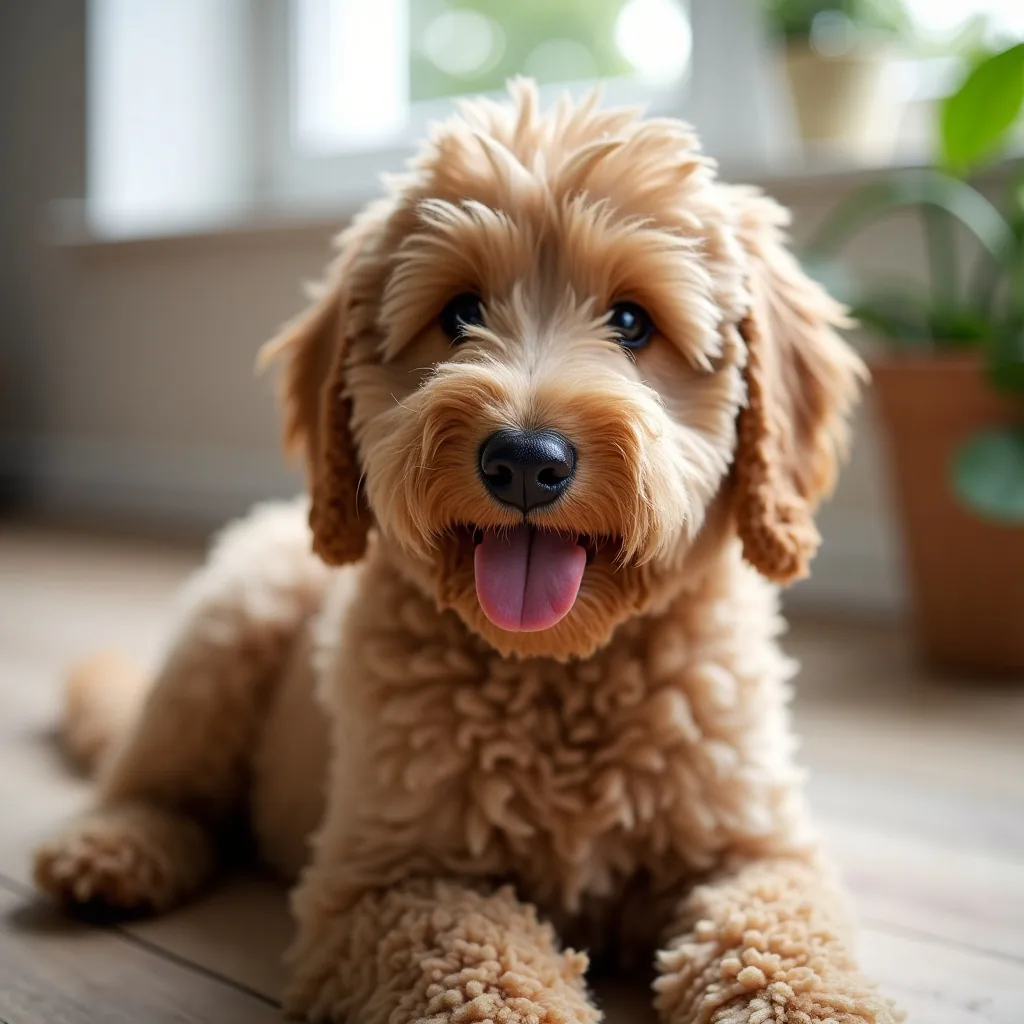
The quick answer
It depends on which size of Poodle was used in the cross. Labradoodles are generally grouped as miniature, medium and standard. Miniatures (from a Miniature Poodle) are the smallest, mediums sit in between, and standards (from a Standard Poodle) are the largest and can be a good-sized dog.
If you are researching Labradoodles, you will quickly hit a wall of jargon: miniature versus standard, fleece versus wool, F1 versus F1b versus multigen. Because the Labradoodle is a crossbreed rather than a standardised pedigree, these terms describe tendencies and ancestry rather than guarantees. Here is an honest, plain-English guide to Labradoodle sizes, coat types and generation terms.
First, the honest caveat
The Labradoodle is a Labrador crossed with a Poodle. It is not recognised as a breed by The Kennel Club and has no official breed standard. That matters here more than anywhere, because it means size and coat are not fixed or guaranteed, especially in early-generation litters. Breeders use the labels below to set expectations, but genetics is variable — puppies in one litter can differ noticeably from each other. Treat every figure as a guide, and always ask to see and learn about the actual parents.
Labradoodle sizes
Labradoodle size depends largely on which size of Poodle was used in the cross, since Poodles come in standard, miniature and toy. Breeders typically group Labradoodles into three rough sizes:
- Miniature Labradoodle — the smallest, produced using a Miniature (or sometimes Toy) Poodle. A more manageable size for smaller homes, though still an active dog.
- Medium Labradoodle — in between, a popular middle ground.
- Standard Labradoodle — the largest, from a Standard Poodle crossed with a Labrador, and can be a good-sized, substantial dog.
Because there is no breed standard, the exact weight and height for each label varies between breeders, and a first-generation puppy's adult size can be genuinely hard to predict. The most reliable indicator is the size of both parents, so ask the breeder directly. If you want a rough sense of how size relates to other factors, our pet life expectancy tool and general breed research can help you set expectations.
Labradoodle coat types
Labradoodles can inherit very different coats, often described in three broad types:
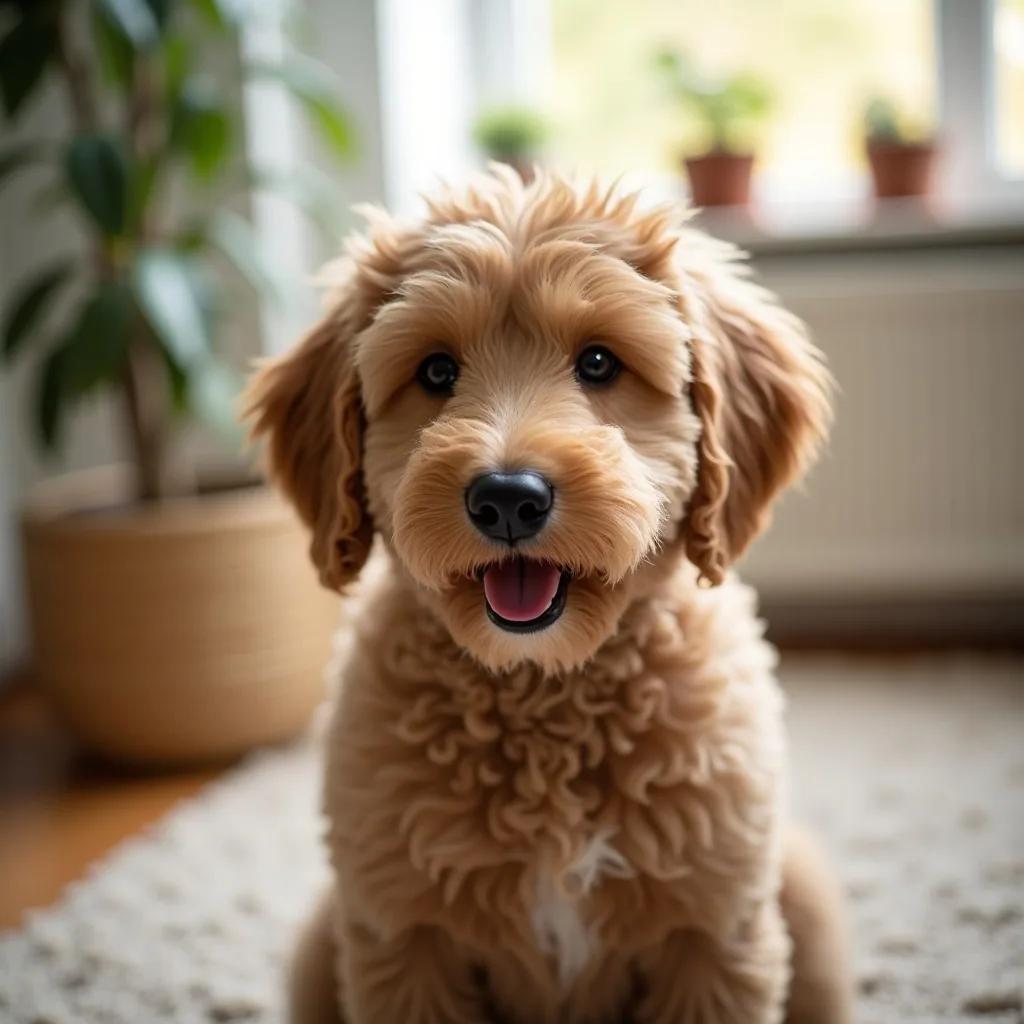
- Fleece coat — soft, wavy and often described as silky, this is many people's idea of the classic Labradoodle look. It is usually low-shedding but still needs regular grooming.
- Wool coat — denser and curlier, more like a Poodle's. It tends to shed the least but is the most prone to matting and needs the most grooming.
- Hair coat — straighter and more Labrador-like. This coat usually sheds more and is less of what most people picture, but it is generally the easiest to maintain.
A single litter can contain puppies with different coat types, and a puppy's coat can change as it matures. Crucially, no coat type makes a Labradoodle hypoallergenic — more on that below.
Generations: F1, F1b and multigen explained
These terms describe the generation of the cross, not the dog's quality:
- F1 — a first cross: one purebred Labrador parent and one purebred Poodle parent. F1 puppies are the most variable in coat and size because they are a direct 50/50 mix.
- F1b — an F1 Labradoodle bred back to a Poodle. This raises the proportion of Poodle (roughly three-quarters), which often, but not always, produces a curlier, lower-shedding coat. F1b is frequently marketed to allergy sufferers, but see the warning below.
- Multigen (F2, F3 and beyond) — later generations, often Labradoodle bred to Labradoodle or to other doodles. Some breeders aim, over generations, for more consistent type, though without a registry and standard this is far from guaranteed.
The honest takeaway: these labels tell you about ancestry, not outcomes. They do not guarantee a particular coat, size, temperament or health, and they should not be used as a price justification on their own.
The hypoallergenic myth
This deserves a clear statement: no dog is truly hypoallergenic, and that includes every type of Labradoodle, F1b or otherwise. Allergic reactions are usually caused by proteins in a dog's dander, saliva and urine rather than by hair, so even a curly, low-shedding wool-coated Labradoodle can trigger symptoms. A lower-shedding coat may spread less hair around the home, which some allergy sufferers find helps a little, but it does not make the dog allergen-free. If anyone in your home has allergies, spend time with the specific dog before committing and take medical advice — do not rely on the word "hypoallergenic" in an advert.
Choosing what is right for you
- Decide what size realistically suits your home and lifestyle, and verify it via the parents.
- Understand that coat type affects grooming workload — wool and fleece coats need the most care.
- Treat generation labels as background information, not guarantees.
- Never choose on the promise of being hypoallergenic.
For what these coats mean in practice day to day, read our grooming and care guide. For the bigger picture on living with the cross, see are Labradoodles good family dogs and health and lifespan.
*This is general guidance. Always meet the parents, ask about size and coat, and judge the individual dog.*
Sources
- The Kennel Club — Poodle varieties, crossbreeds and choosing a dog (thekennelclub.org.uk).
- PDSA — choosing a dog and coat types (pdsa.org.uk).
- Blue Cross — crossbreeds and the hypoallergenic myth (bluecross.org.uk).
- RSPCA — responsible dog breeding and buying (rspca.org.uk).
Common questions
How big do Labradoodles get?
It depends on which size of Poodle was used in the cross. Labradoodles are generally grouped as miniature, medium and standard. Miniatures (from a Miniature Poodle) are the smallest, mediums sit in between, and standards (from a Standard Poodle) are the largest and can be a good-sized dog. Because the Labradoodle is a crossbreed without a fixed standard, adult size can be hard to predict precisely, especially in first-generation litters, so always ask the breeder about the parents' sizes.
What does F1, F1b and multigen mean for Labradoodles?
These describe the generation of the cross. F1 is a first cross: one Labrador parent and one Poodle parent. F1b is an F1 Labradoodle bred back to a Poodle, which raises the proportion of Poodle and often (but not always) produces a curlier, lower-shedding coat. Multigen means later generations, often Labradoodle bred to Labradoodle. These terms only describe ancestry — they do not guarantee coat type, size or health, and none make a dog hypoallergenic.
Are Labradoodles hypoallergenic?
No — this is a common myth. No dog breed is truly hypoallergenic, including the Labradoodle. Allergies are usually triggered by proteins in a dog's dander, saliva and urine rather than by hair itself, so even a low-shedding, curly-coated dog can cause reactions. Some Labradoodles inherit a more Poodle-like, lower-shedding coat that sheds less hair around the home, but this is not guaranteed and does not make them allergen-free. If someone in the home is allergic, spend time with the individual dog before committing.
About the author
Matt Garnett — founder, Giddy Pets
Matt started Giddy Pets to make getting pets the good stuff simpler and fairer. Everything in these guides comes from real life with pets and a lot of trial and error — it's practical guidance, not veterinary advice. If a guide gets something wrong, tell him directly.
Free tools & more guides
Read next
Are Labradoodles Good Family Dogs?
Whether Labradoodles make good family dogs — their friendly, active temperament, why a crossbreed varies so much, and the homes they suit best.
Labradoodle Grooming & Care
How to groom a Labradoodle — brushing the high-maintenance coat, preventing matting, professional clipping, plus nails, ears, teeth and everyday care.
Labradoodle Health & Lifespan
Labradoodle health and lifespan — inherited conditions like hip and elbow dysplasia and PRA, the truth about hybrid vigour, and why health-tested parents matter.
How Much Does a Labradoodle Cost? Buying & Lifetime Costs
What a Labradoodle really costs in the UK — puppy prices, the big lifetime running costs including grooming and insurance, and how to buy responsibly.