


How Much Exercise Does a Cavalier King Charles Spaniel Need?
Cavaliers are happy little spaniels who suit the sofa as much as the footpath, but they still need around an hour of varied exercise a day. Here's how to keep your Cavalier fit, sniffy and at a healthy weight without overdoing it.
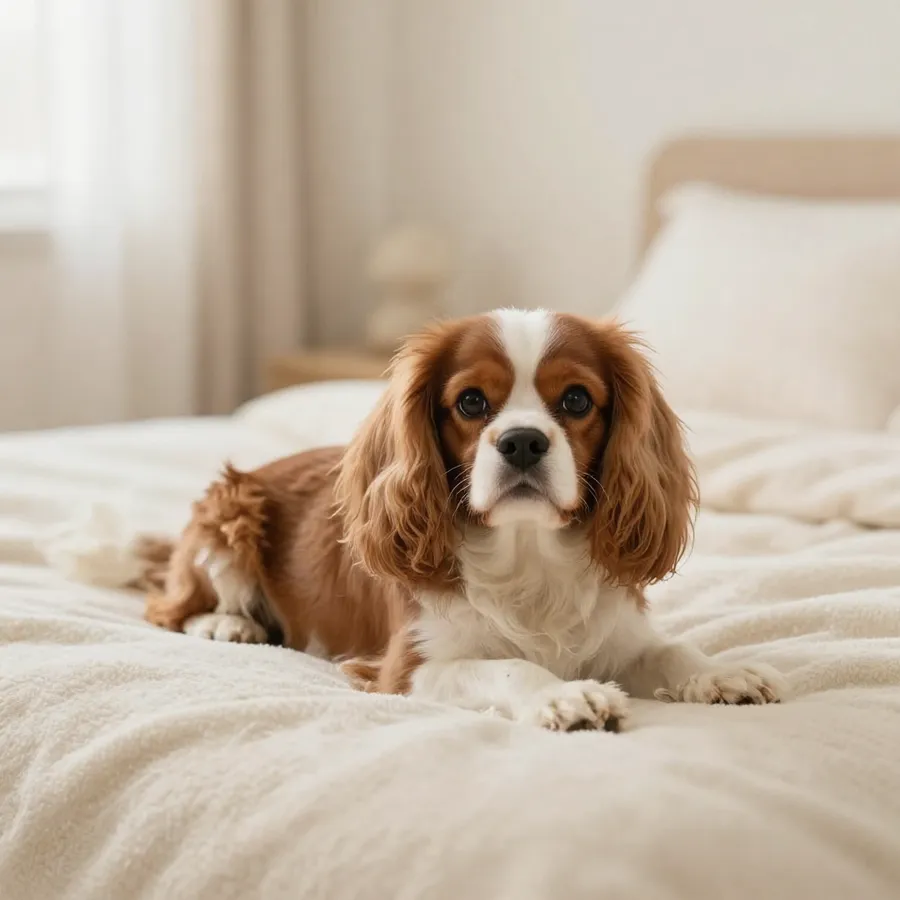
The quick answer
A healthy adult Cavalier needs about an hour of exercise a day, ideally split into two or more walks plus some play and sniffing time. They're more energetic than they look, but they also love their downtime, so a varied mix suits them best.
Cavalier King Charles Spaniels have a lovely knack for fitting into your life. They'll happily curl up on your lap for an afternoon, then bounce to the door the second they spot the lead. That adaptability is exactly why people love them, and it's also why exercise can be easy to get wrong in both directions. Here's a realistic, lived-experience guide to keeping a Cavalier well exercised.
How much exercise does a Cavalier need?
As a rough rule, a healthy adult Cavalier needs about an hour of exercise a day. The PDSA and the breed's own clubs recommend roughly this amount, ideally split into two or more walks rather than one big outing. Cavaliers may be small and fond of comfort, but they're descended from working spaniels, so they're more energetic than their teddy-bear looks suggest.
That hour doesn't all have to be brisk marching. A mix works best: a proper walk, some sniffing time, a bit of gentle play in the garden, and a few minutes of training all count. Cavaliers are bright and people-focused, so scatter-feeding, hide-and-seek and simple trick training tire them out mentally as well as physically.
Walks, sniffing and gentle play
Cavaliers genuinely enjoy pottering and exploring with their nose, so let walks include plenty of unhurried sniffing rather than just covering distance. They love company and tend to wilt if left to exercise alone, so they're at their happiest trotting alongside you.
Because they're a spaniel, many Cavaliers carry a touch of prey drive and can be tempted to follow an interesting scent or dash after a bird or squirrel. Recall isn't always rock solid, so build it patiently from puppyhood and only let your dog off-lead somewhere safe and enclosed once you trust their response. A long training line is a sensible halfway house while you practise.
Flats, gardens and busy lives
One of the breed's great strengths is adaptability. Cavaliers cope well with flat or small-home living provided they get their daily walks and plenty of attention. They don't need acres; they need company, a couple of decent outings, and something to do. If you're out a lot, build in enrichment and shorter, more frequent walks rather than expecting them to settle quietly all day.
Puppies: little and often
Go gently with a Cavalier puppy. Their joints and growth plates are still developing, so a common vet-backed guideline is around five minutes of formal walking per month of age, up to twice a day, until they're fully grown. So a four-month-old pup might manage two twenty-minute walks. Free pottering, sniffing and gentle play in the garden are fine and valuable, but avoid long hikes, forced running and repetitive jumping while they're young.
Don't over-exercise in the heat
Cavaliers are slightly flat-faced, so they can struggle more than many breeds when it's warm. Follow Blue Cross and Kennel Club advice: walk in the cool of early morning or later evening, avoid the midday sun, and skip strenuous exercise when temperatures climb (often above around 20C dogs are at higher risk, especially overweight ones). Always carry water, stick to shade, and remember a tired-out lie-in beats a risky hot walk.
Managing weight
Cavaliers love their food and can gain weight easily, which puts strain on joints and, importantly, the heart. Keep treats to no more than about 10% of daily calories, weigh out meals, and do regular hands-on body checks: you should be able to feel the ribs easily and see a waist. Daily exercise is part of weight control, but you can't out-walk a generous food bowl, so portions matter just as much.
Older dogs and heart conditions
The breed is sadly prone to mitral valve disease, a heart condition that the PDSA and breed clubs flag as their biggest health concern and which becomes more common with age. Cavaliers should be checked yearly for a heart murmur from around 12 months. If your dog is older or has a diagnosed heart condition, keep exercise gentle and steady rather than intense, and let your vet guide how much is appropriate; many dogs with managed heart disease still enjoy regular shorter walks. Watch for coughing, tiring quickly or reluctance to walk, and speak to your vet if you notice any of these.
Get the balance right and a Cavalier is the easiest of companions: happy to walk, happy to sniff, and even happier to flop back on the sofa beside you afterwards.
Sources
- PDSA, Cavalier King Charles Spaniel breed guide: https://www.pdsa.org.uk/pet-help-and-advice/looking-after-your-pet/puppies-dogs/small-dogs/cavalier-king-charles-spaniel
- The Cavalier King Charles Spaniel Club, Cavaliers as Companions: https://www.thecavalierclub.co.uk/pets/2006/sept06/compan.html
- The Kennel Club / Royal Kennel Club, Heatstroke in dogs: https://www.royalkennelclub.com/health-and-dog-care/health-dog-care/health/health-and-care/a-z-of-health-and-care-issues/heatstroke-in-dogs/
- Blue Cross, How to keep dogs cool in the summer heat: https://www.bluecross.org.uk/advice/dog/how-to-keep-dogs-cool-in-the-summer-heat
Common questions
How much exercise does a Cavalier King Charles Spaniel need each day?
A healthy adult Cavalier needs about an hour of exercise a day, ideally split into two or more walks plus some play and sniffing time. They're more energetic than they look, but they also love their downtime, so a varied mix suits them best.
Can a Cavalier King Charles Spaniel live happily in a flat?
Yes. Cavaliers are very adaptable and cope well in flats or small homes as long as they get their daily walks and plenty of company. They thrive on attention more than on space, so company and a couple of good outings matter most.
How much exercise should a Cavalier puppy get?
Keep it little and often. A common vet-backed guideline is around five minutes of formal walking per month of age, up to twice a day, until they're fully grown. Free play and gentle pottering in the garden are fine; avoid long walks, forced running and repeated jumping while their joints develop.
Is it safe to exercise a Cavalier in hot weather?
Be careful. Cavaliers are slightly flat-faced and overheat more easily, so walk in the cool of early morning or evening, avoid the midday sun, carry water and skip strenuous exercise when it's warm (often above around 20C). On very hot days a quiet rest day is safer than a walk.
How should I exercise an older Cavalier or one with a heart condition?
Keep it gentle and steady rather than intense, and let your vet guide how much is right. The breed is prone to mitral valve disease, so dogs should have a yearly heart check from about 12 months. Many dogs with managed heart conditions still enjoy regular short walks; watch for coughing or tiring quickly and tell your vet. This is general information, not veterinary advice.
About the author
Matt Garnett — founder, Giddy Pets
Matt started Giddy Pets to make getting pets the good stuff simpler and fairer. Everything in these guides comes from real life with pets and a lot of trial and error — it's practical guidance, not veterinary advice. If a guide gets something wrong, tell him directly.
Advice & planning
Free tools & more guides
Practical calculators and trusted guides relevant to this product.
Read next

Are Cavalier King Charles Spaniels Good Family Dogs?
What Cavaliers are really like to live with — temperament, children, other pets, exercise, and the one big caveat to plan for.

How Long Do Cavalier King Charles Spaniels Live? Lifespan & Health
How long Cavaliers live, the heart and neurological conditions the breed is prone to, and how to give yours the longest, most comfortable life.
Cavalier King Charles Spaniel Health Problems
Cavaliers are devoted, gentle companions, but the breed carries two serious inherited health problems every owner should understand: mitral valve disease (a heart condition that affects most Cavaliers with age) and syringomyelia. Here's an honest, welfare-focused look at the conditions, the UK healt
Cavalier King Charles Spaniel Grooming Guide
A practical UK grooming guide to the Cavalier King Charles Spaniel's silky, feathered coat: how often to brush, why their ears need such careful attention, what to trim and what to leave natural, plus nails, teeth and starting young.