
Dachshund Types & Size: Standard, Miniature & Coat Types
Standard vs Miniature, the three coat types and their grooming, and how big Dachshunds get and when they finish growing. A complete guide to the variations.
The quick answer
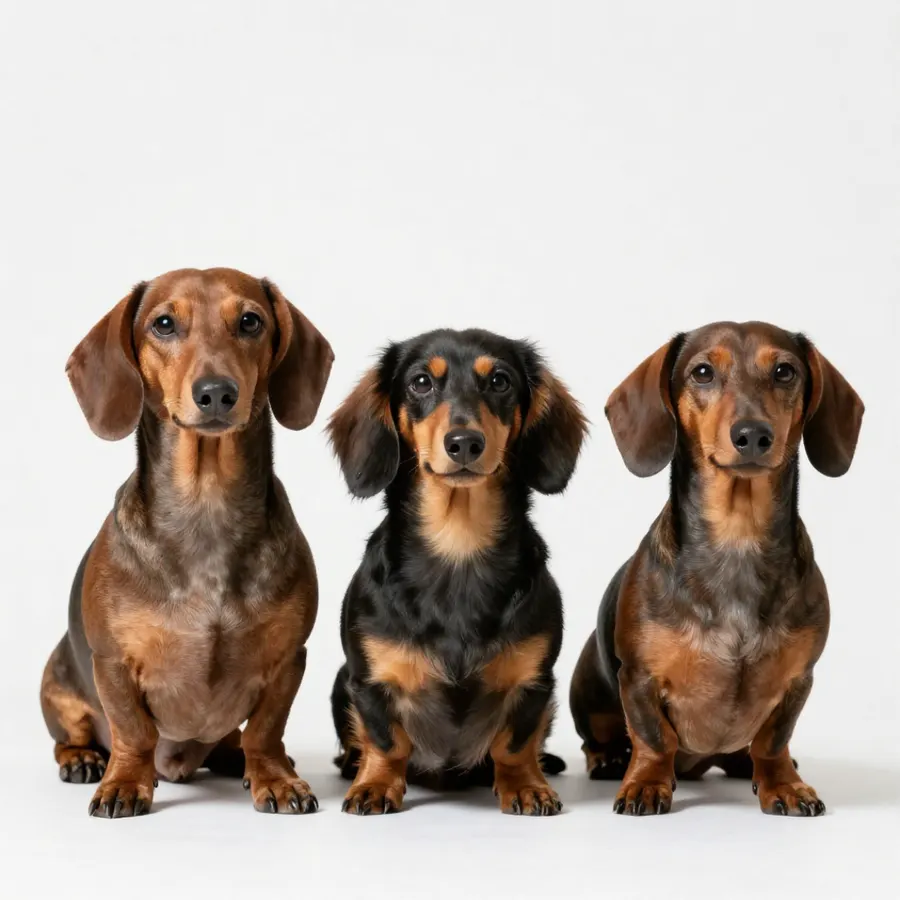
There are three coat types: smooth (short-haired), long-haired and wire-haired. Smooth coats are sleek and need very little grooming. Long-haired coats are silky with feathering and need regular brushing to prevent matting, especially behind the ears and on the legs. Wire-haired coats are coarse with a beard and eyebrows and usually need occasional hand-stripping or trimming.
The Dachshund is one of the most varied breeds you can choose, with two sizes and three coat types giving six distinct combinations, each with its own look and care needs. If you are choosing a Dachshund or simply curious about your own, this guide explains the sizes, the coat types and their grooming, and how big Dachshunds get and when they finish growing.
Standard vs Miniature
In the UK, the Dachshund comes in two recognised sizes:
- Standard Dachshund. The original size, bred to hunt larger quarry such as badgers, which is what the name means in German. Standards typically weigh around 9 to 12kg and stand roughly 20 to 22cm at the shoulder.
- Miniature Dachshund. A smaller version, bred down to work on smaller prey such as rabbits. Miniatures usually weigh up to about 5kg and stand a little lower.
Both share the same characteristic long body, deep chest and short legs, and both have very similar temperaments and care needs. The choice between them is largely about the size of dog you want to live with. It is worth knowing that there is no separate recognised category for the very tiny dogs sometimes advertised as teacup Dachshunds. That is a marketing term, not a true breed size, and buyers should be cautious of breeders selling on the basis of extreme smallness.
The three coat types
Whichever size you choose, Dachshunds come in three coat types, each with a slightly different look, character and grooming requirement.
Smooth (short-haired)
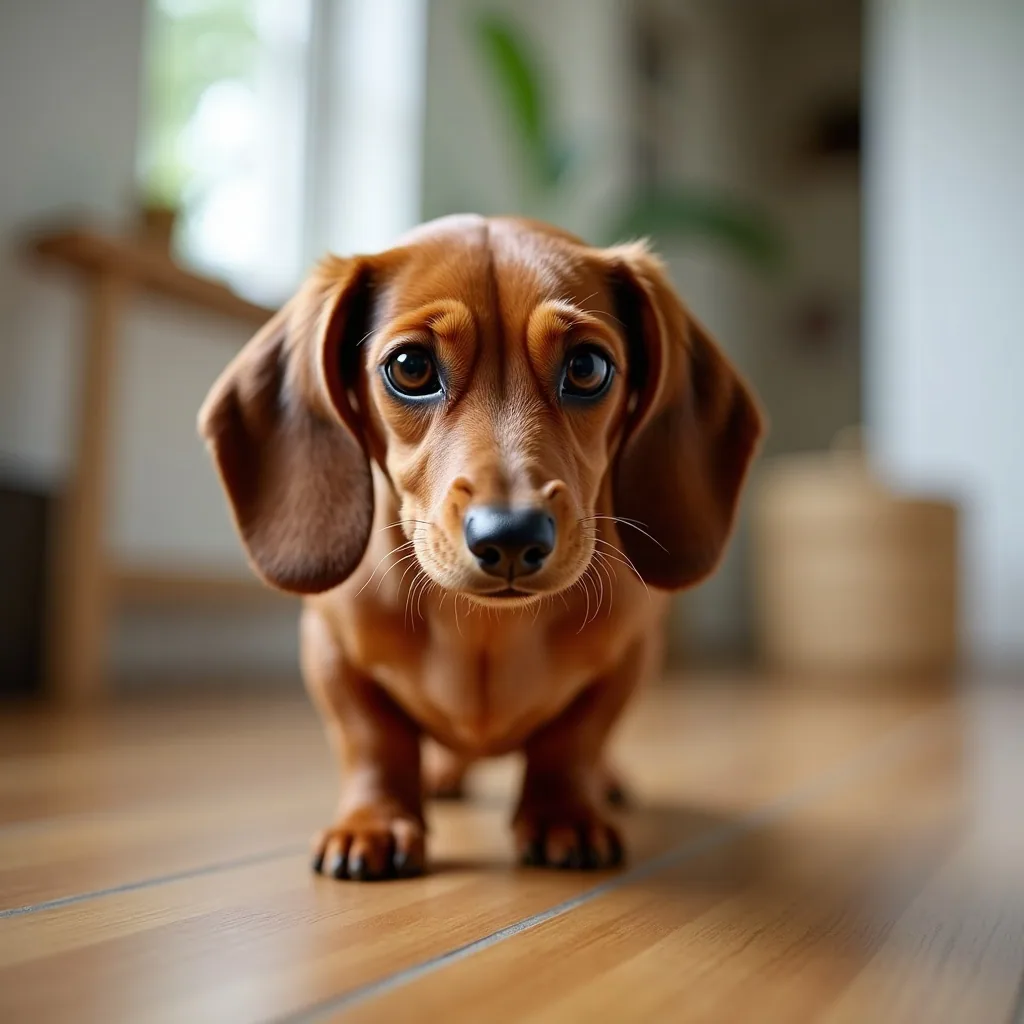
The classic Dachshund coat: short, sleek, glossy and close-lying. Grooming is minimal — a quick wipe or brush keeps it looking good, and they shed modestly. Being short-coated, they feel the cold more than the other types, so a warm dog coat is genuinely useful for walks in cold or wet British weather.
Long-haired
A softer, silkier coat with attractive feathering on the ears, legs, chest and tail. Long-haired Dachshunds often have a slightly gentler reputation, though temperament varies by individual. The trade-off is more grooming, with regular brushing several times a week needed to prevent matting, particularly behind the ears and on the feathering, plus extra attention after muddy walks.
Wire-haired
A coarse, dense outer coat with a softer undercoat, plus a distinctive beard and bushy eyebrows that give wire-haired Dachshunds a characterful look. They often have a bold, terrier-like personality, reflecting the terrier breeds used to create the coat. Grooming sits in between: regular brushing plus occasional hand-stripping or trimming to keep the wiry coat in good order. Many owners have this done professionally a few times a year.
General grooming and care
Whatever the coat, all Dachshunds benefit from routine basics: regular nail trims, ear checks, and a consistent dental-care routine, as small breeds are prone to dental disease. Brushing the teeth regularly makes a real difference, as our guide on how to brush a dog's teeth explains. You will find brushes, dental kits and grooming basics in our health and grooming range.
How big do Dachshunds get, and when are they fully grown?
As above, expect a standard to settle at around 9 to 12kg and a miniature up to around 5kg, though individuals vary. In terms of growth, most Dachshunds reach their adult height by around 8 to 12 months, but they often continue to fill out and develop in body and muscle until 12 to 18 months of age. Because their bodies are long and their bones are still developing, it is especially important not to over-exercise a Dachshund puppy or encourage jumping while they are growing, to protect the back and joints.
Keeping any Dachshund at a healthy weight
One thing applies to every size and coat type: weight control is critical. Because the breed is so prone to back disease, even a little extra weight adds meaningful strain to the spine. A lean Dachshund is a healthier, more comfortable one, and a pet calorie calculator helps you get portions right. Our guides to how long Dachshunds live and back problems and IVDD explain just how much weight matters for this particular breed.
Which Dachshund is right for you?
There is no single best combination. Smooth coats are the lowest-maintenance, long coats are beautiful but need regular brushing, and wire coats have bags of character and need occasional stripping. Standards are a more substantial little dog, while miniatures suit those wanting something smaller. Whichever you choose, the underlying breed, with all its boldness, charm and its need for careful back protection, is the same. Pick the size and coat that fit your lifestyle, and commit to the care the breed needs.
*This is general guidance. A breed-experienced groomer or your breeder can advise on grooming your specific dog.*
Sources
- UK Kennel Club — Dachshund breed standard, sizes and coat varieties (thekennelclub.org.uk).
- Dachshund Breed Council UK — varieties, sizes and breed care (dachshundbreedcouncil.org.uk).
- PDSA — Dachshund care and grooming (pdsa.org.uk).
- Blue Cross — choosing and caring for a dog (bluecross.org.uk).
Common questions
What are the coat types of Dachshund?
There are three coat types: smooth (short-haired), long-haired and wire-haired. Smooth coats are sleek and need very little grooming. Long-haired coats are silky with feathering and need regular brushing to prevent matting, especially behind the ears and on the legs. Wire-haired coats are coarse with a beard and eyebrows and usually need occasional hand-stripping or trimming. All three come in both standard and miniature sizes, so there are six combinations in total within the breed.
How big do Dachshunds get?
There are two recognised sizes in the UK. Standard Dachshunds typically weigh around 9 to 12kg, while Miniature Dachshunds usually weigh up to about 5kg. Both stand low to the ground on short legs, with the standard reaching roughly 20 to 22cm at the shoulder and the miniature a little less. Most Dachshunds reach their adult height by around 8 to 12 months, though they may continue to fill out and mature in body until 12 to 18 months of age.
How long do Dachshunds live?
Dachshunds are a long-lived breed, typically reaching around 12 to 16 years. Their small size works in their favour, as smaller dogs generally live longer than large ones. Where an individual dog lands in that range depends a great deal on staying lean, protecting the back from injury, and good dental and routine veterinary care. Choosing a puppy from health-tested parents and keeping weight under control are the two single biggest things you can do to help yours reach the upper end.
About the author
Matt Garnett — founder, Giddy Pets
Matt started Giddy Pets to make getting pets the good stuff simpler and fairer. Everything in these guides comes from real life with pets and a lot of trial and error — it's practical guidance, not veterinary advice. If a guide gets something wrong, tell him directly.
Free tools & more guides
Read next
How Long Do Dachshunds Live? Lifespan & Health
Dachshunds are one of the longer-lived breeds at around 12 to 16 years. The conditions to watch for, and how to help yours live a long, comfortable life.
Dachshund Back Problems & IVDD: Prevention and Care
IVDD is the breed-defining health risk. What it is, the emergency warning signs, and the practical steps that genuinely lower the risk for your Dachshund.
Are Dachshunds Good Family Dogs?
Bold, loyal and full of personality — but with a delicate back and a feisty streak. An honest look at whether a Dachshund suits family life.
How to Train a Dachshund: A Practical Guide
Dachshunds are clever but famously independent. How to house-train, build recall against a strong prey drive, and train with the breed's delicate back in mind.