
Burmese Cat Personality & Behaviour
A close look at the Burmese cat personality — affectionate, playful, intelligent and intensely social — plus the behaviour quirks and needs that come with it.
The quick answer
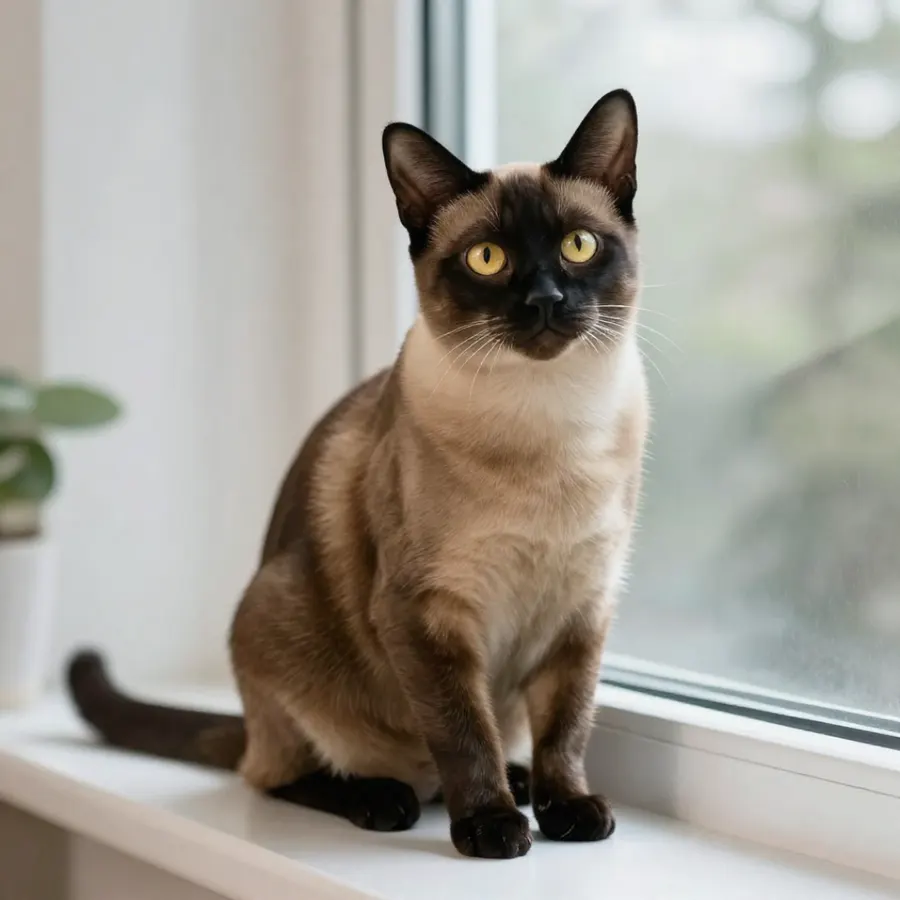
Burmese are warm, extrovert and busy little cats. They are intensely people-focused, often demanding attention, lap time and conversation in a soft, persistent voice. They stay playful and kitten-like well into adulthood, enjoy interactive games and puzzle feeders, and are clever enough to learn tricks and open doors.
If you ask Burmese owners to sum up their cats in a word, you will hear things like "velcro", "clown" and "shadow". The Burmese is one of the most characterful of all pedigree cats: warm, busy, clever and utterly devoted to its people. Understanding that personality — and the behaviour that flows from it — is the key to a happy life together. Here is an honest look at what makes the Burmese tick.
An intensely social cat
The single most important thing to know about the Burmese is how social and people-oriented the breed is. These are not cats that keep themselves to themselves. They form deep attachments to their humans and want to be involved in everything — supervising the cooking, helping with the laptop, sitting on the newspaper you are trying to read. Many enjoy being picked up and carried, draped over a shoulder or tucked under an arm, which is unusual among cats. This closeness is the breed's greatest charm, but it also means a Burmese genuinely needs company and attention to be content.
Playful for life
Burmese famously stay playful and kitten-like well into adulthood, and even into their senior years. They love interactive toys, games of fetch, chasing and pouncing, and they will happily invent their own games if you do not provide enough. That energy needs an outlet: regular play sessions, a rotation of toys, and puzzle feeders that make them work for a reward all help. A bored Burmese is more likely to find its own entertainment in ways you would rather it did not — so think of play and enrichment as a daily need, not an optional extra. Browse our cat toys and puzzle and enrichment range for ideas.
Clever and curious
Burmese are intelligent and inquisitive. Many learn to open cupboards and doors, work out where the treats are kept, and pick up tricks or even harness-walking with patience and reward-based training. That cleverness is a joy, but it also means they need mental stimulation as well as physical play. Hiding food around the house, teaching simple cues, and giving them safe things to investigate all channel that curiosity in positive directions. An under-stimulated clever cat is a recipe for mischief.
Athletic and confident
Despite their compact, rounded looks, Burmese are surprisingly muscular and heavy — often described as feeling like a brick wrapped in silk. They are agile climbers and jumpers who appreciate height and vantage points, so cat trees, shelves and perches suit them well. Browse our cat trees and scratchers for sturdy options. They also tend to be confident and outgoing with visitors and new situations, which makes them charming but also means they can be trusting of strangers — one reason many owners keep them as indoor or supervised-access cats.
The voice
Burmese are talkative, but in a gentler register than their Siamese cousins. They have a soft, sweet, fairly persistent voice that they use to greet, request and converse. Most owners find it endearing rather than annoying, and it is part of how communicative and people-focused the breed is. A marked change in how vocal your cat is — much more or much less than usual — can occasionally signal a problem, so it is worth a vet check, but everyday chattiness is simply normal Burmese behaviour.
Behaviour challenges to expect
The Burmese personality is wonderful, but it comes with responsibilities:
- Separation-related stress. Because they bond so closely and dislike being alone, Burmese can struggle when left for long periods. Boredom and loneliness may show as over-grooming, destructiveness or excessive vocalising.
- Demanding of attention. Their sociability can tip into clinginess. Setting up enrichment and, often, a feline companion helps share the load.
- Boredom-driven mischief. A clever, active cat with too little to do will make its own fun. Prevention — through play, puzzles and routine — beats correction.
Meeting their needs
The good news is that a Burmese's needs are straightforward once you understand them: company, play, mental stimulation and a stable routine. Keep the coat in good order with a quick weekly brush, feed measured meals to protect against the breed's tendency to gain weight, and give them plenty of interaction. Many households find that keeping two cats together meets the social need beautifully, especially if people are out during the day. For feeding guidance, our cat portion control and obesity guide and the pet calorie calculator help you get portions right.
The honest verdict
The Burmese is a true companion cat: affectionate, playful, clever and endlessly engaged with its people. That personality is hugely rewarding, but it asks for real time, attention and stimulation in return. Give a Burmese the company and enrichment it craves and you will have one of the most loving, entertaining cats you could wish for. For more on whether the breed suits your home, see our guide on whether Burmese make good pets.
*This is general guidance. Every cat is an individual, and any sudden change in behaviour is worth discussing with your vet.*
Sources
Common questions
What is the Burmese cat personality like?
Burmese are warm, extrovert and busy little cats. They are intensely people-focused, often demanding attention, lap time and conversation in a soft, persistent voice. They stay playful and kitten-like well into adulthood, enjoy interactive games and puzzle feeders, and are clever enough to learn tricks and open doors. Their muscular, athletic build matches an energetic, curious nature. They are generally confident and sociable with visitors, children and other animals, though their need for company means they can become bored or stressed if left alone too much.
Why are Burmese cats so vocal and affectionate?
Burmese are an unusually people-focused breed, and that closeness shows in how much they want to interact. They tend to have a soft, sweet, fairly persistent voice and will use it to greet you, ask for attention or simply join in. They love laps, shoulders and being part of whatever you are doing. It is one of the most endearing things about the breed — they genuinely seem to want to be with you. A sudden change in how vocal or clingy your cat is can be worth a vet check, but everyday chattiness and cuddliness are simply normal Burmese character.
Are Burmese cats high maintenance?
Their coat is low maintenance — a short, fine, glossy coat that needs only a weekly brush and sheds little. Where they are demanding is company and stimulation: Burmese are highly social and dislike being alone, so they need attention, play and enrichment, and often a feline companion if the house is empty during the day. They are also clever and active, so a bored Burmese can get into mischief. In short, low grooming but high emotional and mental input.
About the author
Matt Garnett — founder, Giddy Pets
Matt started Giddy Pets to make getting pets the good stuff simpler and fairer. Everything in these guides comes from real life with pets and a lot of trial and error — it's practical guidance, not veterinary advice. If a guide gets something wrong, tell him directly.
Free tools & more guides
Read next
Are Burmese Cats Good Pets? Temperament & Home Fit
What Burmese cats are really like to live with — their affectionate, people-oriented, dog-like temperament, their need for company, and the homes they suit best.
Burmese Cat Health Problems: An Honest Guide
An honest, factual guide to Burmese cat health problems — hypokalaemia, diabetes, the Burmese head defect, flat-chested kitten syndrome and dental disease.

How Long Do Burmese Cats Live? Lifespan & Health
How long Burmese cats live, the inherited conditions the breed can carry, and the practical things that help yours reach a healthy old age.
How Much Does a Burmese Cat Cost? Buying & Lifetime Costs
What a Burmese cat really costs — the purchase price of a health-tested kitten, the lifetime running costs, and why insurance matters for this breed.