
Bengal Cat Personality & Behaviour (Energy & Enrichment)
What Bengals are really like to live with — their high energy, intelligence and love of climbing and water, plus practical enrichment to keep this demanding breed happy.
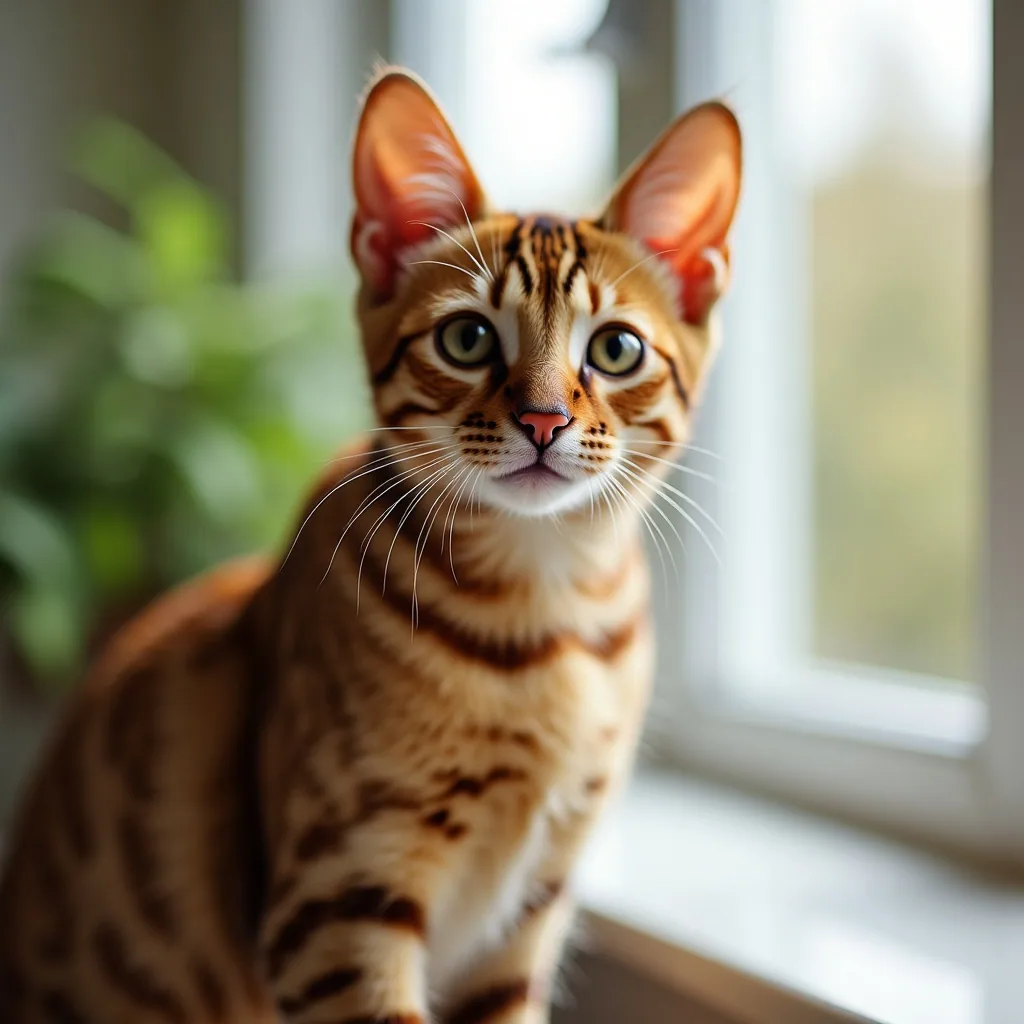
The quick answer
Bengals descend from crosses between domestic cats and the wild Asian leopard cat, and that ancestry shows in their athletic, energetic and inquisitive nature. They are strong jumpers and climbers, love to be up high, and many enjoy water, fetch and puzzle games.
If you want a cat that does nothing but sleep on the sofa, a Bengal is not it. This is one of the most active, athletic and intelligent domestic breeds, with a personality that owners often describe as part cat, part dog and part small whirlwind. Understanding how a Bengal thinks and behaves — and how to channel all that energy — is the key to living happily with one. Here is an honest look at Bengal personality and behaviour.
A high-energy, athletic breed
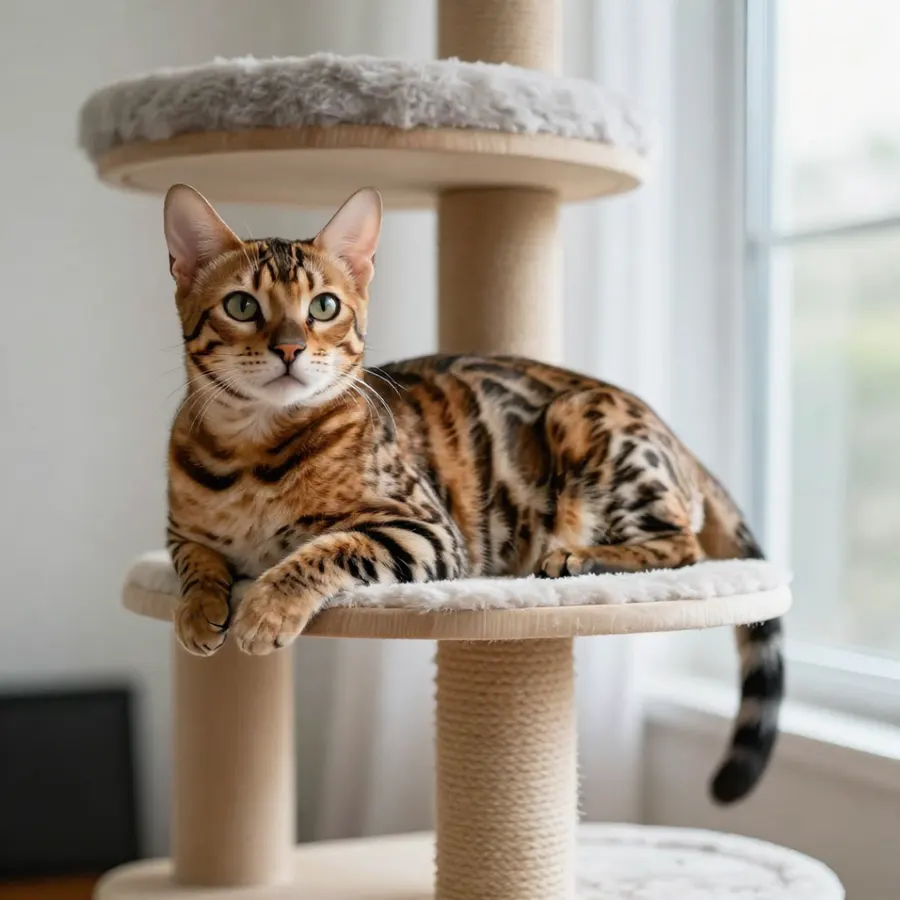
Bengals are bundles of energy. Descended from the wild Asian leopard cat, they are powerful jumpers and climbers who love to be up high, survey their territory and patrol the house. A Bengal will think nothing of leaping onto the top of a wardrobe or bookcase, and they are fast, agile and tireless in play. This athleticism is one of the breed's joys, but it means they need somewhere appropriate to express it — ideally plenty of vertical space in the form of tall cat trees, shelves and perches. Browse our cat trees and scratchers for structures sturdy enough to take an enthusiastic climber.
Intelligent and curious
Bengals are genuinely clever, and a bored Bengal will find its own entertainment — usually the kind you would rather it did not. Many learn to open cupboards, turn on taps, fetch toys and even respond to their name or simple tricks. This intelligence is hugely rewarding to engage with, but it raises the stakes: a Bengal needs mental stimulation as much as physical exercise. Puzzle feeders, foraging games and rotating toys keep that busy brain occupied. Our puzzle and enrichment range and interactive toys are made for exactly this kind of clever, curious cat, and a slow feeder turns mealtimes into a small challenge.
The famous love of water
Unlike most cats, many Bengals are fascinated by water. They may dabble in their water bowl, paw at a running tap, join you at the bath or even paddle in shallow water. It is thought to trace back to the breed's wild ancestry, and while not every Bengal shares the trait, plenty do. A pet-friendly water fountain can double as enrichment for a water-loving Bengal while also encouraging healthy drinking.
Vocal and communicative
Bengals are often talkative and not shy about telling you what they want, whether that is food, play or attention. Their voice can be loud and insistent, and some owners find them among the more vocal breeds. This chattiness is part of their engaged, people-focused character, but a sudden change in how vocal your cat is — or any sign of distress — is always worth a vet check.
When energy turns to mischief
The behaviour problems people report with Bengals are almost always rooted in boredom and under-stimulation. A Bengal with nothing to do may become destructive, over-vocal, attention-seeking or prone to inappropriate scratching. The answer is rarely discipline and almost always more enrichment: longer and more frequent interactive play sessions, more climbing options, puzzle feeders, and ideally company, whether human or a compatible feline friend. Meeting a Bengal's needs head-on prevents most of the behaviour issues attributed to the breed.
Building a good enrichment routine
- Daily interactive play — wand toys and chase games that let your Bengal stalk, pounce and 'hunt'. Several short sessions beat one long one.
- Vertical territory — tall cat trees, shelves and perches so they can climb and survey from height.
- Puzzle feeding — slow feeders and puzzle toys to work the brain at mealtimes.
- Rotating toys — swap toys in and out to keep novelty high.
- Company — Bengals dislike being left alone for long; a second active cat can be a great outlet.
- Scratching outlets — sturdy posts to protect furniture and let them stretch and mark.
Sociable but on their terms
Bengals tend to be confident and sociable, bonding strongly with their families and often enjoying the company of other pets when introductions are handled calmly. They can be wonderful with older children who join in their games. But they are an involved, demanding companion rather than a low-key one — they want interaction, and they thrive on it.
The bottom line
A Bengal's personality is its greatest gift and its biggest challenge: brilliant, athletic, curious and engaged, but only happy when that energy has somewhere to go. Give a Bengal climbing, play, puzzles and company, and you will have a captivating, characterful companion. Skimp on enrichment, and you will have a frustrated cat and a stressed household. For more on the breed, see our guides on whether Bengals make good pets and lifespan and health.
*This is general guidance. If your cat shows sudden or worrying behaviour changes, consult your vet, who can rule out pain or illness and refer you to a qualified behaviourist if needed.*
Sources
- International Cat Care — cat behaviour, play and environmental needs (icatcare.org).
- Governing Council of the Cat Fancy (GCCF) — Bengal breed information (gccfcats.org).
- Blue Cross — cat behaviour and enrichment (bluecross.org.uk).
- PDSA — keeping cats happy and stimulated (pdsa.org.uk).
Common questions
Why are Bengal cats so active?
Bengals descend from crosses between domestic cats and the wild Asian leopard cat, and that ancestry shows in their athletic, energetic and inquisitive nature. They are strong jumpers and climbers, love to be up high, and many enjoy water, fetch and puzzle games. This is simply normal Bengal character rather than a problem, but it means they need a real outlet for their energy. Plenty of play, tall climbing structures and enrichment keep a Bengal happy and out of mischief.
Are Bengal cats high maintenance?
In terms of energy and stimulation, yes. Bengals are one of the most demanding domestic breeds for play, climbing and mental enrichment, and a bored Bengal can become destructive or vocal. Grooming, by contrast, is easy: their short, sleek coat needs only occasional brushing. The maintenance is really about time and engagement — daily interactive play, puzzle feeders, tall climbing space and company — rather than coat care. They suit active owners who enjoy an involved, interactive cat.
Do Bengal cats really like water?
Many do, though not every individual. Unlike most cats, plenty of Bengals are fascinated by water — dabbling in the water bowl, pawing at a running tap, joining you at the bath or paddling in shallow water. It is thought to trace back to the breed's wild ancestry. A pet-friendly water fountain can double as enrichment for a water-loving Bengal while encouraging healthy drinking. Always supervise around any deeper water for safety.
About the author
Matt Garnett — founder, Giddy Pets
Matt started Giddy Pets to make getting pets the good stuff simpler and fairer. Everything in these guides comes from real life with pets and a lot of trial and error — it's practical guidance, not veterinary advice. If a guide gets something wrong, tell him directly.
Free tools & more guides
Read next
Are Bengal Cats Good Pets? Temperament & Home Fit
Whether Bengals make good pets, the homes their high-energy, intelligent temperament suits, the licensing rules for early-generation hybrids, and how to decide if one is right for you.

How Long Do Bengal Cats Live? Lifespan & Health
How long Bengals live, the inherited heart, eye and other conditions the breed can carry, and the practical steps that help yours reach a healthy old age.
Bengal Cat Health Problems: An Honest Guide
An honest look at the health conditions Bengals can carry — HCM, progressive retinal atrophy (PRA-b), pyruvate kinase deficiency (PK-def) and patellar luxation — and the DNA tests and screening that reduce the risks.
How Much Does a Bengal Cat Cost? Buying & Lifetime Costs
What a Bengal really costs — the purchase price of a health-tested kitten, the lifetime running costs, the licensing point on early-generation hybrids, and why insurance matters.