
Are Dachshunds Good Family Dogs?
Bold, loyal and full of personality — but with a delicate back and a feisty streak. An honest look at whether a Dachshund suits family life.
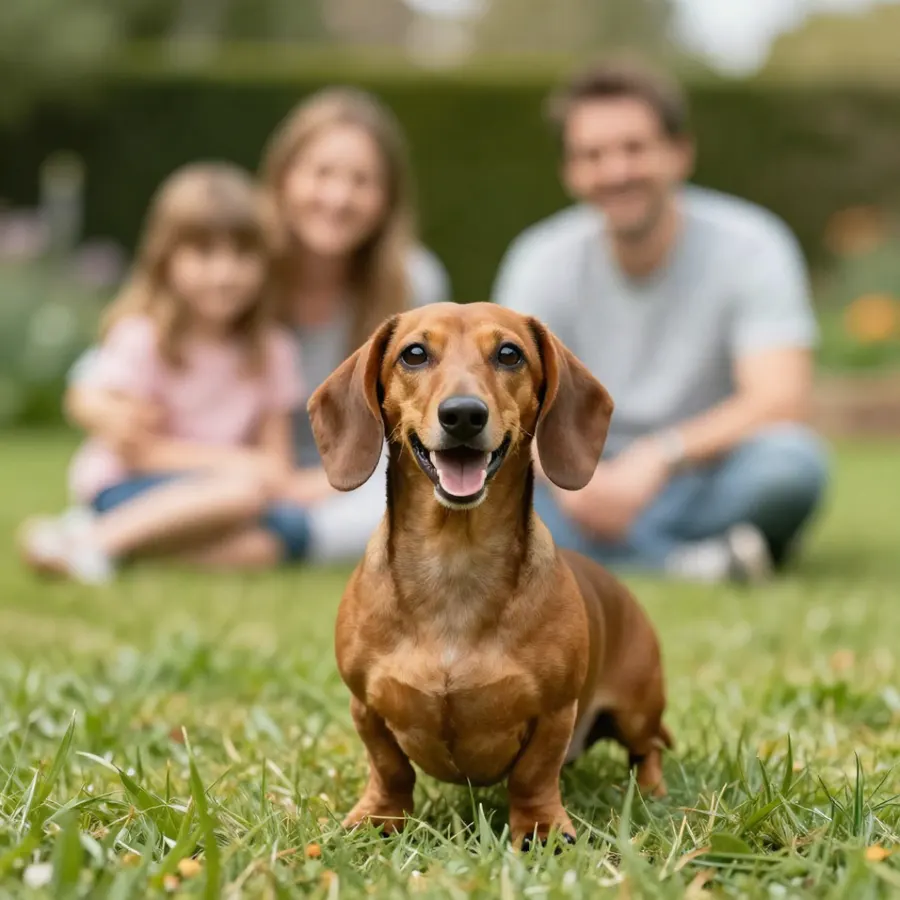
The quick answer
Yes, with the right household. Dachshunds are bold, loyal, affectionate and full of personality, and many are devoted family companions. The main cautions are their delicate backs, which means rough handling or jumping must be avoided, and that they can be snappy if frightened or hurt.
Few small dogs have as much personality packed into them as the Dachshund. Bold, loyal and endlessly characterful, they form devoted bonds and bring a great deal of fun and affection to a household. But they are not the right dog for every family, and being honest about that matters. Their delicate backs and their feisty, can-be-snappy-if-mishandled streak mean they suit some homes far better than others. Here is a clear-eyed look at whether a Dachshund makes a good family dog.
Are Dachshunds good family dogs?
They can be excellent family companions in the right household. Dachshunds are affectionate, courageous and intensely loyal, often bonding very closely with their people. They are entertaining, surprisingly big-hearted for their size, and many thrive at the centre of family life. The important qualifications are around their physical fragility and their temperament, both of which mean they suit families with older, sensible children rather than homes with toddlers, and families willing to manage the breed thoughtfully.
Temperament: a big personality in a small dog
Dachshunds were bred to hunt, and that heritage shows. They tend to be bold, confident and tenacious, with a stubborn streak and a strong sense of their own importance. Many are alert little watchdogs who will announce every visitor in a deep, carrying bark. They can also be wary of strangers and stand their ground rather than back down, which is why early socialisation and consistent, reward-based training matter so much, as covered in our Dachshund training guide. A well-socialised Dachshund is a confident, sociable companion. A poorly socialised one can be nervous or reactive.
Dachshunds and children
This is where honesty really counts. Dachshunds can be lovely with children, but two cautions apply:
- Their backs are fragile. A Dachshund must never be picked up awkwardly, dropped, or allowed to leap from a child's arms, as this risks serious spinal injury. Young children cannot reliably handle a dog this carefully.
- They can be snappy if frightened or hurt. Like many small dogs, a Dachshund that feels cornered, grabbed or in pain may growl or nip. This is normal dog communication, but it means rough or unpredictable handling is a poor mix.
For these reasons Dachshunds generally suit families with older children who can be taught to be gentle, to leave a resting or eating dog alone, and never to pick the dog up without being shown how. Always supervise interactions between any dog and young children, for the dog's safety as much as the child's. The principles in the puppy socialisation checklist help raise a child-confident dog.
Dachshunds and other pets
With other dogs, Dachshunds are often sociable, especially when well socialised, though some can be bossy or territorial and a few do not appreciate boisterous larger dogs jumping around them, partly because of the injury risk. With cats, much depends on the individual and on early introductions, but bear in mind the breed's hunting background and prey drive, particularly around smaller pets such as rabbits, hamsters or birds, which are best kept well separated. Careful, gradual introductions give the best chance of harmony.
Barking and noise
Prospective owners should know that Dachshunds are vocal. Their hunting heritage gave them a loud, persistent bark used to signal handlers, and many are quick to sound off at noises, visitors and the post. With training and enough stimulation this is manageable, but a Dachshund is not the dog for a household that needs near silence or has very close neighbours and no tolerance for barking.
Exercise, space and lifestyle fit
Dachshunds adapt well to flats or houses and do not need a huge amount of space, but they do need around an hour of activity a day plus mental stimulation, and they need a home set up to protect their backs, with ramps rather than constant jumping. They suit families who are around a fair amount, as they form strong bonds and can dislike being left for long. They are not low-effort dogs despite their size, but they are rewarding for owners who enjoy a characterful, interactive companion.
Who does a Dachshund suit?
A Dachshund is a good family dog for a household that:
- Has older, sensible children or no very young children.
- Will commit to gentle handling and back protection as a way of life.
- Enjoys an interactive, characterful dog and will put in the training and socialisation.
- Can tolerate some barking and is around enough to keep the dog company.
Get that match right, and a Dachshund repays it with enormous loyalty, humour and affection. Get it wrong, and the breed's fragility and feistiness can cause real difficulty, so it is worth thinking it through honestly before you commit.
*This is general guidance. Every dog is an individual, and temperament is shaped by breeding, socialisation and training.*
Sources
- UK Kennel Club — Dachshund breed information and temperament (thekennelclub.org.uk).
- PDSA — Dachshund care and behaviour (pdsa.org.uk).
- Blue Cross — dogs and children, safe interactions (bluecross.org.uk).
- Dachshund Breed Council UK — living with the breed and protecting the back (dachshundbreedcouncil.org.uk).
Common questions
Are Dachshunds good family dogs?
Yes, with the right household. Dachshunds are bold, loyal, affectionate and full of personality, and many are devoted family companions. The main cautions are their delicate backs, which means rough handling or jumping must be avoided, and that they can be snappy if frightened or hurt. They suit families with older, sensible children who can be taught to handle them gently and never to pick them up awkwardly. Supervision around toddlers is essential for the dog's safety as much as the child's.
Do Dachshunds bark a lot?
They can. Dachshunds were bred to bark to signal their handler while underground, and they have a surprisingly deep, loud voice for their size. Many are alert and quick to announce visitors, post or unfamiliar sounds. With early training, plenty of mental stimulation and not rewarding the barking with attention, it can be kept manageable. Persistent barking often points to boredom, frustration or being left alone too long rather than the dog simply being naughty.
Are Dachshunds hard to train?
Dachshunds are clever but independent, which can make training feel like hard work. They were bred to hunt alone underground, so they think for themselves and are not naturally eager to please in the way some breeds are. House-training in particular can be slow and needs real consistency. Reward-based methods, short upbeat sessions and patience get the best results. They respond far better to food, praise and play than to any kind of harshness, which simply makes them shut down or dig their heels in.
About the author
Matt Garnett — founder, Giddy Pets
Matt started Giddy Pets to make getting pets the good stuff simpler and fairer. Everything in these guides comes from real life with pets and a lot of trial and error — it's practical guidance, not veterinary advice. If a guide gets something wrong, tell him directly.
Free tools & more guides
Read next
How to Train a Dachshund: A Practical Guide
Dachshunds are clever but famously independent. How to house-train, build recall against a strong prey drive, and train with the breed's delicate back in mind.
Dachshund Back Problems & IVDD: Prevention and Care
IVDD is the breed-defining health risk. What it is, the emergency warning signs, and the practical steps that genuinely lower the risk for your Dachshund.
How Long Do Dachshunds Live? Lifespan & Health
Dachshunds are one of the longer-lived breeds at around 12 to 16 years. The conditions to watch for, and how to help yours live a long, comfortable life.
Dachshund Types & Size: Standard, Miniature & Coat Types
Standard vs Miniature, the three coat types and their grooming, and how big Dachshunds get and when they finish growing. A complete guide to the variations.