





What Is Rally Obedience? A UK Beginner's Guide

The quick answer
Rally obedience (or 'rally-o') is a dog sport where you and your dog work through a numbered course of signs, each asking for a small exercise like a turn, halt or spiral. Unlike formal obedience, you can talk to, praise and encourage your dog the whole way round. In the UK it runs through the Royal Kennel Club across six levels, and it suits almost any dog.
Mentioned in this guide

Long Reflective Dog Training Lead
A longer reflective training lead that gives your dog room to roam while you keep an easy hold.
From£12.99
Rally obedience is one of the friendliest ways into dog sport in the UK. You and your dog walk a course of numbered signs, each one asking for a small task, and the whole point is teamwork rather than robotic precision. It's cheap to try, kind on nervous dogs, and genuinely good fun.
If you've ever watched formal obedience and thought it looked a bit stiff, rally is the relaxed cousin. Here's exactly what it is, how it works in the UK, and how to get started without spending a penny you don't need to.
What is rally obedience?
Rally is best described as an obedience obstacle course. The course is laid out with numbered signs (also called stations), and you follow them in order from start to finish. Each sign tells you what to do at that spot: a left turn, a halt and sit, a 270-degree spiral, a figure of eight around two cones, and so on. You read the sign, perform the exercise with your dog, and move on to the next number.
The Royal Kennel Club, which governs the sport in the UK, calls it a canine activity "derived from the heelwork elements of competitive obedience" where you and your dog work through a course as a team. In the USA it's often shortened to "rally-o". A typical Level 1 course has up to around a dozen signs; higher levels have more, and the exercises get harder.
The thing that makes rally different from the moment you start is simple: you're allowed to talk to your dog. You can praise, encourage, use hand signals and give repeated cues the whole way round. Nobody's expecting silence and stillness. That single rule changes the whole atmosphere.
How rally differs from traditional obedience
Both sports grew from the same roots, so the exercises look similar on paper. The experience is very different, though. Traditional competitive obedience is precise and formal: set exercises, minimal talking, and marks lost for the smallest wobble. Rally keeps the skills but loosens the rules.
| Rally obedience | Traditional obedience | |
|---|---|---|
| Format | Follow a numbered course of signs at your own pace | Set exercises performed on the judge's command |
| Talking to your dog | Encouraged throughout | Very limited; extra commands cost marks |
| Atmosphere | Relaxed, upbeat, chatty | Formal and quiet |
| Scoring | Points deducted for errors; a clear pass mark | Precision-marked, often to fractions |
| Best for | Beginners, nervous dogs, owners wanting fun with structure | Owners chasing high-level precision competition |
Neither is "better". Plenty of people do both. But if you're new, or your dog finds a hushed, high-pressure ring stressful, rally is the gentler place to begin.
What the signs (stations) actually ask for
Every exercise in rally is spelled out on a printed sign, so you're never guessing. Before the class starts you get a "walkthrough" — you pace the course without your dog to plan your route and read each station. Common exercises include:
- Halt and sit — stop, your dog sits in heel position.
- Turns — left, right, and about-turns (a full 180).
- Spirals and serpentines — weaving around a line of cones.
- Figure of eight — a loop around two cones or, at higher levels, past a bowl of food or a distraction.
- Pace changes — fast and slow heelwork.
- Sit, down and stay — with you stepping away.
- Send to jump or send away — at the top levels only.
The Royal Kennel Club publishes the official rally signs for every level. You can buy a set or download the PDFs, print them, and practise one exercise at a time in the garden. That's a big part of why rally is so beginner-friendly: the "syllabus" is right there in front of you.
The UK levels explained
UK rally runs through six graded levels. Everyone starts at Level 1 and works up. The lower levels are on-lead, which takes a lot of pressure off a new dog; the higher levels move to off-lead work as your control improves.
| Level | Lead | Rough difficulty |
|---|---|---|
| Level 1 (Novice) | On lead | Entry level, up to ~12 signs plus a bonus |
| Level 2 | On lead | More signs, slightly harder exercises |
| Level 3 | Off lead | First off-lead level |
| Level 4 | Off lead | Longer, more technical courses |
| Level 5 | Off lead | Advanced control and distance work |
| Level 6 (Excellent) | Off lead | The top tier |
To move up a level (except from Level 6), your dog needs six qualifying scores under at least four different judges. There's also a fast track: three scores of 190 or more, under three different judges, will do it. Progress is based on hitting the standard, not on beating other dogs — so you're really competing against yourself.
How to start rally in the UK
You don't need a pedigree, and you don't need to have competed at anything before. Here's the honest running order.
1. Build the basics first
Rally rewards calm heelwork, a reliable sit and down, and a dog that can focus on you around other dogs. If your recall and lead skills are still shaky, shore those up first — our guide to the best long line lead for recall training and the best dog whistle for recall training are good starting points. Breed-specific plans like the Jack Russell training guide and the Staffy training guide also help you tailor the groundwork.
2. Find a club or class
Most people learn rally at a local dog training club. The Royal Kennel Club has a "Find a Club" search on its website that lists rally and obedience clubs across the country. A good instructor will teach you the signs, fix your handling, and get you competition-ready far faster than going it alone. Many clubs run rally as a friendly weekly class long before anyone thinks about competing.
3. Practise at home
Download or buy the official rally signs and set up a mini course in the garden or a quiet hall. Work one station at a time, keep sessions short, and reward generously. Blue Cross and other UK welfare bodies recommend keeping training sessions to just a few minutes and using reward-based methods — little and often beats one long slog.
4. Register with the Royal Kennel Club
To compete (not just to train), your dog must be registered with the Royal Kennel Club on either the Breed Register (pedigree dogs) or the Activity Register (any dog, crossbreeds included). Dogs generally need to be at least six months old for Levels 1 and 2, and twelve months for Level 3 and above.
5. Watch a competition before you enter
Go and spectate first. Watch the walkthrough, see how handlers move their dogs between signs, and chat to competitors — the rally community is famously welcoming. You'll pick up more in one afternoon of watching than in a month of reading.
Why rally is brilliant for bonding and nervous dogs
This is where rally quietly shines. Because you can talk to and encourage your dog throughout, the sport is built around communication rather than command-and-silence. You're constantly reading each other, and that back-and-forth is exactly what strengthens the relationship.
For shy, under-confident or reactive dogs, that matters even more. The structure gives a nervous dog a clear job to focus on, and every completed station is a little win followed by a reward. Dogs Trust makes the point that reward-based training is not only the most effective approach but "a great way to build confidence", and that you should always go at your dog's pace — pushing a worried dog to "face its fears" tends to backfire.
A few practical ways rally helps a reactive or nervous dog:
- On-lead lower levels mean you keep physical control and can manage distance from other dogs.
- Distance is your friend. Dogs Trust advises keeping your dog far enough from a trigger that they can cope; in class you can work at the edge of the group and move closer only as your dog settles.
- Predictable structure lowers arousal — the dog knows what's coming.
- Constant reinforcement builds a positive association with being around other dogs and handlers.
Rally isn't a fix for serious reactivity on its own. If your dog struggles badly around other dogs, work with a qualified, reward-based behaviourist first and treat rally class as controlled practice, not the front line.
There's good science behind the reward-based ethos, too. A UK-relevant study published in *PLoS ONE* comparing reward-based and aversive-inclusive training found reward methods are associated with better welfare and lower stress — which is the whole spirit of rally.
Kit you actually need
Rally is refreshingly low-cost. To start, you need almost nothing:
- A flat collar or harness and a normal lead — no special equipment for the lower levels.
- A treat pouch — you'll be rewarding constantly, so having treats to hand at your hip makes a real difference to your timing.
- Small, high-value training treats — soft and quick to eat, so you don't break the flow.
- Printed rally signs — official PDFs from the Royal Kennel Club for home practice.
That's genuinely it. You can add a training mat or cones for home courses later, but they're optional.
Common beginner mistakes
- Skipping the walkthrough plan. Decide your route and footwork before your dog is involved — fumbling at a sign confuses the dog.
- Going quiet. New handlers often forget they're *allowed* to talk. Encourage your dog; it's the point.
- Reward timing lag. Mark and reward the moment your dog gets it right, not three seconds later.
- Too much, too soon. Two to five minutes of practice, then stop while it's still fun.
- Chasing perfection over connection. In rally, a happy, engaged dog beats a stiff, precise one.
Rally is one of those rare activities that's easy to start, hard to get bored of, and kind to dogs who find the world a bit much. Print a few signs, book into a local class, and see how your dog takes to it — most take to it fast.
Sources
Common questions
Is rally obedience suitable for any breed?
Yes. Rally welcomes all types and sizes of dog, and your dog doesn't need to be a pedigree. To compete under the Royal Kennel Club, they just need to be registered on either the Breed Register or the Activity Register, which covers crossbreeds too.
How is rally different from normal obedience?
Both share the same core skills, but rally lets you talk to, praise and encourage your dog throughout the course, and you follow numbered signs at your own pace. Traditional obedience is more formal, quieter, and marked on precision. Rally is the more relaxed, beginner-friendly of the two.
What age can my dog start rally?
You can train the foundations from puppyhood, but to compete in the UK dogs generally need to be at least six months old for Levels 1 and 2, and twelve months for Level 3 and above. Check the current Royal Kennel Club rules before entering.
Do I need to compete, or can rally just be a hobby?
It can absolutely stay a hobby. Lots of people do rally purely as a fun weekly class at their local training club and never enter a competition. You only need to register your dog with the Royal Kennel Club if you decide to compete.
How many levels are there and how do I move up?
There are six levels, from Level 1 (Novice) to Level 6 (Excellent). To progress you need six qualifying scores under at least four different judges, or three scores of 190-plus under three different judges. Levels 1 and 2 are on-lead; Levels 3 to 6 are off-lead.
Is rally good for a nervous or reactive dog?
It can be. The on-lead lower levels, clear structure and constant rewards suit under-confident dogs, and you can work at a distance from others. For serious reactivity, though, get help from a qualified reward-based behaviourist first and treat class as controlled practice.
What equipment do I need to start rally?
Very little: a flat collar or harness, a normal lead, small high-value treats, and ideally a treat pouch for quick rewards. You can print the official rally signs from the Royal Kennel Club to practise at home. No specialist kit is needed for the lower levels.
About the author
Matt Garnett — founder, Giddy Pets
Matt started Giddy Pets to make getting pets the good stuff simpler and fairer. Everything in these guides comes from real life with pets and a lot of trial and error — it's practical guidance, not veterinary advice. If a guide gets something wrong, tell him directly.
Advice & planning
Free tools & more guides
Practical calculators and trusted guides relevant to this product.
Read next

Jack Russell Training: Channelling a Busy Terrier
Bright, busy and brilliantly stubborn, the Jack Russell learns fast but does its own thing twice as fast. Here's how to channel that terrier drive into recall, tricks and calm — with reward-based training, plenty of mental work and realistic expectations for first-time owners.
Staffy Training: A Practical Guide
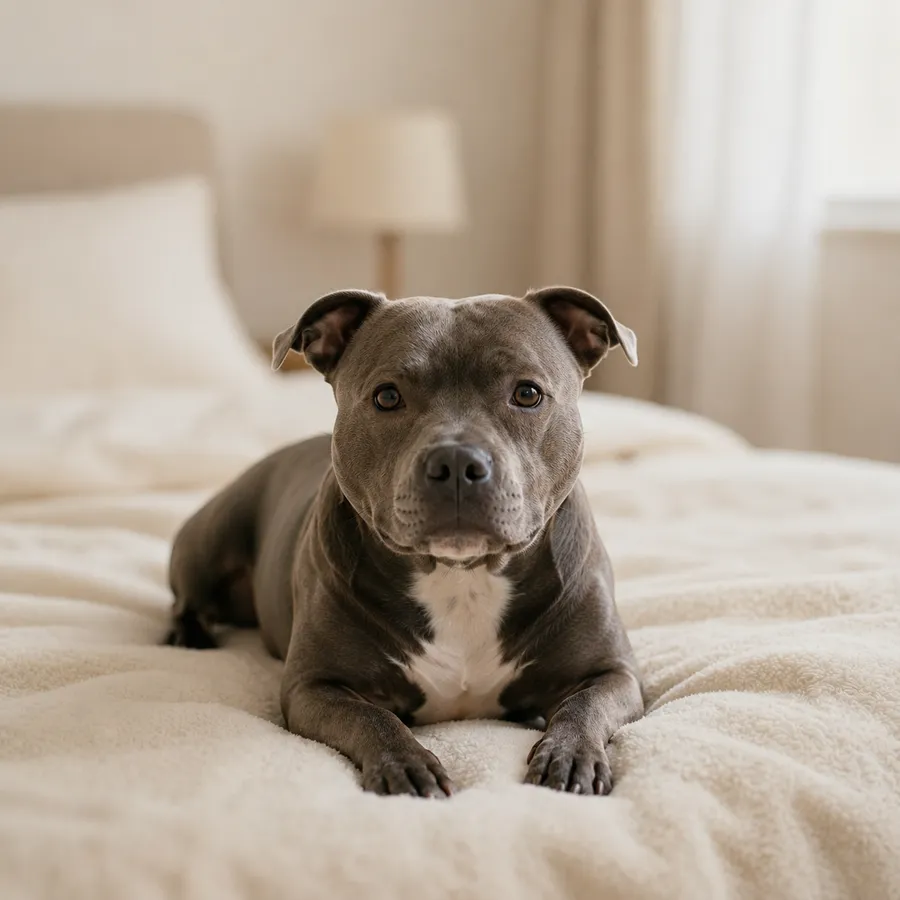
Staffies are clever, people-loving and famously food-motivated, which makes them a joy to train with kind, reward-based methods. Here's a practical, real-world guide to getting the basics right.

Dog behaviour and training: a beginner's guide
A grounded introduction to reading your dog's body language and starting reward-based training the right way
How to feed a puppy: a complete feeding guide
How often to feed your puppy, how much, and when to switch from puppy to adult food by breed size