



Yellow Ribbon on a Dog's Collar: What It Means (UK)
The quick answer
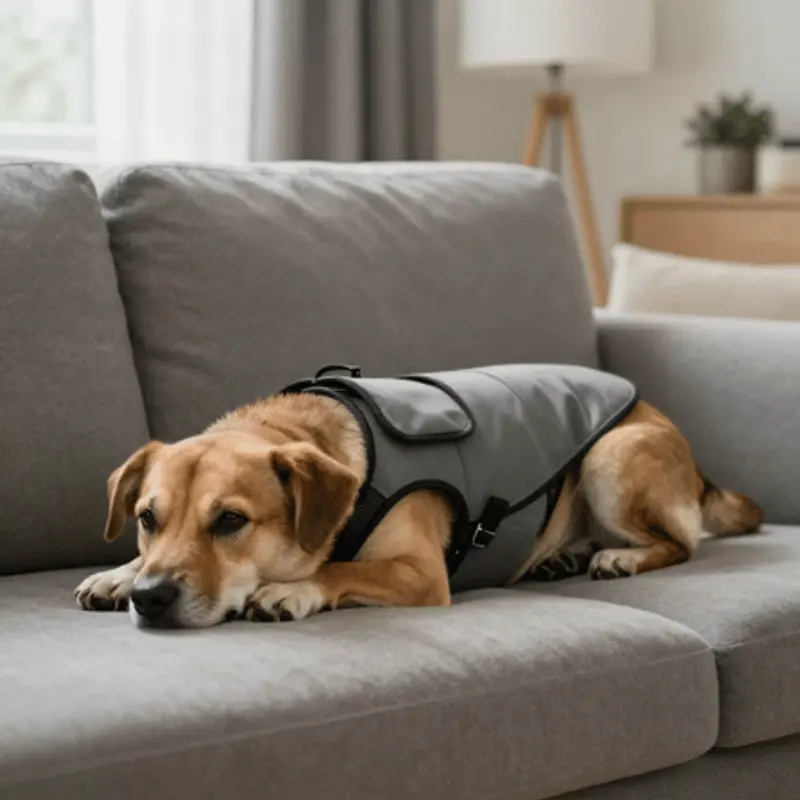
A yellow ribbon, bandana or lead sleeve on a dog means the dog needs space. It doesn't mean the dog is aggressive — it may be nervous, in training, recovering from surgery, or simply uncomfortable with strangers or other dogs. If you see one, put your own dog on the lead, give a wide berth, and don't approach the dog or its owner.
You're out on a walk, another dog appears, and it's got a yellow ribbon tied to its lead or collar. It's a quiet signal — and once you know what it means, you can make that dog's day a great deal easier. Here's what yellow stands for, why a dog might be wearing it, and exactly how to respond.
What a yellow ribbon on a dog's collar means
A yellow ribbon — or a yellow bandana, lead sleeve, harness or vest — is a widely recognised way of saying "this dog needs space." It does not mean the dog is aggressive or dangerous. It means: please don't let your dog, your children, or yourself rush up to say hello. Give us a wide berth and we'll both have a calmer walk.
The idea comes from the Yellow Dog Project, an awareness campaign that spread internationally in the early 2010s. In the UK it's championed by Yellow Dog UK, a registered charity (charity number 1153038), and their whole message boils down to one line: nervous doesn't mean aggressive. They'll even post free yellow ribbons to owners whose dogs need a bit of breathing room.
One important caveat before we go further: yellow is a courtesy code, not a law. There's no legal requirement to use it and no single official standard behind it, so plenty of owners still won't recognise it. That's exactly why it's worth spreading the word.
Why a dog might be wearing yellow
Space isn't only for so-called "problem" dogs. According to Yellow Dog UK, the reasons a dog wears yellow include:
- recovering from surgery, an injury or an illness
- a rescue dog still settling in and learning to trust
- in training — including young dogs still learning their manners and working dogs building focus
- nervous, shy or anxious by nature
- a bitch in season
- an older dog who finds bouncy puppies painful or overwhelming
- simply not a fan of strange dogs bounding into their face
Some of these are temporary and some are just who that dog is. A high-drive breed learning to stay calm around others might wear yellow for months — the same goes for a Border Collie or a Staffy whose owner is putting in careful, patient work. None of it is a mark against the owner. If anything it's the opposite: someone flagging yellow is a responsible owner managing their dog thoughtfully, and giving you fair warning.
What to do when you see a yellow-ribbon dog
Here's the quick checklist for the moment you spot yellow:
- Put your own dog on the lead if it's off, and reel in any long line.
- Create distance. Cross the road, step onto the verge, or take a different path — aim for the widest gap the space allows.
- Don't approach the dog or the handler, and don't call out "can they say hello?" The yellow is your answer.
- Keep moving calmly. Don't stop, stare or hover, and don't let your own dog fixate. Walk on in a relaxed arc.
- Manage the children. Kids love to run at dogs. A yellow ribbon is your cue to take a hand and quietly explain that this dog would like some space.
- Pop a treat under your own dog's nose to keep their focus on you as you pass.
That's genuinely all it takes. The owner will clock what you've done and be quietly grateful — a considerate passer-by is a small win that can turn a tense walk into a good one.
Read the dog, not just the ribbon
Plenty of dogs that need space aren't wearing anything at all. The ribbon is a helpful shortcut, but the more useful skill is reading canine body language, because a dog will tell you it's uncomfortable long before it ever barks or lunges. Dogs Trust lists early signs worth learning:
- lip-licking or a big yawn when nothing's tiring
- turning the head away or leaning back
- slowing down, freezing, or a lifted front paw
- "whale eye" — the whites of the eyes showing
- a tucked tail and a crouched body, trying to look smaller
- a sudden full-body shake, or panting that has nothing to do with heat or exercise
Spot any of those in an approaching dog — ribbon or not — and do exactly what you'd do for a yellow dog: give it room. Reactivity, as Dogs Trust puts it, is "a heightened emotional response to something in the environment." The dog isn't being naughty; it's struggling, and distance is the kindest and fastest fix.
If it's your dog who needs space
There's no shame in it — a huge number of dogs are simply happier with a buffer around them. Here's how to use the system well:
- Make yellow obvious. A small ribbon is easy to miss at speed. A yellow "NERVOUS" or "GIVE ME SPACE" lead sleeve, harness, bandana or vest reads from much further away.
- Don't rely on it entirely. Treat yellow as a bonus, not a force field. Most people still won't know the code, so keep managing distance yourself — walk at quieter times and in open places with good visibility, so you can see other dogs coming, exactly as Dogs Trust recommends.
- Advocate out loud. A friendly but firm "he needs space, thank you!" is completely fine. You're not being rude; you're protecting your dog.
- Reward calm. Pay your dog for noticing another dog and then choosing to look back at you. Over time, that quietly changes how they feel about the thing that worries them.
- Get proper help for true reactivity. If your dog is barking, lunging or panicking, a yellow ribbon manages the symptom but not the cause. Speak to your vet first to rule out pain, then work with a qualified, reward-based behaviourist. Dogs Trust also runs a free Behaviour Support Line on 0303 003 6666.
Where the yellow-ribbon idea came from
The Yellow Dog Project began around 2012 as a grassroots way to protect dogs that find the world a bit much. The logic is simple and clever: a visual signal works at a distance, in a way that shouting "give us room!" across a field never quite does. It spread fast because almost every dog owner has, at some point, either had a nervous dog or unwittingly let a bouncy one charge over to one. Yellow Dog UK has since carried the message here, pairing it with free ribbons and a steady reminder that a dog needing space is normal, not shameful.
Is there a colour code beyond yellow?
You may also see other colours on leads, harnesses and "space" sleeves. Be aware that these are commercial systems rather than an agreed national standard, and they're far less recognised than yellow — never assume everyone knows them.
| Colour | Common meaning (not official) |
|---|---|
| Yellow | Needs space — nervous, in training, or recovering |
| Red | "No dogs" — do not let your dog approach |
| Orange | Fine with people, not with other dogs |
| Green | Friendly, happy to say hello |
| White | Deaf and/or blind dog |
Because only yellow is widely understood, the safe rule for walkers is simple: give any coloured "space" marker a wide berth, and don't treat green as a guaranteed invitation — always ask the owner first.
Why such a small signal matters so much
It's easy to underestimate a scrap of ribbon, but the difference it makes on the ground is real. For a nervous or reactive dog, one bad encounter — a strange dog barrelling into its face — can set training back weeks and reinforce the very fear the owner is working to undo. Dogs learn by association, and a walk that ends in a fright teaches the dog that other dogs mean trouble. A walk where the scary thing stayed at a comfortable distance teaches the opposite: that the world is manageable and the owner has things under control.
That's why the yellow signal is really about prevention. It lets an owner get ahead of a problem instead of scrambling to recall a dog that's already committed to charging over. And it works both ways: if you're the one giving space, you're not just being polite, you're actively helping another dog feel safe. Multiply that across every walk and every considerate owner, and the shared dog-walking spaces we all use get calmer for everyone.
Etiquette in busy spaces
Tight, busy places — narrow towpaths, café gardens, packed park gates, vet waiting rooms — are where nervous dogs struggle most, because there's nowhere to retreat to. If you're passing a yellow-ribbon dog in a pinch point, slow down, keep your dog on the side furthest from theirs, and give the pair a moment to move on before you follow. A few seconds of patience beats a squeeze-past that leaves a frightened dog trapped. If it's your own dog who finds crowds hard, plan routes with escape room built in and avoid the busiest times — a slightly longer, quieter walk is worth far more than a stressful short one.
Common mistakes to avoid
- "My dog is friendly, it'll be fine." Your dog being friendly isn't the point. The yellow dog isn't up for it right now, and forcing an interaction can undo weeks of patient training.
- Letting an off-lead dog run over "just to check." This is the single biggest complaint from owners of nervous dogs. Recall your dog first, every time.
- Asking to say hello anyway. The ribbon has already answered the question.
- Assuming no ribbon means no problem. Learn the body-language signs above — they matter more than any accessory.
- Telling the owner they should "socialise" the dog more. They almost certainly are — carefully, at a distance, which is precisely what the ribbon is helping them do.
Yellow is a tiny scrap of ribbon doing a big job: fewer ambushes, calmer walks, and dogs that get to feel safe. If you're spotting it on someone else's dog or tying it to your own, you're now fluent in one of the kindest signals in the dog world.
Sources
Common questions
Is a dog with a yellow ribbon aggressive?
No. A yellow ribbon simply means the dog needs space. As Yellow Dog UK puts it, 'nervous doesn't mean aggressive.' The dog may be recovering from surgery, in training, elderly, in season, or just anxious around strangers and other dogs.
What should I do if I see a yellow ribbon on a dog?
Put your own dog on the lead, create distance by crossing over or stepping aside, and keep walking calmly. Don't approach the dog or its handler, and don't ask if they can say hello — the ribbon has already answered.
Where can I get a yellow ribbon for my dog?
Yellow Dog UK, a registered charity, will post free yellow ribbons to owners whose dogs need space. You can also use a yellow 'nervous' or 'give me space' lead sleeve, bandana or harness, which is easier for other walkers to spot from a distance.
Do all dog owners know what a yellow ribbon means?
No. It's a courtesy code, not a legal or official scheme, so many people won't recognise it. Use it as a helpful extra rather than relying on it — keep managing distance yourself and, if needed, say out loud that your dog needs space.
What do other colours like red, orange and green mean on a dog lead?
These come from commercial 'colour code' systems and aren't an official standard, so far fewer people know them. Red usually means 'no dogs', orange means fine with people but not dogs, green means friendly, and white often marks a deaf or blind dog. Treat any coloured space marker as a request for room.
My dog is friendly — can they still greet a yellow-ribbon dog?
No. Your dog being friendly isn't the issue; the yellow dog isn't comfortable being approached right now. Letting a friendly dog charge over can undo weeks of careful training and frighten the other dog.
Is the yellow ribbon scheme official or legal?
No, it's an awareness campaign, not a law. There's no legal requirement to display it and no single governing standard. It works purely because enough considerate walkers recognise and respect it.
About the author
Matt Garnett — founder, Giddy Pets
Matt started Giddy Pets to make getting pets the good stuff simpler and fairer. Everything in these guides comes from real life with pets and a lot of trial and error — it's practical guidance, not veterinary advice. If a guide gets something wrong, tell him directly.
Advice & planning
Free tools & more guides
Practical calculators and trusted guides relevant to this product.
Read next
How Much Exercise Does a Border Collie Need?
Border Collies need far more than a couple of walks — real physical exertion plus mental work every day. Exactly what that looks like, and whether the breed suits you.
How Much Exercise Does a Staffy Need?
A healthy adult Staffy needs a minimum of an hour of exercise a day, split across a few outings rather than one big slog. They're muscular little powerhouses who love tug, fetch and strength play, but they overheat easily and puppies' joints need protecting. Here's how much exercise a Staffy really

How Much Exercise Does a Cockapoo Need?
Most Cockapoos need around an hour of exercise a day, but the real answer depends on which parent line they take after. Here's how to read your own dog, why a clever brain needs as much work as the legs, and how to keep a growing puppy's joints safe.

What Is the Rainbow Bridge?
The Rainbow Bridge is a gentle prose poem that has comforted grieving pet owners for decades — here's what it means and why it brings solace.