





Pet Emergency Plan & Kit: A UK Guide for Owners
The quick answer
A UK pet emergency plan means having a grab bag ready and knowing what to do if you must leave home fast or your pet is suddenly ill. Pack 3–5 days of food and water, medication, a carrier or lead, vaccination and microchip records, a recent photo, and your vet's out-of-hours number. Keep microchip details current, and know your nearest emergency vet and evacuation options before you need them.
Mentioned in this guide

Canvas Pet Backpack Carrier
A padded backpack carrier with mesh ventilation panels and a drawstring top opening, letting your cat or small dog poke out and look around. Comfortable padded straps make hands-free trips to the vet or park easy.
£20.99

Personalised Laser-Engraved Leather Dog Collar
A leather dog collar with your dog's name and number laser-engraved into the buckle plate, so the identification cannot swing loose and drop off on a walk.
From£14.99

Leucillin Canine First Aid Kit – Portable & Refillable
A compact, refillable first aid kit for dogs combining Leucillin's veterinary-grade antiseptic with professionally selected first-aid essentials for walks and travel.
£22.99
Most of us never expect to grab our dog and leave the house in ten minutes flat, but floods, house fires, gas leaks and sudden serious illness don't give much notice. Having a simple plan and a packed bag ready means that if the worst happens, you're not scrabbling around for the cat carrier while water comes under the door. This is a practical UK guide to getting your pets ready for an emergency, without the panic.
Why every pet owner needs a plan
The UK's most common household emergencies that force people out of their homes are flooding and fire. Thousands of properties flood in a typical wet winter, and when you're told to evacuate, the pressure is on and the clock is ticking. On top of that, there are the everyday crises, a dog hit by a car, a cat that's swallowed something toxic, a pet collapsing on a Sunday night, where knowing exactly who to call saves precious minutes.
A plan does three things: it keeps your pets with you rather than left behind, it means you're carrying the things they actually need, and it stops you making frantic decisions when you're least able to think clearly. Twenty minutes of preparation now is worth a great deal on a bad day.
The pet grab bag: what to pack
A grab bag (sometimes called a go bag) is a single, waterproof, easy-to-carry container kept somewhere you can reach it fast, by the front door, in a hall cupboard, or in the car. Aim to stock it for at least three to five days per pet, and check it every few months so nothing's out of date.
Food, water and feeding
- Three to five days of your pet's usual food (rotate tins or pouches so they don't expire; keep a bag of dry food sealed)
- Bottled water and a collapsible bowl, don't assume clean tap water will be available
- A manual tin opener if you feed wet food
- Any supplements or prescription diet they rely on
Medication and health records
- A few days' supply of any regular medication, clearly labelled, plus dosing instructions
- A copy of vaccination records and any medical history (a photo on your phone plus a printed copy)
- Your vet's name, address and out-of-hours emergency number written down, not just saved in a phone that might run flat
- Microchip number and the database it's registered with
If your pet is elderly or on a special diet, keep enough of the right food in the bag, running out mid-emergency is stressful for a dog whose stomach is already sensitive. Our guide to feeding a senior dog covers why sudden diet changes are best avoided.
Restraint, transport and comfort
- A sturdy carrier for each cat or small animal (label it with your name and number)
- A spare lead, collar and well-fitted harness for dogs
- A blanket or piece of bedding that smells of home
- A favourite toy and a few treats to keep them calm
- Poo bags, and for cats, a disposable litter tray, litter and a scoop
- Puppy pads for accidents in the car or at a shelter
Paperwork and extras
- A recent, clear photo of each pet (and ideally one of you together, useful for proving ownership if you're separated)
- A written care sheet: feeding times, medication, quirks, anything a stranger would need to know if they had to look after your pet
- A small pet first aid kit (see below)
- A torch and spare batteries
Microchipping and ID: the legal bit
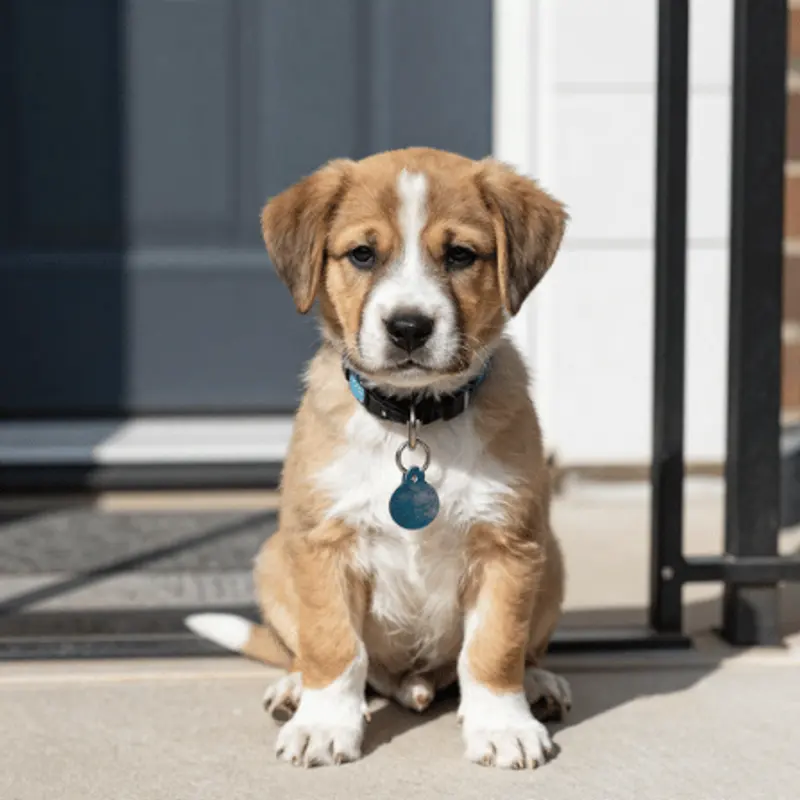
If your pet bolts during an emergency, identification is what gets them home. In the UK this is both sensible and, in most cases, the law.
- Dogs must be microchipped and registered by 8 weeks old. This has been law across the UK for years.
- Cats in England must now be microchipped and registered by 20 weeks old, a requirement that came into force on 10 June 2024.
- Failing to comply can mean a fine of up to £500 after a short period to put it right.
A microchip only works if the details behind it are current. If you've moved house or changed your number and not updated the database, the chip leads a rescue or vet to a dead end. Take five minutes to check your registration is up to date, and do the same for a collar ID tag. In fact, in an emergency it's worth adding the phone number of a friend or relative who lives outside your area to your pet's tag, because if local networks are down, a distant contact may be easier to reach.
Know your out-of-hours vet before you need one
Don't wait until 2am on a bank holiday to find out how emergency vet cover works in your area. Ask your practice now:
- Who provides their out-of-hours emergency service, and where is it?
- What's the direct number, and how far is the nearest emergency clinic?
- Is there a dedicated pet poison advice line you can use?
Write the answers down and put them in your grab bag and on the fridge. In a genuine emergency, phone ahead so the clinic is ready for you, and never try to treat a serious injury or suspected poisoning yourself. First aid is about keeping your pet stable and safe on the way to professional help, not replacing it.
Flooding: the UK's biggest evacuation risk
If you live anywhere near a river, the coast or on low ground, flooding is the emergency most likely to force you out. The Environment Agency runs a free flood warning service for England, and signing up is one of the highest-value things on this whole list, because warning time is everything.
You can check your property's flood risk and register for alerts online. There are three escalating levels, and each one tells you exactly how urgently to act:
| Warning level | What it means | What to do for your pets |
|---|---|---|
| Flood alert | Flooding is possible | Get the grab bag out, bring outdoor pets in, check your plan and routes |
| Flood warning | Flooding is expected, act now | Move pets, carriers and kit upstairs or to higher ground; be ready to leave |
| Severe flood warning | Danger to life | Evacuate if told to, take your pets with you, do not delay |
The single most important rule: if it isn't safe for you, it isn't safe for them, take your pets with you. Never leave an animal shut in a flooding house expecting to come back for it, and never wade into floodwater to reach a pet, as it's often deeper, faster and more contaminated than it looks.
Fire and other sudden emergencies
For house fires, your own safety comes first, get everyone out and call 999; never go back into a burning building for a pet. To improve the odds, keep collars and a lead near the door, tell the fire service if animals are inside, and consider a pet alert sticker for a window so crews know to look. Working smoke alarms protect your pets as much as you.
For gas leaks, power cuts and other sudden events, the same grab bag and the same principle apply: know where the carrier and lead are, and have somewhere to go.
Your evacuation plan
A bag is only half of it. You also need to know where you'll go, because many emergency shelters and some hotels won't take animals.
- Line up options in advance. A friend or relative outside your immediate area, a pet-friendly B&B or hotel, or boarding kennels and catteries you could call at short notice. Keep the numbers with your kit.
- Plan more than one route out of your area, one road may be blocked or flooded.
- Practise. Get cats used to going calmly into a carrier, and dogs used to travelling and settling somewhere unfamiliar, when there's no pressure. A rehearsed pet is a far calmer pet on the day.
- Assign responsibility. If you live with others, agree now who grabs which pet and which bag, so nothing is left to chance in the rush.
Don't forget other pets
- Cats: a secure top-loading carrier is easiest under stress; bring litter, tray and something that smells of home.
- Small animals (rabbits, guinea pigs, hamsters): a ventilated carrier or secure box, plus bedding, food and a water source.
- Birds: a travel cage and a cover to reduce stress; keep them warm.
- Fish and reptiles: these need the most forethought. Have battery-powered aeration or heat options in mind, and know that these species are often the hardest to move safely, so factor them into your plan early.
A simple pet first aid kit
Keep a small kit in the grab bag for minor injuries and to stabilise a pet on the way to the vet:
- Vet-approved wound wipes or saline for cleaning
- Non-stick dressings, a bandage roll and micropore tape
- Blunt-ended scissors and tweezers
- A tick remover
- A digital thermometer
- A clean towel (for warmth, restraint or as an improvised sling)
- A pair of thin disposable gloves
Use it to keep things clean and stable, then get to a vet. A first aid kit is a bridge to treatment, not a substitute for it.
Quick preparedness checklist
- [ ] Grab bag packed with 3–5 days of food, water and supplies per pet
- [ ] Medication and vaccination/medical records inside (and photographed on your phone)
- [ ] Carrier per cat/small animal; spare lead, collar and harness for dogs
- [ ] Microchip registered and details up to date; ID tag with an out-of-area contact
- [ ] Vet and out-of-hours emergency numbers written down
- [ ] Signed up for Environment Agency flood warnings (if at risk)
- [ ] At least two evacuation routes and a pet-friendly place to go
- [ ] Everyone in the household knows who takes which pet and bag
- [ ] Kit checked and food/medication rotated every few months
Common mistakes to avoid
- Leaving it too late to sign up for flood warnings. The whole point is advance notice, register before the weather turns.
- A microchip with old details. It's one of the most common reasons lost pets aren't reunited. Check yours today.
- No plan for cats or small pets. People often plan for the dog and forget the cat hiding under the bed, decide now how you'll catch and carry each animal.
- Assuming you'll find pet-friendly shelter on the night. Many won't take animals; sort your options in advance.
- Going back for a pet in a fire or flood. Heartbreaking as it is, your safety has to come first. Prevention, ID and a fast exit are how you protect them.
Spend twenty minutes today packing a bag and checking your microchip details, and you turn a potential disaster into something manageable. Your pets can't prepare for an emergency, but you can do it for them.
Sources
Common questions
What should be in a pet emergency grab bag?
Three to five days of food and water, a collapsible bowl, any medication with dosing instructions, copies of vaccination and microchip records, a recent photo, a carrier or spare lead and harness, familiar bedding, treats, poo bags or a disposable litter tray, a small first aid kit, and your vet's out-of-hours number written down.
Is it a legal requirement to microchip my cat in the UK?
In England, cats must be microchipped and registered by 20 weeks old, a law that came into force on 10 June 2024. Dogs across the UK must be chipped by 8 weeks. Non-compliance can lead to a fine of up to £500 if it isn't put right within the allowed period.
How do I sign up for flood warnings in the UK?
The Environment Agency offers a free flood warning service for England. You can check your property's flood risk and register for alerts online at GOV.UK, or by phone. You'll then get warnings by text, email or phone across three levels: flood alert, flood warning and severe flood warning.
What's the difference between a flood alert and a flood warning?
A flood alert means flooding is possible, so stay alert and get your kit ready. A flood warning means flooding is expected and you should act now. A severe flood warning means there is danger to life, evacuate if told to and take your pets with you, without delay.
Should I take my pets with me if I have to evacuate?
Yes. If it isn't safe for you, it isn't safe for them. Never leave a pet shut in a flooding or burning building expecting to return. Plan pet-friendly places to stay in advance, as many emergency shelters and hotels won't accept animals, and keep those numbers with your grab bag.
What should I do if my pet is injured or poisoned out of hours?
Phone your vet's out-of-hours emergency line straight away, describe what's happened, and follow their advice. Keep your pet calm and warm on the way in. Don't try to treat a serious injury or suspected poisoning yourself, first aid is only to stabilise them until a vet takes over.
How often should I check my pet's emergency kit?
Every few months. Rotate food, water and any medication so nothing expires, confirm your vet and emergency numbers are current, and make sure your microchip and ID details still match where you live. A kit is only useful if its contents are in date and its records are correct.
About the author
Matt Garnett — founder, Giddy Pets
Matt started Giddy Pets to make getting pets the good stuff simpler and fairer. Everything in these guides comes from real life with pets and a lot of trial and error — it's practical guidance, not veterinary advice. If a guide gets something wrong, tell him directly.
Advice & planning
Free tools & more guides
Practical calculators and trusted guides relevant to this product.
Read next

Labrador Puppy Guide: The First Year
A practical Labrador puppy guide — feeding for controlled growth, the socialisation window, protecting growing joints, training and what to expect month by month.

Jack Russell Training: Channelling a Busy Terrier
Bright, busy and brilliantly stubborn, the Jack Russell learns fast but does its own thing twice as fast. Here's how to channel that terrier drive into recall, tricks and calm — with reward-based training, plenty of mental work and realistic expectations for first-time owners.

Keeping Pets Safe on Halloween: Chocolate, Doorbells and Costumes