
How Long Do German Shepherds Live? Lifespan & Health
How long German Shepherds live, the joint, spinal and digestive conditions the breed is prone to, the bloat signs to know, and how to help yours thrive.

The quick answer
German Shepherds typically live to around 9–13 years, often about 10–11. RVC VetCompass research links their lifespan strongly to mobility and joint problems, which the breed is prone to. Buying from hip- and elbow-scored parents, keeping your dog lean, protecting the joints and staying on top of preventive vet care all genuinely help yours reach the upper end of that range.
German Shepherds are one of the world's most capable and devoted dogs — working as police, assistance and family dogs the world over. They're a large, athletic breed with some well-known health vulnerabilities, and understanding those is the key to giving a Shepherd a long, sound life. Here's how long German Shepherds live, the conditions to watch for, and how to help yours thrive.
How long do German Shepherds live?
German Shepherds typically live to around 9–13 years, with many sitting around 10–11. Research from the Royal Veterinary College's VetCompass programme has found that mobility-related problems — the breed's well-known hip, joint and hindquarter issues — are a leading factor in their lifespan. The encouraging news is that much of this is influenced by breeding, body weight and care, so an owner who manages those well genuinely improves the odds.
Joints: hip and elbow dysplasia
This is the breed's signature health issue. Hip and elbow dysplasia are malformations of the joints that can lead to pain and arthritis, and German Shepherds are strongly predisposed. The single most important thing you can do is buy from a breeder who hip- and elbow-scores their dogs through the BVA/Kennel Club schemes and breeds only from good scores. After that, keeping your dog lean, providing a supportive orthopaedic bed, and avoiding repetitive high-impact exercise (especially in growing puppies) all protect the joints over a lifetime.
Degenerative myelopathy
German Shepherds are also prone to degenerative myelopathy (DM), a progressive disease of the spinal cord that causes gradual hind-limb weakness and, eventually, loss of coordination in older dogs. It isn't painful, but it is life-limiting. There's a DNA test that identifies dogs at risk, so it's worth asking a breeder about — and mobility aids and supportive care can keep affected dogs comfortable and moving for longer.
Bloat (GDV) — know the emergency signs
As a deep-chested breed, German Shepherds are at risk of gastric dilatation-volvulus (GDV), or "bloat" — a sudden, life-threatening emergency where the stomach fills with gas and can twist. Signs include a swollen, hard belly, unproductive retching, restlessness, drooling and distress. This is a 999-for-dogs situation: get to a vet immediately, as every minute counts. To reduce the risk, feed measured meals (a slow feeder helps), avoid one large daily meal, and don't let your dog do vigorous exercise right before or after eating.
Other conditions to know
German Shepherds are also predisposed to exocrine pancreatic insufficiency (EPI) — where the pancreas doesn't produce enough digestive enzymes, causing weight loss despite a good appetite (it's manageable with enzyme supplements) — as well as skin allergies, anal furunculosis (perianal fistulas) and certain cancers. Buying from health-tested lines and seeing your vet early about digestive, skin or mobility changes makes a real difference.
Helping your German Shepherd live well
- Keep them lean — extra weight is hard on vulnerable joints.
- Protect the joints — sensible, regular exercise, ramps to limit jumping, and an orthopaedic bed.
- Feed to avoid bloat — measured meals, slow feeding, calm around mealtimes.
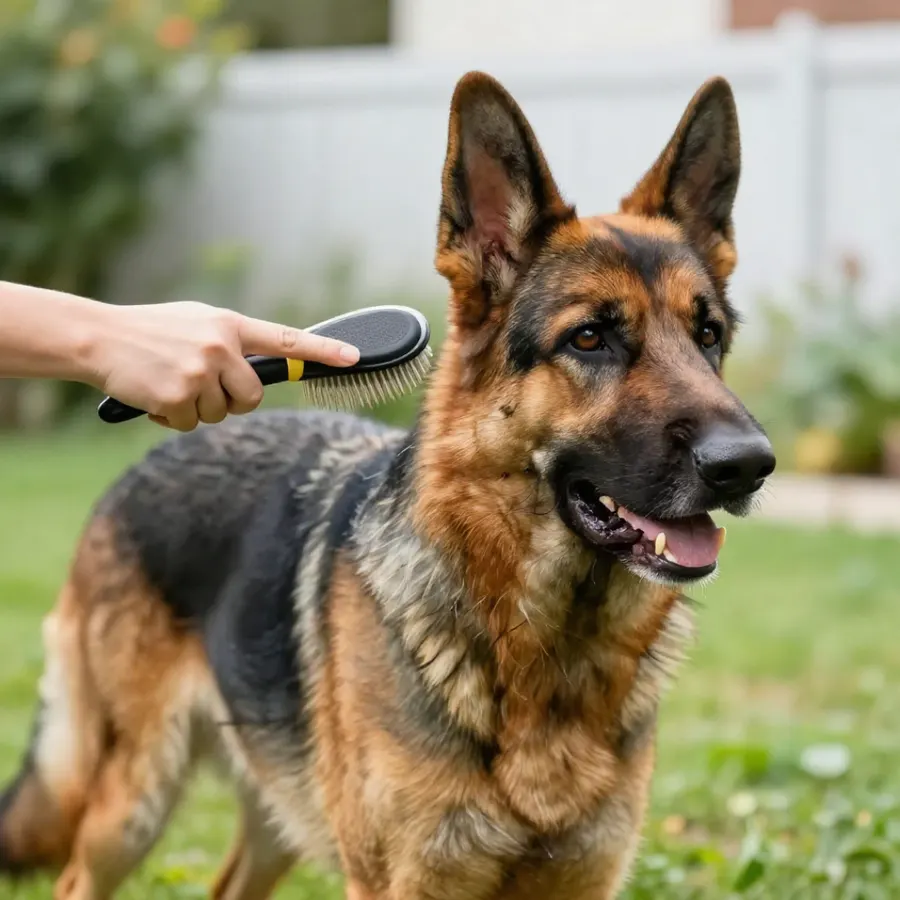
- Brush often — this is a heavy-shedding double coat; regular grooming keeps skin and coat healthy.
- See your vet regularly and move to twice-yearly checks as they age, watching for stiffness, hind-end weakness or digestive changes.
*This is general guidance, not a substitute for advice from your vet, who can assess your individual dog.*
Sources
- RVC VetCompass — German Shepherd health and longevity research (O'Neill et al.) (rvc.ac.uk/vetcompass).
- UK Kennel Club & BVA — hip and elbow scoring schemes and DM testing (thekennelclub.org.uk).
- PDSA — German Shepherd care and bloat (GDV) (pdsa.org.uk).
- Blue Cross — dog health (bluecross.org.uk).
Common questions
How long do German Shepherds live?
German Shepherds typically live to around 9–13 years, often about 10–11. RVC VetCompass research links their lifespan strongly to mobility and joint problems, which the breed is prone to. Buying from hip- and elbow-scored parents, keeping your dog lean, protecting the joints and staying on top of preventive vet care all genuinely help yours reach the upper end of that range.
What health problems are German Shepherds prone to?
The big ones are hip and elbow dysplasia (the breed's signature joint problems) and degenerative myelopathy, a progressive spinal cord disease of older dogs. As a deep-chested breed they're also at risk of bloat (GDV), a life-threatening emergency, plus exocrine pancreatic insufficiency, skin allergies, anal furunculosis and certain cancers. Buying from hip/elbow-scored, health-tested lines and keeping your dog lean reduces much of the risk.
What are the signs of bloat in a German Shepherd?
Bloat (gastric dilatation-volvulus) is a sudden, life-threatening emergency in deep-chested breeds. Signs include a swollen, hard or distended belly, repeated unproductive retching (trying to be sick with nothing coming up), restlessness and pacing, drooling and obvious distress. It can kill within hours, so treat it as an emergency and get to a vet immediately. Feeding measured meals with a slow feeder and avoiding exercise around mealtimes helps reduce the risk.
About the author
Matt Garnett — founder, Giddy Pets
Matt started Giddy Pets to make getting pets the good stuff simpler and fairer. Everything in these guides comes from real life with pets and a lot of trial and error — it's practical guidance, not veterinary advice. If a guide gets something wrong, tell him directly.
Free tools & more guides
Read next

German Shepherd Health Problems: What to Watch For
German Shepherds are prone to hip and elbow dysplasia, bloat, DM, EPI and more. Learn the signs, the UK health tests to ask for, and how to lower the risk.

Are German Shepherds Good Family Dogs?
German Shepherds can be superb family dogs in the right home — but they're a large working breed that needs training, socialisation and exercise. An honest guide.
German Shepherd Puppy Guide: The First Few Months
Bringing home a German Shepherd puppy? Here's a warm, practical UK guide to the first few months — choosing a health-tested pup, surviving the 'land shark' phase, feeding for slow joint-friendly growth, getting socialisation right, and the vet milestones that matter.
German Shepherd Shedding & Grooming
German Shepherds are famous 'German shedders' with a heavy double coat. Here's how to manage year-round shedding and seasonal moults, the tools to use, and why you should never shave the coat.