


How Big Do Cavapoos Get? Cavapoo Size Guide
Most UK Cavapoos settle between 4 and 10 kg and stand around 23 to 33 cm at the shoulder, but the real answer depends almost entirely on whether the Poodle parent was a Toy or a Miniature. Here's an honest look at adult size, growth timelines, and how to estimate where your pup will land.
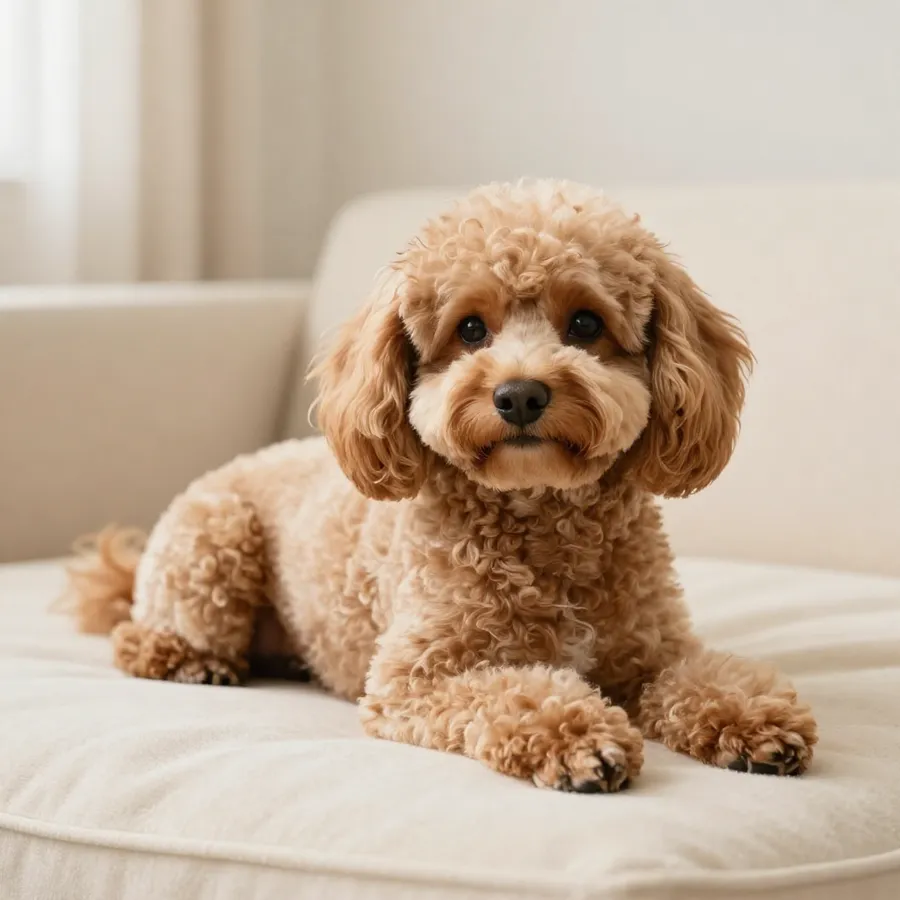
The quick answer
Most fully grown Cavapoos weigh between 4 and 10 kg and stand around 23 to 33 cm tall at the shoulder, according to Purina UK. Where your dog lands in that range depends mainly on whether the Poodle parent was a Toy (smaller) or a Miniature (larger).
"How big will they get?" is the question we hear most from people about to bring a Cavapoo home. The honest answer is: it depends, and mostly on one thing. Cavapoos aren't a standardised pedigree breed, so there's natural variation from litter to litter. But once you understand what drives their size, you can make a sensible, grounded estimate.
The typical adult ranges
According to Purina UK, a fully grown Cavapoo usually weighs between 4 and 10 kg and stands roughly 23 to 33 cm tall at the shoulder. That puts them firmly in the small-to-medium bracket: bigger than a teacup lap dog, smaller than a Spaniel.
The spread within that range is wide for a reason. A petite Cavapoo from a Toy Poodle line might sit at the lower end, around 4 to 6 kg, while a sturdier one with more Cavalier or Miniature Poodle influence can reach 8 to 10 kg or occasionally a touch more. Males tend to land slightly heavier than females, though it's not a hard rule.
Be wary of breeders quoting suspiciously precise adult figures for a young puppy. Honest ranges are the only honest answer.
Why the Poodle parent decides everything
The single biggest factor in your Cavapoo's adult size is the Poodle parent. The Cavalier King Charles Spaniel side is fairly consistent (the Kennel Club describes the Cavalier as a small dog of around 5 to 8 kg), so it's the Poodle that swings the result.
There are two common Poodle parents:
- Toy Poodle — under 20 cm tall and roughly 3 to 5 kg (Purina UK). Cross this with a Cavalier and you get a smaller, daintier Cavapoo.
- Miniature Poodle — under 30 cm and around 5 to 9 kg. This pairing produces a noticeably larger, stockier Cavapoo.
So before anything else, ask the breeder which Poodle was used. A Toy-cross and a Miniature-cross can differ by several kilos as adults.
Do generations (F1, F1b) change the size?
They can nudge it. An F1 Cavapoo is a first cross, 50% Cavalier and 50% Poodle. An F1b is bred back to a Poodle, making it roughly 75% Poodle and 25% Cavalier. Because F1b pups carry more Poodle genetics, they often trend a little smaller and curlier when the Poodle parent is a Toy or Miniature, and they tend to shed less.
In practice the generation matters less than which Poodle was used. An F1 from a Miniature Poodle will usually be bigger than an F1b from a Toy. Treat generation as a secondary clue, not the headline.
When do Cavapoos reach full size?
Small dogs mature quickly. Most Cavapoos reach their full adult height by around 12 months, with many hitting their final height a little before their first birthday. They'll then keep "filling out" — gaining muscle and a more solid adult frame — until roughly 18 months.
If your dog still looks leggy and lean at ten months, don't panic. The height is largely done; the body shape is still settling.
Estimating adult size from the parents and the puppy
The most reliable method is simply meeting the parents, especially the dam, and asking the breeder for the Poodle parent's size. That tells you more than any chart.
A couple of rough rules of thumb owners use:
- Double the four-month weight. Weigh your pup at around 16 weeks and double it for a ballpark adult weight. It's only an estimate, but it works reasonably well for small and medium breeds.
- Watch the paws. Oversized paws relative to the body can hint at more growing to come — but it's a fun observation, not a precise measurement.
Use these as guides, not guarantees.
Keeping your Cavapoo a healthy weight
Whatever size your Cavapoo turns out to be, the number that matters most is their *condition*, not the figure on the scales. You should be able to feel their ribs easily without pressing hard, and see a visible waist from above. The fluffy coat hides a lot, so use your hands, not just your eyes.
Because they're small and food-motivated, the calories from treats and table scraps add up fast — a few extra grams matters far more on a 6 kg dog than a 30 kg one. If you're ever unsure whether your Cavapoo is over or underweight, your vet can do a quick body-condition score and set a target. This guide is general information from lived experience, not veterinary advice.
Sources
- Purina UK — Cavapoo breed information (adult weight, height, and parent-breed sizes)
- The Kennel Club — Cavalier King Charles Spaniel breed standard (Cavalier parent size)
- The Kennel Club — Poodle (Toy and Miniature) breed standard (Poodle parent sizes)
- Waggel — How big does a Cavapoo get? (UK size ranges and growth)
Common questions
How big do Cavapoos get when fully grown?
Most fully grown Cavapoos weigh between 4 and 10 kg and stand around 23 to 33 cm tall at the shoulder, according to Purina UK. Where your dog lands in that range depends mainly on whether the Poodle parent was a Toy (smaller) or a Miniature (larger).
What's the difference between a Toy and a Miniature Cavapoo?
A Cavapoo bred from a Toy Poodle tends to be smaller and daintier, often around 4 to 6 kg, while one from a Miniature Poodle is stockier and taller, frequently 7 to 10 kg or more. The Poodle parent is the single biggest factor in adult size, so always ask the breeder which was used.
At what age is a Cavapoo fully grown?
Most Cavapoos reach their full adult height by around 12 months, often a little before their first birthday. They then continue to fill out and gain muscle until roughly 18 months, when they settle into their final adult frame.
Are F1b Cavapoos smaller than F1 Cavapoos?
They often trend slightly smaller because an F1b carries more Poodle genetics (around 75% Poodle) than an F1 (50%). However, generation matters less than which Poodle parent was used — an F1 from a Miniature Poodle will usually be bigger than an F1b from a Toy.
How can I estimate how big my Cavapoo puppy will get?
The most reliable method is asking the breeder about the Poodle parent's size and meeting the parents. As a rough rule of thumb, doubling your puppy's weight at four months gives a ballpark adult weight for small and medium breeds. Large paws can hint at more growing to come, but it's only a casual indicator, not a precise measurement.
About the author
Matt Garnett — founder, Giddy Pets
Matt started Giddy Pets to make getting pets the good stuff simpler and fairer. Everything in these guides comes from real life with pets and a lot of trial and error — it's practical guidance, not veterinary advice. If a guide gets something wrong, tell him directly.
Advice & planning
Free tools & more guides
Practical calculators and trusted guides relevant to this product.
Read next
How Long Do Cavapoos Live? Lifespan & Health
Cavapoos live around 12–15 years. What this Cavalier × Poodle cross can inherit from each parent breed, why health-tested parents matter, and how to keep yours well.
Are Cavapoos Hypoallergenic? Do They Shed?
The honest answer on Cavapoos and allergies: no dog is truly hypoallergenic, but many allergy sufferers do better with a Cavapoo. Here's why it varies so much, and how to test before you commit.
Cavapoo Grooming Guide: Coat Care & Clipping
A Cavapoo's soft, mat-prone coat is a real commitment. Here's a practical UK guide to brushing right to the skin, the tools that work, the trouble spots that knot, and the every-6-to-8-week groomer routine that keeps it kind.
Are Cavapoos Good Family Dogs?
Cavapoos are one of the UK's most popular family crossbreeds, prized for the Cavalier's affectionate softness and the Poodle's clever, sociable nature. Here's an honest look at their temperament with children and pets, their exercise and grooming needs, and the realities — separation issues, crossbr