
Goldendoodle Grooming & Coat Care Guide
Goldendoodle coats range from wavy to curly and need regular professional grooming plus home brushing to prevent matting. How to keep your dog's coat healthy.

The quick answer
Yes. Most Goldendoodles need regular professional grooming — often every 6–8 weeks — plus frequent brushing at home to prevent painful matting, especially curlier coats. Their coat doesn't shed out the way a short-coated breed's does, so loose hair tangles into the coat instead.
If there's one thing every prospective Goldendoodle owner should understand before buying, it's grooming. That lovely teddy-bear coat doesn't look after itself — it needs regular, ongoing care to stay healthy and comfortable. Underestimating this is one of the most common reasons Goldendoodles end up matted, uncomfortable, or even surrendered. Here's an honest guide to caring for your Goldendoodle's coat.
Coat types vary
Because the Goldendoodle is a crossbreed, coat type varies from dog to dog — even within the same litter, and even between generations (F1, F1b and so on). Broadly, coats fall into three types:
- Straight or flat — more like a Golden Retriever; tends to shed more but mat less.
- Wavy — the popular middle ground; needs regular grooming to stay tangle-free.
- Curly — more like a Poodle; tends to shed less but mat much more easily and needs the most upkeep.
Which coat your puppy ends up with isn't fully predictable, and coats often change as a puppy matures, frequently becoming thicker and curlier through the first year or two. Whatever the type, the coat keeps growing and won't "shed out" the way a short-coated breed's does — which is exactly why it needs hands-on management rather than just the occasional brush.
Why matting happens
In most short-coated breeds, loose hair simply falls out. In a Goldendoodle, loose hair tends to get trapped in the coat rather than dropping, and without regular brushing it tangles and forms mats. Mats aren't just unsightly — they pull on the skin, trap moisture and dirt, hide skin problems and parasites, and can become genuinely painful. Severe matting sometimes can only be resolved by clipping the coat right down.
Brushing at home
The single most important thing you can do is brush regularly — for many Goldendoodles, that means several times a week, and curlier coats often need brushing daily. Use a slicker brush and a comb to work right down to the skin, not just over the surface — surface brushing can leave mats forming underneath. Pay particular attention to the friction areas that mat fastest: behind the ears, the armpits, the collar area, the back legs and the tail.
Start grooming young and keep it positive, with praise and treats, so your dog learns to enjoy (or at least tolerate) being handled and brushed for life.
Professional grooming
Most Goldendoodles also need regular professional grooming, typically every 6–8 weeks, for a full bath, brush-out, clip and tidy. A good groomer keeps the coat at a manageable length, tidies the hygiene areas, trims around the eyes so your dog can see clearly, and clips the hair between the paw pads. Build a relationship with a groomer early, and keep up your home brushing between appointments — a groomer can't undo weeks of neglected matting without clipping the coat off.
Ears, eyes and paws
Goldendoodles' hairy, floppy ears need particular attention. Hair can grow in the ear canal and, combined with the floppy shape, traps moisture — a recipe for ear infections. Keep the ears clean and dry, especially after swimming or baths, and ask your vet or groomer how best to manage the ear hair. Trim or wipe the hair around the eyes so it doesn't irritate them, and keep the hair between the paw pads clipped to stop debris and mats forming.
Bathing
Bath your Goldendoodle when genuinely dirty using a gentle dog shampoo — over-bathing can strip the natural oils and dry the skin. Crucially, brush the coat through before bathing to remove tangles, and dry thoroughly afterwards, because washing a matted coat tends to tighten the mats and make them far worse. A damp, poorly dried coat can also lead to sore, irritated skin.
When to see your vet
Grooming is also a health check. While brushing, look for lumps, sore or red skin, parasites, and any ear discomfort. See your vet if you find persistent itching, sore skin under mats, recurring ear infections, or any change you can't explain. A well-groomed coat isn't just about looks — it's central to a Goldendoodle's comfort and health.
*This is general guidance, not a substitute for advice from your vet, who can assess your individual dog.*
Sources
- RVC VetCompass — UK dog health and longevity research (rvc.ac.uk/vetcompass).
- UK Kennel Club & BVA — breed health and hip/elbow/eye screening schemes (thekennelclub.org.uk).
- PDSA — dog health and breed care (pdsa.org.uk).
- Blue Cross — dog health (bluecross.org.uk).
Common questions
Do Goldendoodles need a lot of grooming?
Yes. Most Goldendoodles need regular professional grooming — often every 6–8 weeks — plus frequent brushing at home to prevent painful matting, especially curlier coats. Their coat doesn't shed out the way a short-coated breed's does, so loose hair tangles into the coat instead. Ears, paws and the area around the eyes need particular attention to stay clean and comfortable.
Do Goldendoodles shed a lot?
It varies — "non-shedding" is a myth. Shedding depends on the individual dog and which generation it is (F1, F1b and so on), as coat type ranges from straighter and more Retriever-like to tightly curled and Poodle-like. Curlier coats tend to shed less but mat more and need more grooming. There's no guarantee any Goldendoodle will be low-shedding, even within the same litter.
How do I stop my Goldendoodle's coat matting?
Brush right down to the skin several times a week (daily for curly coats) with a slicker brush and comb, focusing on friction areas like behind the ears, armpits and back legs. Keep up regular professional grooming every 6–8 weeks, brush before bathing, and dry the coat thoroughly. Start young and keep sessions positive so your dog tolerates handling for life.
About the author
Matt Garnett — founder, Giddy Pets
Matt started Giddy Pets to make getting pets the good stuff simpler and fairer. Everything in these guides comes from real life with pets and a lot of trial and error — it's practical guidance, not veterinary advice. If a guide gets something wrong, tell him directly.
Free tools & more guides
Read next
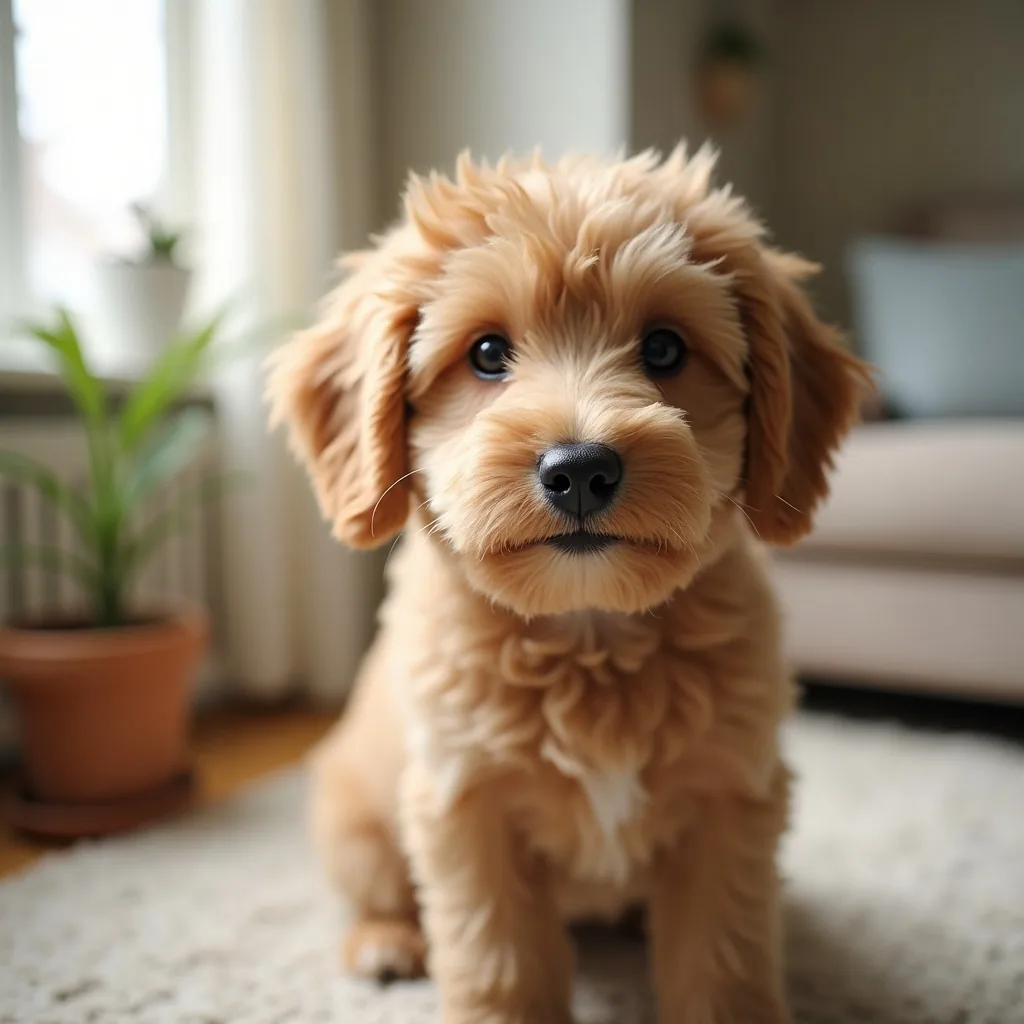
Goldendoodle Health Problems & What Varies
Goldendoodles can inherit issues from either parent: hips, eyes, ears, heart and bloat. The health tests that matter — and the truth about "hypoallergenic".
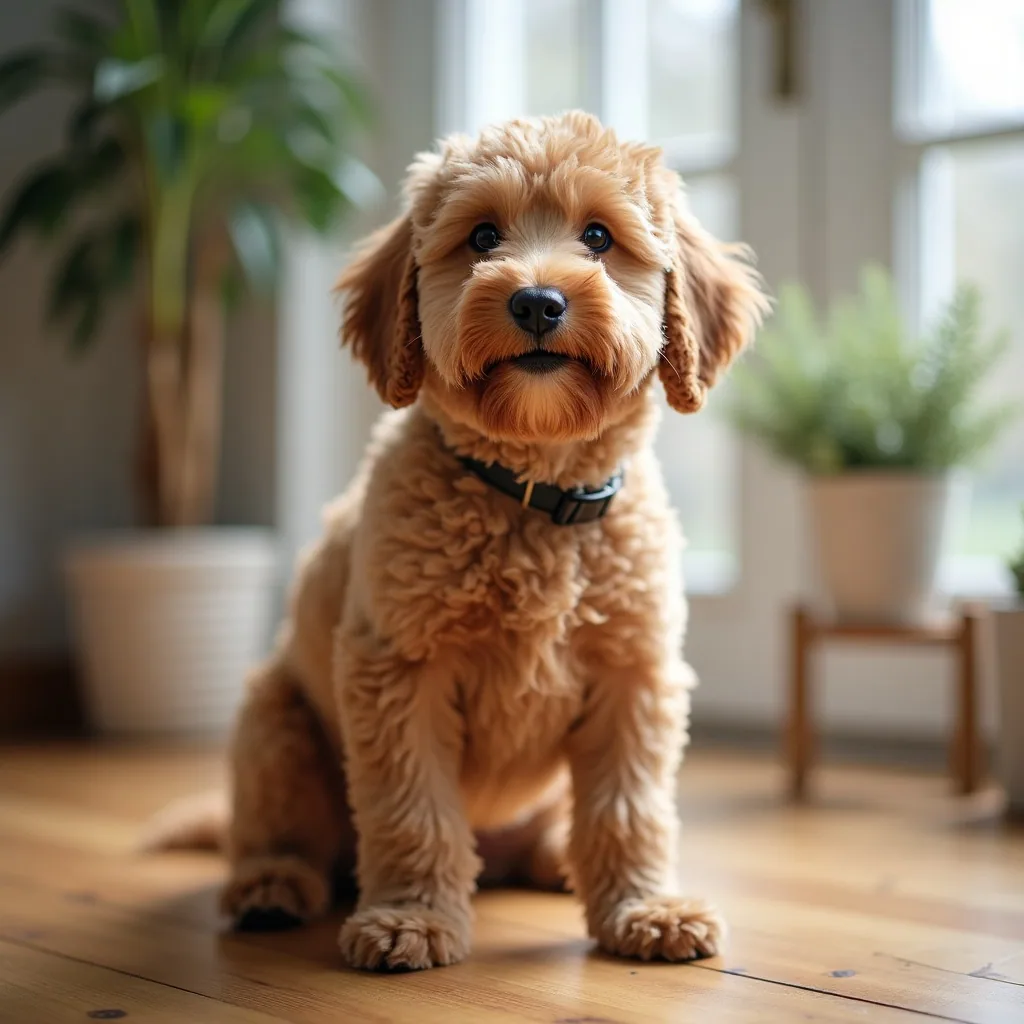
How Much Does a Goldendoodle Cost in the UK?
Goldendoodle puppies are pricey, and grooming and vet care add up. A realistic look at the upfront and ongoing cost of owning a Goldendoodle in the UK.

Are Goldendoodles Good Family Dogs? Temperament Guide
Goldendoodles are friendly, trainable and sociable family dogs. Their temperament, size variation and what they need to thrive at home, explained honestly.

Cavalier King Charles Spaniel Grooming Guide
A practical UK grooming guide to the Cavalier King Charles Spaniel's silky, feathered coat: how often to brush, why their ears need such careful attention, what to trim and what to leave natural, plus nails, teeth and starting young.