


Golden Retriever Puppy Guide: The First Few Months
Bringing home a golden retriever puppy? Here's a warm, practical UK guide to the first few months — feeding for steady growth, protecting growing joints, surviving the 'land shark' phase, and getting socialisation and training right while the window's open.

The quick answer
A common guide is the 'five-minute rule': around five minutes of formal lead-walking per month of age, up to twice a day — so roughly 15 minutes at three months, 20 at four months, and so on until fully grown. It's a guide rather than a strict rule, but the principle of little and often protects growing joints.
So you've fallen for a golden retriever puppy — or you're about to. They are, in our experience, one of the gentlest, most people-loving dogs you can share a home with. They're also large-breed puppies, which means the first few months come with their own rhythm: rapid growth, a lot of mouthing, and some sensible limits that protect those growing joints for life. Here's what actually helps.
Start with a health-tested puppy
The single best thing you can do happens before the puppy comes home: choose a responsible breeder. Goldens are a breed with known joint and eye conditions, so ask to see the parents' hip and elbow scores and current eye-test results, and meet at least the mother on the premises with the litter. The Royal Kennel Club's Assured Breeder scheme and Find a Puppy service are a sound starting point. Most puppies come home at around eight weeks old — old enough to leave mum, young enough to settle in fast.
What to expect: rapid growth and the 'land shark' phase
Goldens are slow to mature. Large-breed dogs can take up to two years to reach full adult size, and they pile on a lot of frame in the first year. Alongside that comes the part nobody warns you about: the mouthing. Puppies explore the world with their teeth, and a teething golden will chew hands, sleeves, furniture and your favourite shoes with cheerful enthusiasm. This 'land shark' stage is completely normal. Redirect onto appropriate chews every single time, keep tempting items out of reach, and never tell a puppy off for being a puppy — just calmly swap the wrong thing for the right one.
Feeding a large-breed puppy: slow and steady
This matters more for goldens than many owners realise. Large-breed puppies need controlled, gradual growth — overfeeding makes them grow too fast, which adds stress to bones and joints that aren't finished forming and can contribute to joint problems later. The Royal Kennel Club advises feeding a diet formulated for large-breed puppies and managing weight carefully so growth is gradual rather than rushed. Keep them lean, weigh food rather than guessing, and resist the urge to fatten up a 'skinny' adolescent. If in doubt about portions, your vet can help you body-condition score.
Exercise limits to protect growing joints
Goldens want to run everywhere, but young joints need protecting. A widely used guide is the 'five-minute rule': around five minutes of formal lead-walk exercise per month of age, up to twice a day — so roughly 15 minutes at three months, 20 at four months, and so on, until they're fully grown. It's a guide rather than gospel (PDSA rightly points out puppies aren't one-size-fits-all), but the principle holds: little and often, plenty of free play and rest, and no forced running, long hikes or repetitive jumping while the skeleton is still developing. Never exercise right after a meal, as this can contribute to bloat. Free pottering and sniffing in the garden doesn't count against the total.
The socialisation window — don't waste it
The most important developmental window is short. Blue Cross and PDSA put the key socialisation period roughly between three and twelve weeks, with the brain still highly receptive up to around sixteen weeks. This is when positive, gentle exposure to new people, sounds, surfaces, traffic, vehicles and handling shapes a confident adult. Because your puppy may not be fully covered by vaccinations yet, carry them out and about, invite calm visitors round, and use puppy classes — so they meet the world safely before the window closes. Keep every experience short and positive; never flood a nervous puppy.
Basic training: recall, settle and bite inhibition
Goldens are famously trainable and food-motivated, so reward-based training works brilliantly. Focus early on the things that make life easy: a happy recall (start in the house and garden, pay generously, make coming back the best decision they ever make); a 'settle' on a mat so they learn to switch off; and bite inhibition — when those needle teeth land, calmly end the game so they learn mouths-on means fun stops. Short, frequent, upbeat sessions beat long ones. Crate training and toilet training both reward patience and routine.
Grooming: get them used to it now
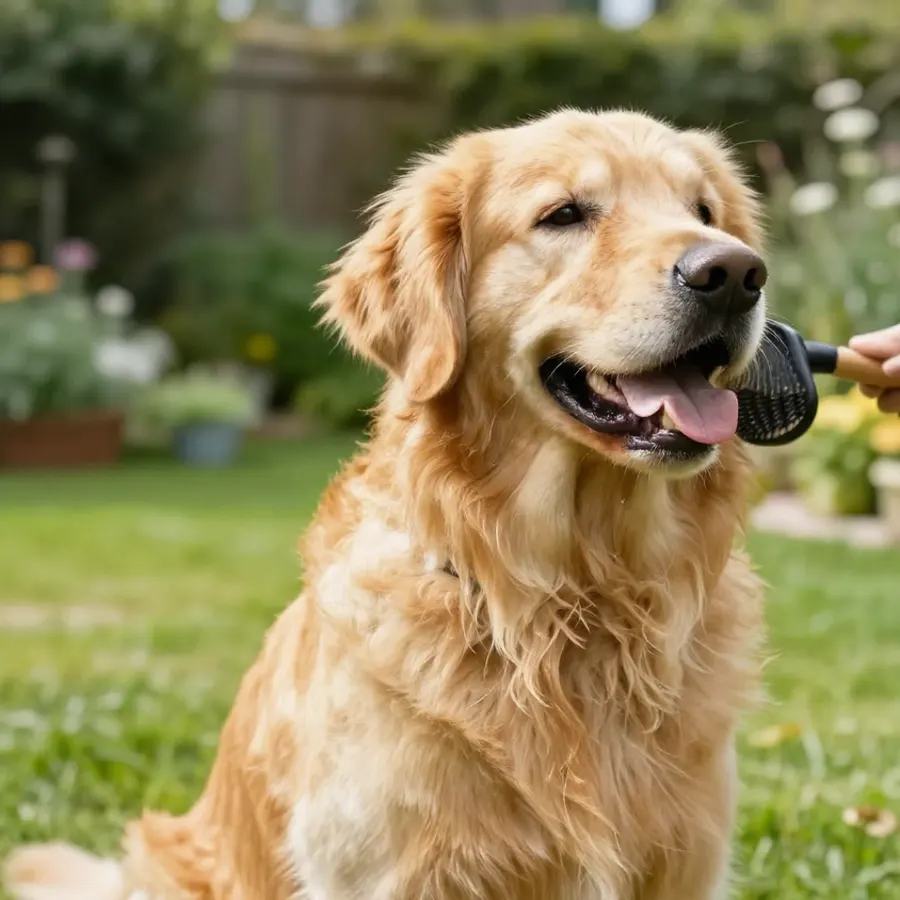
That glorious coat needs lifelong upkeep, so make handling normal while they're tiny. Gently brush, touch paws and ears, and pair the brush with treats so grooming is something they enjoy rather than endure. Easy now saves battles later.
Vet, vaccination and neutering timing
Get your puppy registered with a vet early. Core puppy vaccinations typically start from around six to eight weeks, with a second dose two to four weeks later; your vet will confirm exactly when it's safe to walk on public ground, as the vaccines take time to become fully effective. On neutering, don't rush. For large breeds like goldens, growth plates close around twelve to eighteen months, and research links early neutering with a higher risk of joint disorders — so many vets now advise waiting until the dog is more physically mature. This is an individual decision: talk it through with your own vet.
The first few months feel intense, but they're short — and the steady, sensible choices you make now set your golden up for a long, healthy, happy life.
Sources
- The Royal Kennel Club — Large dogs' diet and Puppy and dog walking tips (royalkennelclub.com)
- PDSA — Exercising your puppy and Puppy socialisation (pdsa.org.uk)
- Blue Cross — Socialising your puppy and Puppy exercise (bluecross.org.uk)
- Dogs Trust — What vaccinations does my puppy need? (dogstrust.org.uk)
Common questions
How much exercise does a golden retriever puppy need?
A common guide is the 'five-minute rule': around five minutes of formal lead-walking per month of age, up to twice a day — so roughly 15 minutes at three months, 20 at four months, and so on until fully grown. It's a guide rather than a strict rule, but the principle of little and often protects growing joints. Free play and pottering in the garden don't count against the total, and avoid forced running or jumping while the skeleton is still developing.
When can my golden retriever puppy go out for walks?
Not until their vaccinations have taken full effect. Core puppy vaccinations usually start from around six to eight weeks with a second dose two to four weeks later, and the vaccines take days to weeks to become fully protective. Your vet will tell you exactly when it's safe to walk on public ground. In the meantime, carry your puppy out and about so they can still experience the world during the important socialisation window.
Why shouldn't I overfeed a large-breed puppy like a golden?
Large-breed puppies need slow, controlled growth. Overfeeding makes them grow too quickly, which adds stress to bones and joints that haven't finished forming and can contribute to joint problems later in life. Feed a diet formulated for large-breed puppies, weigh portions rather than guessing, and keep your puppy lean. Your vet can help you body-condition score if you're unsure.
When is the socialisation window for a puppy?
The key socialisation period runs roughly between three and twelve weeks, with the brain still highly receptive up to around sixteen weeks (Blue Cross and PDSA). This is when calm, positive exposure to people, sounds, surfaces, traffic and handling shapes a confident adult dog. Because your puppy may not be fully vaccinated yet, socialise safely — carry them out, invite calm visitors, and attend puppy classes.
When should I neuter my golden retriever?
There's no need to rush. For large breeds like goldens, growth plates close around twelve to eighteen months, and research has linked early neutering with a higher risk of joint disorders. Many vets now recommend waiting until the dog is more physically mature. It's an individual decision based on your dog's health, sex and circumstances, so discuss the right timing with your own vet.
About the author
Matt Garnett — founder, Giddy Pets
Matt started Giddy Pets to make getting pets the good stuff simpler and fairer. Everything in these guides comes from real life with pets and a lot of trial and error — it's practical guidance, not veterinary advice. If a guide gets something wrong, tell him directly.
Advice & planning
Free tools & more guides
Practical calculators and trusted guides relevant to this product.
Read next
Golden Retriever Shedding & Grooming: Managing the Coat
How much Golden Retrievers shed, how often to brush and bathe, why you should never shave the double coat, and the grooming kit that helps.

How Long Do Golden Retrievers Live? Lifespan & Health
How long Golden Retrievers typically live, the health conditions the breed is prone to, and how to help yours reach a long, comfortable old age.
Are Golden Retrievers Good Family Dogs?
Golden Retrievers earn their reputation as one of Britain's favourite family dogs — gentle, patient and endlessly friendly. But they're big, energetic gundogs that shed, need two hours of exercise a day and hate being left alone. Here's the honest picture of whether one suits your family.
How Much Exercise Does a Golden Retriever Need?
Goldens are working gundogs at heart, so they need a proper amount of daily exercise — but the real skill is knowing how much, and how to protect those growing joints while they're young. Here's a practical, life-stage guide.