






English vs American Labrador: The Real Differences

The quick answer
English and American Labradors are not separate breeds. They are two informal types of one breed. The 'English' or show type is stockier, calmer and bred for the show ring and family life. The 'American' or field type is leaner, more athletic and bred for hunting and gundog work with much higher energy and drive.
Ask ten Labrador owners what an "English" Lab is and you will get ten slightly different answers. The short version: there is only one Labrador Retriever breed, and "English" and "American" are nicknames for two styles within it. Getting the difference right matters, because a dog bred for the show ring and a dog bred to work all day in a field can suit very different homes.
One breed, two nicknames
The Kennel Club, the American Kennel Club and the FCI all recognise a single Labrador Retriever. There is one written breed standard, and every registered Lab, whatever its shape, is measured against it. So "English Labrador" and "American Labrador" are not official breeds, and you will not see them on a Kennel Club pedigree.
What the labels really describe is what a line was bred *for*. Over decades, two loose types have drifted apart:
- The show or bench type (commonly called "English" in the US, especially where the line traces back to British show kennels). Bred to match the physical standard and to have a calm, biddable temperament suited to the ring and the home.
- The field or working type (commonly called "American", though plenty of working Labs are bred in Britain too). Bred for stamina, drive, speed and retrieving instinct rather than for looks.
Here in the UK the more accurate terms are simply show type and working type, and that is the language a good breeder will use. If someone is selling you an "English Lab" as if it were a rare, superior breed, treat that as a marketing flag rather than a fact.
The physical differences
Both types share the same breed standard, so the differences are of degree, not kind. But side by side they can look surprisingly distinct.
| Feature | Show type ("English") | Working type ("American") |
|---|---|---|
| Overall build | Stockier, heavier-boned, blockier | Leaner, taller-looking, athletic |
| Head | Broad skull, defined stop, full cheeks | Narrower skull, less pronounced stop |
| Muzzle | Shorter, deeper | Longer, finer |
| Chest | Broad and deep, barrel ribs | Narrower, more tucked |
| Coat | Very dense, thick "otter" tail | Slightly finer, thinner tail |
| Typical energy | Lower to moderate | High to very high |
A word of caution on weight. The show look is *not* an excuse for a fat dog. The Kennel Club standard specifically calls for a Labrador to be "very agile (which precludes excessive body weight or excessive substance)." A well-bred show-type Lab is solid and broad, but still lean enough to jump, swim and run. A barrel-shaped Lab that waddles is an overweight Lab, not a correct "English" one.
Temperament and energy
This is where the choice really bites, because it shapes daily life for the next decade or more.
Show-type lines are usually bred for a steadier, more settled temperament. They tend to mature into calmer adults, are often a little easier to live with in a normal household, and are content with good daily walks and games rather than a job. That said, they are still Labradors: bouncy, mouthy and mad about food as puppies, and in need of real exercise and training.
Working-type lines are bred for drive. They are typically faster to switch "on", more intense about retrieving, quicker to learn, and far more likely to become frustrated and destructive without a proper outlet. A field-bred Lab in a quiet flat with one short walk a day is a recipe for chewed skirting boards and a stressed dog. Give the same dog gundog training, scent work or dog sport and it will thrive.
A useful rule of thumb: a show-type Lab asks "what shall we do today?" A working-type Lab asks "what's the job, and can we start now?"
Neither is better. They are tuned for different lives. The mistake is picking the athletic working line because the puppies looked keen, then being surprised when the adult dog needs two hours of structured activity a day.
Health: what they share, and one thing colour tells you
Type does not protect a Lab from the breed's common health issues, so budget and screen for the same things either way. Labradors are predisposed to:
- Hip and elbow dysplasia, which can lead to arthritis.
- Obesity — Labs are famously food-driven, partly due to a known genetic quirk in many lines.
- Ear infections (otitis externa) and skin problems.
- Progressive retinal atrophy (PRA) and other inherited eye conditions.
The UK data backs this up. In the Royal Veterinary College's VetCompass study of 33,320 Labradors under primary vet care, the three most common disorders were otitis externa (10.4%), overweight/obesity (8.8%) and degenerative joint disease (5.5%). A separate VetCompass analysis found Labradors had about 1.6 times the odds of obesity compared with other breeds. Keeping any Lab lean is one of the single most protective things an owner can do — our guide to feeding a Labrador and avoiding obesity goes into how.
One finding worth knowing, and it cuts across the type question entirely: coat colour is not the same as type, but it does track with health. The same VetCompass study found chocolate Labradors had a shorter median lifespan (10.7 years) than non-chocolate dogs (12.1 years), and markedly higher rates of ear disease (23.4% of chocolates versus 12.8% of blacks) and skin conditions. So a chocolate show-type Lab and a black working-type Lab differ in more than looks. For the bigger picture on how long the breed tends to live, see how long do Labradors live.
Because both types carry the same predispositions, pet insurance and a health-testing check on the parents matter regardless of which you choose.
Which type suits your home?
Run through these honestly before you fall for a photo.
A show / "English" type tends to suit you if:
- You want a family companion first and foremost.
- Your exercise is steady rather than sport-level — good walks, some fetch, a swim.
- You would rather have a dog that settles calmly in the evening.
- You are a first-time Lab owner.
A working / "American" type tends to suit you if:
- You want to do gundog work, field trials, scent work, agility or another dog sport.
- You can commit to a genuine one-to-two hours of active exercise and training daily.
- You enjoy a driven, intense, quick-learning dog.
- You have handled high-energy working dogs before.
If you tick boxes in both columns, many show-type lines happily meet the needs of an active family without the full intensity of a field line. That middle ground is where a lot of UK pet homes land.
Buying wisely in the UK
The type debate matters far less than breeder quality. A well-bred working Lab from health-tested parents will make a better pet than a poorly bred show Lab, and vice versa. When you enquire:
- Ask which type the line is, and why they bred it. A good breeder will talk openly about temperament and purpose, not just looks.
- Insist on health results. Hip and elbow scores (via the BVA/Kennel Club schemes), current eye testing, and DNA tests for PRA, exercise-induced collapse (EIC) and centronuclear myopathy (CNM) are the baseline for the breed.
- Use the Kennel Club Assured Breeder scheme as a starting filter, and meet the mother with the pups.
- Be sceptical of premium "English Lab" pricing. "English" is not a rare breed. If a listing leans hard on the label and light on health testing, walk away.
- Match the dog to your life, not the other way round. Rehoming a bored, under-exercised working Lab at eighteen months is heartbreakingly common and entirely avoidable.
Common mistakes to avoid
- Assuming "English" means lazy. Show-type Labs are calmer, not couch potatoes. They still need daily exercise and training.
- Assuming stocky means healthy. A broad, correct show Lab is lean under the muscle. An overweight Lab of any type is at real risk.
- Buying a field line for its looks. The drive that makes them superb gundogs is exactly what overwhelms an unprepared pet home.
- Treating colour as type. Chocolate, black and yellow occur in both types; colour carries its own health signals, as the UK data shows.
The bottom line
There is one Labrador Retriever. "English" show types are stockier and steadier; "American" working types are leaner and higher-drive. Pick the type that matches how you actually live, choose a breeder who health-tests and talks honestly about temperament, and keep whichever dog you bring home lean and well exercised. Do that and you will have the friendly, biddable companion the breed is loved for, whatever label the pedigree does or does not carry.
Sources
Common questions
Are English and American Labradors different breeds?
No. There is only one Labrador Retriever breed, recognised by the Kennel Club, AKC and FCI under a single standard. 'English' (show type) and 'American' (working type) are informal nicknames for two styles bred for different purposes, not separate breeds, and they never appear on a pedigree.
Which type of Labrador is calmer?
Show-type ('English') Labradors are generally bred for a steadier, more settled temperament and tend to be easier in a normal family home. Working-type ('American') Labradors are bred for drive and typically need far more exercise, training and mental work to stay content.
Do English Labradors live longer than American Labradors?
There is no reliable evidence that type affects lifespan. Coat colour does, though: UK VetCompass data found chocolate Labradors live a shorter median 10.7 years versus 12.1 years for non-chocolate dogs, regardless of whether they are show or working type.
Is an English Labrador better for a first-time owner?
Often, yes. A show-type Lab's calmer energy is usually more forgiving for a first-time owner than a driven working line. That said, breeder quality and health testing matter far more than type, and every Labrador needs proper exercise and training.
Why are English Labradors more expensive?
They are not inherently worth more. 'English' is a marketing label, not a rare breed, and higher prices often reflect show reputation rather than better health. Judge a breeder on hip and elbow scores, eye testing and DNA results, not on the 'English' tag.
Can you mix English and American Labrador lines?
Yes. Because they are the same breed, show and working lines interbreed freely, and many UK Labs are a blend of both. A mixed-type dog often lands in a useful middle ground of moderate energy that suits an active family.
Which Labrador type is best for gundog work?
The working ('American' or field) type. These lines are bred for stamina, retrieving drive, speed and trainability, which makes them better suited to shooting, field trials and scent work than the steadier show type.
About the author
Matt Garnett — founder, Giddy Pets
Matt started Giddy Pets to make getting pets the good stuff simpler and fairer. Everything in these guides comes from real life with pets and a lot of trial and error — it's practical guidance, not veterinary advice. If a guide gets something wrong, tell him directly.
Advice & planning
Free tools & more guides
Practical calculators and trusted guides relevant to this product.
Read next
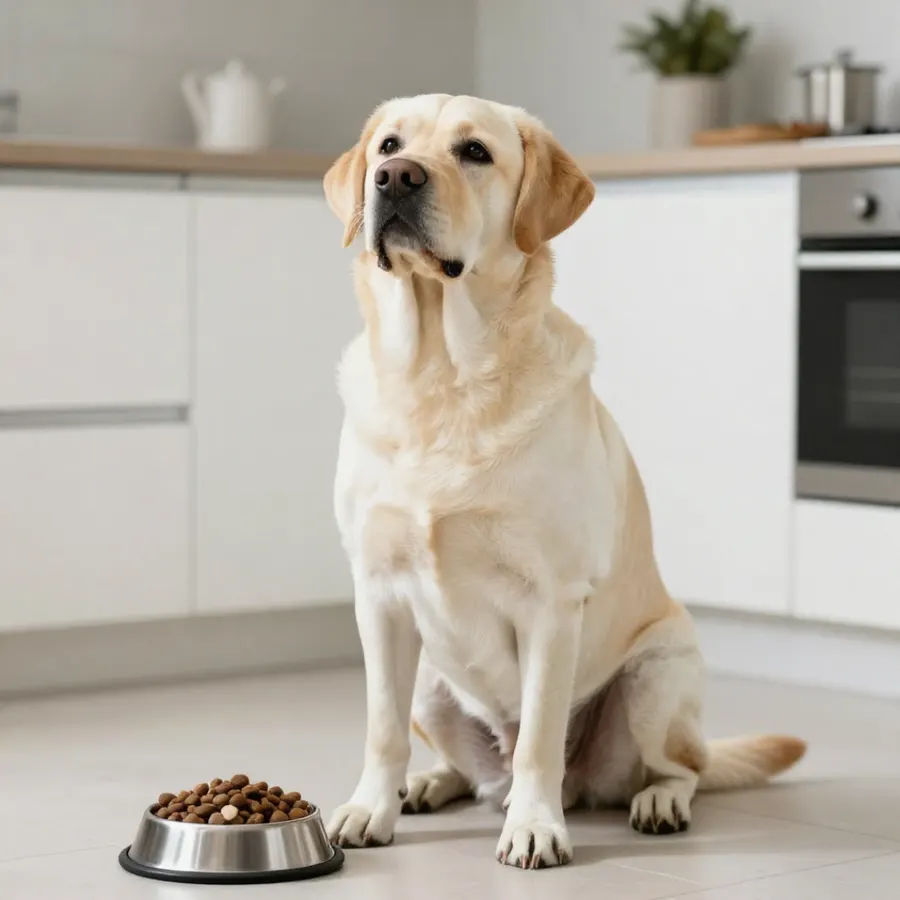
Feeding a Labrador: Portions, Weight & Avoiding Obesity
Why Labradors gain weight so easily — and exactly how to portion, treat and slow-feed to keep yours lean and healthy.

How Long Do Labradors Live? Lifespan & Healthy Ageing
How long Labradors typically live, what shortens or extends it, and how to help yours reach a long, comfortable old age.
What Does Pet Insurance Cover?
A plain-English look at what UK pet insurance typically pays for, the cover types, and the exclusions that catch owners out.

How Long Do English Springer Spaniels Live? Lifespan & Health
How long Springer Spaniels live, the ear, eye and inherited conditions the breed is prone to, and how to help yours stay healthy.

How Long Do English Mastiffs Live? Lifespan & Health
English Mastiffs live around 7–10 years. The giant-breed lifespan, plus the bloat, heart, joint and cancer issues this gentle giant is prone to — and how to help yours stay well.