





Crossbreed dogs: what they are and how to choose one
What crossbreed dogs actually are, the most common types, and what to check on health, temperament and sourcing before choosing one
The quick answer
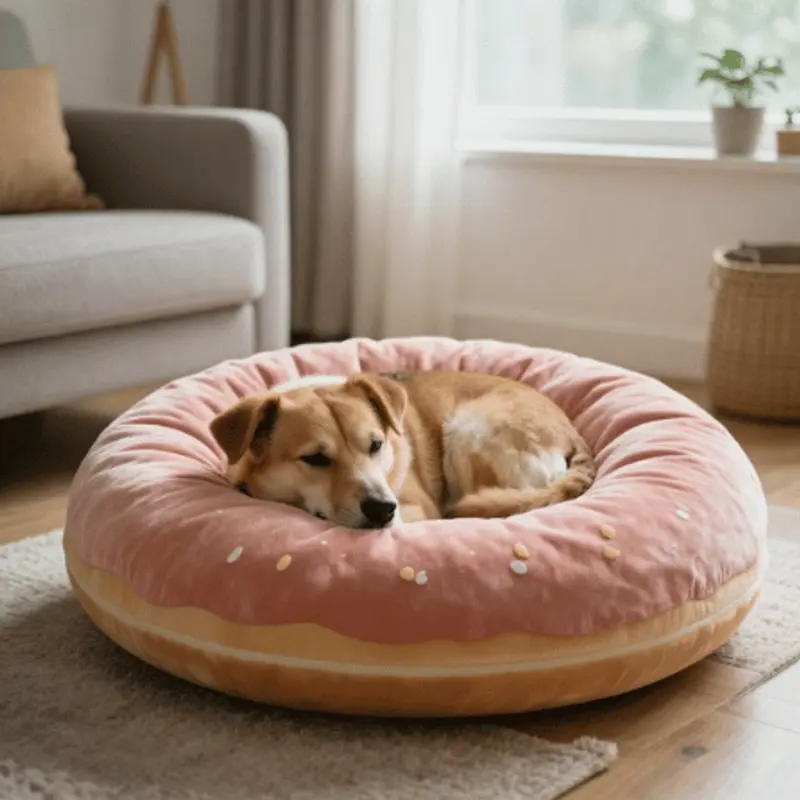
A crossbreed has two identifiable purebred parents of different breeds, such as a Poodle and a Cocker Spaniel. A mixed-breed dog (or mongrel) usually has undocumented ancestry, often involving several breeds over multiple generations, so its exact make-up isn't known.
If you're weighing up a crossbreed dog, you're in good company. Cockapoos, cavapoos and labradoodles are now some of the most familiar dogs on any British street, and mixed-breed dogs of every combination fill rescue centres up and down the country. But "crossbreed" gets used loosely, and a lot of the marketing around so-called designer dogs doesn't hold up to scrutiny.
This guide explains what a crossbreed dog actually is, how it differs from a mixed breed and a pedigree, what the evidence really says about crossbreed health, and what to look for whether you're buying from a breeder or adopting from a rescue.
None of this is about steering you away from crossbreeds — many make wonderful family dogs. It's about making sure you choose one with your eyes open, based on the individual dog in front of you rather than assumptions about the mix.
What is a crossbreed dog?
A crossbreed is a dog with two identifiable purebred parents of different breeds. The Royal Kennel Club defines a crossbreed simply as "a dog whose parents are of two different breeds, or a mixture of several breeds." That's different from a mixed-breed dog (sometimes called a mongrel or a moggy), whose ancestry usually isn't known or documented, often because several generations of unplanned or informal breeding lie behind it.
A pedigree or purebred dog, by contrast, has generations of documented ancestry within a single recognised breed, usually registered with a body like the Kennel Club.
Designer dogs and the F1/F2 system
When a crossbreed combines the names of its parent breeds — Cockapoo (Cocker Spaniel x Poodle), Labradoodle (Labrador x Poodle), Cavapoo (Cavalier King Charles Spaniel x Poodle), Puggle (Pug x Beagle) — it's often marketed as a "designer dog." You'll also see breeders describe litters as F1, F1b or F2. The "F" stands for filial, meaning offspring of a cross:
- F1 — the direct offspring of two different purebred parents (e.g. a Poodle x Cocker Spaniel).
- F1b — an F1 dog bred back to one of the original purebred lines (often used to push coat type further towards the Poodle parent).
- F2 — the offspring of two F1 dogs.
These labels describe ancestry, not quality, and they don't guarantee a particular look, coat or temperament. Poodle-cross litters in particular can vary enormously, even within the same litter, in coat texture, shedding and size.
Kennel Club registration
Crossbreeds aren't eligible for full Kennel Club breed registration, which is reserved for recognised pedigree breeds. However, the Royal Kennel Club has run an Activity Register for crossbreeds and mixed breeds for more than 50 years, which allows them to compete in activities such as agility, obedience, rally and heelwork to music, even though they can't be shown in breed classes.
The most common crossbreeds in the UK
While there's no official registration body tracking every crossbreed litter born in the UK, a handful of poodle-cross types have become extremely well established:
- Cockapoo — Cocker Spaniel x Poodle, prized for a soft coat and affectionate, biddable temperament.
- Cavapoo — Cavalier King Charles Spaniel x Poodle, typically small and gentle, popular as a family or companion dog.
- Labradoodle — Labrador Retriever x Poodle, originally developed in Australia in the 1980s as a guide dog candidate for allergy sufferers, now widespread as a family pet.
- Sprocker — Springer Spaniel x Cocker Spaniel, popular with working and country households for its energy and nose.
- Puggle — Pug x Beagle, a smaller, sturdier mix than either parent alone.
- Jackahuahua, Sprollie, Lurcher-types and countless one-off mixes — the true "mixed breed" end of the spectrum, often the product of unplanned litters or several generations of crossing.
Lurchers deserve a specific mention: technically a crossbreed between a sighthound (Greyhound, Whippet, Saluki) and another breed, lurchers have a long history in the UK as working and companion dogs and are extremely common in rescue centres.
Do crossbreeds live longer and get ill less often?
This is the claim behind most crossbreed marketing, and the honest answer is: it depends on the mix, and it's more nuanced than "crossbred equals healthier."
The underlying idea is hybrid vigour (heterosis) — the theory that breeding two genetically distinct parents reduces the chance of a puppy inheriting two copies of the same harmful recessive gene, because pedigree breeds are bred within a comparatively narrow gene pool and can carry a higher load of breed-specific inherited conditions. There's a real genetic basis to this for some conditions. Broader research comparing mixed-breed and purebred dogs has found that purebred dogs had a higher prevalence than mixed-breed dogs for several individual inherited conditions, including certain heart conditions, some cataracts, elbow dysplasia, epilepsy, hypothyroidism, and intervertebral disc disease.
But hybrid vigour is not automatic or guaranteed, and it doesn't apply evenly to every crossbreed pairing. The Royal Veterinary College's VetCompass programme ran the world's largest study into the health of the three most common designer crossbreeds — Cockapoos, Labradoodles and Cavapoos — comparing 3,424 crossbred dogs against 5,978 of their purebred parent-breed dogs, based on veterinary health records from 9,402 UK dogs. Published in PLOS ONE in 2024, the study looked at 57 common disorders across 342 breed-by-disorder comparisons. The result: there was no statistically significant difference in risk for 86.6% of comparisons. Where differences did exist, crossbreeds had higher odds of a disorder in 7.0% of comparisons and lower odds in 6.4%. All three poodle crosses, for example, showed higher odds of ear infections than their non-Poodle parent breed, and higher odds of gastrointestinal upsets than their Poodle parent — while Cockapoos and Labradoodles had lower odds of patellar luxation (a slipping kneecap) than Poodles.
The researchers concluded that owners should choose a dog based on breeding conditions, temperament, conformation and the health of the parents — not an assumption that "crossbred" automatically means "healthier."
Blue Cross makes a similar point in its buying advice: crossbreeds have a wider gene pool than pedigree dogs, but that doesn't mean any individual crossbred puppy is guaranteed to be healthy, and irresponsible breeders have used the "crossbreeds are healthier" myth as an excuse to skip health testing altogether.
What this means in practice
- Don't choose a crossbreed purely because you've been told it will be healthier than a pedigree — ask about the specific parent breeds and their known conditions instead.
- A well-bred crossbreed from health-tested parents is likely to be a safer bet than a poorly-bred pedigree, and vice versa. Breeding practice matters more than the label.
- If you're drawn to a poodle cross for its coat, remember there's no guarantee of a specific texture, and coat can vary between siblings in the same litter.
The hypoallergenic myth
Many people choose a Cockapoo, Cavapoo or Labradoodle because they've been told it's hypoallergenic. It's worth being realistic about this: there is no dog breed or crossbreed that is truly hypoallergenic. Allergens come mainly from proteins in a dog's dander, saliva and urine, not just loose fur, and every dog produces them to some degree.
A poodle-cross puppy might inherit the Poodle parent's low-shedding coat, which can mean less dander is spread around the home — but it might equally inherit the other parent's coat and shedding pattern instead, and this can vary within the same litter. If allergies are a serious concern for anyone in your household, spend time with the actual puppy (and ideally its parents) before committing, rather than relying on the breed name.
Temperament: what to expect
One of the genuine unpredictabilities of crossing two breeds is temperament. A purebred dog from health-tested, well-socialised parents from a single, well-documented breed gives you a reasonably good idea of typical temperament traits. With a crossbreed, especially a first-generation (F1) cross of two very different breeds, you're combining two different behavioural profiles, and it isn't possible to predict exactly which traits — energy level, prey drive, trainability, noise sensitivity — an individual puppy will inherit from each side.
This is less of an issue when the two parent breeds are behaviourally similar (a Cockapoo, for instance, combines two biddable, people-focused breeds), and more of an issue when they're very different, such as crossing a high-drive working breed with a placid companion breed. If you're considering a specific cross, research both parent breeds thoroughly, not just the designer name, so you have a realistic picture of the range of temperaments you might end up with.
Choosing a crossbreed responsibly
Whether you buy from a breeder or take on an older crossbreed, the checks are largely the same as they would be for a pedigree puppy:
- Ask to see both parents, or at least the mother, and ask for evidence of health testing appropriate to both breeds in the mix — not just one.
- Avoid sellers offering multiple breeds or types at once. The PDSA and Blue Cross both flag this as a common sign of a puppy farm or commercial dealer rather than a responsible small-scale breeder.
- Never buy online without seeing the puppy with its mother in the place it was born. Puppy farmed and illegally imported puppies are frequently sold as crossbreeds because it's harder for a buyer to know what to expect or verify parentage.
- Use the free Puppy Contract (developed by the RSPCA, British Veterinary Association and Kennel Club) to structure your questions to the breeder and to have a written record of what you were told.
- Consider a KC Assured Breeder if you're going down the breeder route for a designer cross, since some assured breeders now breed popular crosses to the same welfare standards required for pedigree litters.
If your priority is a healthy, well-socialised dog rather than a specific look, rehoming is well worth considering. Battersea Dogs & Cats Home points out that mixed-breed dogs are often less prone to some of the inherited conditions linked to specific pedigree lines, and every mixed-breed dog they rehome comes with an assessment of temperament and needs carried out by their behaviour team, which can tell you far more about how a dog will fit your life than a breed label ever could. PDSA's own advice puts rehoming centres — Battersea, Blue Cross, RSPCA and similar charities — first on the list of places to look before considering a breeder.
Crossbreeds and cost of ownership
A crossbreed puppy from a popular pairing like a Cockapoo or Cavapoo can carry as high a price tag as many pedigree breeds, so don't assume choosing a crossbreed will automatically be the cheaper route. Ongoing costs — food, insurance, grooming, vet care — depend far more on the dog's size, coat type and individual health than on whether it's a crossbreed or a pedigree. Poodle-cross coats in particular usually need professional grooming every six to eight weeks to prevent matting, which is a recurring cost worth budgeting for before you commit.
Pet insurance is worth arranging as soon as you bring a crossbreed home, exactly as you would for a pedigree dog. Insurers assess premiums based on breed mix, size and known predispositions, and having a puppy insured from day one avoids gaps in cover for conditions that emerge later.
When to see your vet
Book a general health check with your vet within the first few days of bringing any crossbreed puppy or adult dog home, even if it looks and behaves perfectly well. Your vet can flag early signs of joint, ear, skin or eye issues linked to either parent breed, confirm vaccination and worming status, and advise on a sensible weight and exercise plan for the specific mix you have. If you're ever unsure whether a symptom is linked to a breed-specific predisposition, your vet is best placed to interpret it for your individual dog.
If you're planning exercise for a new crossbreed, our Dog Walking Calculator can help you judge a sensible daily amount based on size and age, and our Pet Calorie Calculator is useful for working out feeding amounts once you know your dog's likely adult weight.
*This is general guidance, not a substitute for advice from your vet, who can assess your individual pet.*
Sources
- Royal Kennel Club — what a crossbreed dog is, Activity Register for crossbreeds (royalkennelclub.com).
- Royal Veterinary College VetCompass, published in PLOS ONE — "The doodle dilemma: how the physical health of 'Designer-crossbreed' Cockapoo, Labradoodle and Cavapoo dogs compares to their purebred progenitor breeds" (journals.plos.org).
- Blue Cross — buying a puppy, avoiding puppy farms, crossbreed health testing advice (bluecross.org.uk).
- PDSA — choosing a healthier pet and getting a dog, including crossbreeds and rehoming order of preference (pdsa.org.uk).
- Battersea Dogs & Cats Home — mixed breed dogs advice and rehoming assessment (battersea.org.uk).
Common questions
What's the difference between a crossbreed and a mixed-breed dog?
A crossbreed has two identifiable purebred parents of different breeds, such as a Poodle and a Cocker Spaniel. A mixed-breed dog (or mongrel) usually has undocumented ancestry, often involving several breeds over multiple generations, so its exact make-up isn't known.
Are crossbreed dogs healthier than pedigree dogs?
It depends on the specific mix. A 2024 Royal Veterinary College VetCompass study found no significant health difference in 86.6% of comparisons between Cockapoos, Labradoodles and Cavapoos and their purebred parent breeds. Crossing breeds can reduce the risk of some inherited conditions, but it isn't a guarantee, and breeding conditions and parental health testing matter more than the crossbreed label alone.
Are Cockapoos and Labradoodles hypoallergenic?
No dog is truly hypoallergenic, including poodle crosses. Allergens come from dander, saliva and urine, not just fur, and a puppy may inherit either parent's coat type, so shedding and allergen levels can vary even within the same litter.
Can crossbreed dogs be registered with the Kennel Club?
Crossbreeds aren't eligible for full Kennel Club breed registration, which is reserved for recognised pedigree breeds. However, the Kennel Club's Activity Register allows crossbreeds and mixed breeds to take part in agility, obedience, rally and heelwork to music.
Should I buy a crossbreed puppy or adopt one from a rescue?
PDSA and Battersea both recommend checking rehoming centres first, since charities assess a dog's temperament and health before rehoming. If you do buy from a breeder, ask to see both parents, request health test results for both breeds in the mix, and avoid any seller advertising multiple breeds at once.
About the author
Matt Garnett — founder, Giddy Pets
Matt started Giddy Pets to make getting pets the good stuff simpler and fairer. Everything in these guides comes from real life with pets and a lot of trial and error — it's practical guidance, not veterinary advice. If a guide gets something wrong, tell him directly.
Advice & planning
Free tools & more guides
Practical calculators and trusted guides relevant to this product.
Read next
How to Choose a Dog Breed That Suits Your Life
A practical, honest guide to choosing a dog breed - matching energy, size, grooming and temperament to your home and lifestyle, and why the right fit matters more than looks.

Reasons to adopt a pet rather than buy one
The practical, financial and welfare reasons to choose a rescue centre over a breeder or seller when you're ready for a pet

Adopting a Rescue Dog in the UK: How the Process Works
An honest guide to adopting a rescue dog in the UK - how the process works, what to expect from a home check, the questions to ask, and how to choose the right dog for your home.