
Best dog breeds for protection
Which breeds are genuinely suited to protection, what their temperament really needs, and how training (not size) makes a dog a good guardian
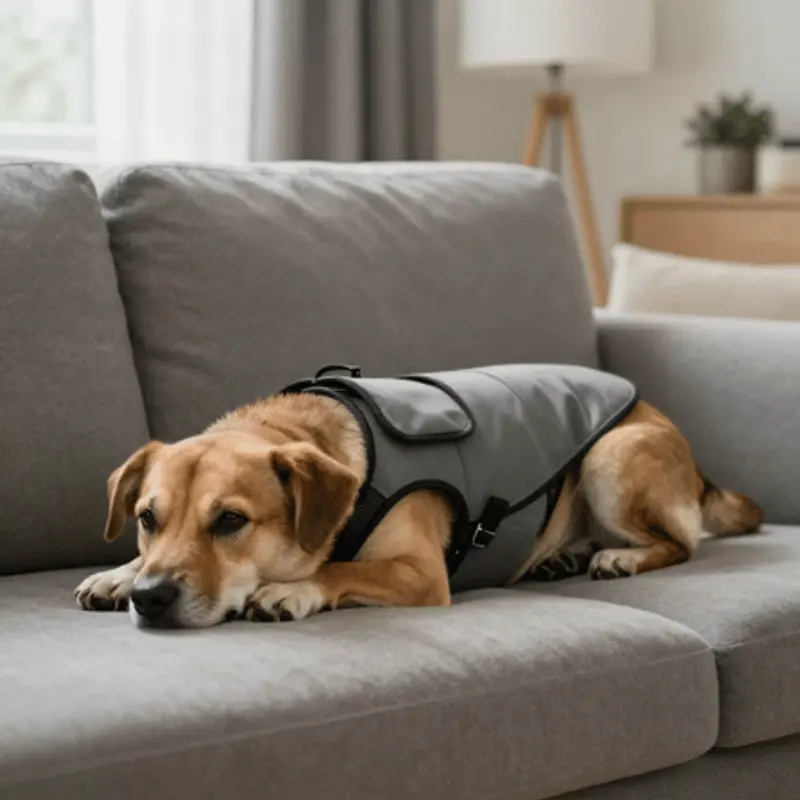
The quick answer
There's no single "best" breed, as suitability depends on your household and lifestyle as much as the dog. German Shepherds, Rottweilers, Dobermanns, Boxers and Bullmastiffs are the breeds most commonly associated with protection, but a well-socialised, well-trained dog of almost any working breed will be a more reliable guardian than an untrained one chosen for looks alone.
If you're looking for a dog that will look out for your home and family, it's tempting to reach straight for a list of "guard dog breeds" and pick the biggest, boldest name on it. In reality, a dog's protective instinct is only ever half of the story. The other half — the half that actually determines whether you end up with a calm, confident companion or a nervous, reactive liability — is early socialisation, consistent training and an owner who understands what they've taken on.
This guide rounds up the breeds most commonly associated with protection and personal or property security in the UK, what their temperament genuinely looks like day to day, and the training and lifestyle commitment each one needs. It also covers where the law stands on "dangerous" breeds, because that context matters just as much as coat colour or bite strength when you're choosing a dog to share your home with.
None of this is about turning a family pet into a weapon. Every breed below can be, and usually is, a loving, sociable companion. The difference between a well-adjusted protective breed and a genuinely difficult dog almost never comes down to genetics alone.
Breed instinct versus upbringing: what actually makes a dog protective
The RSPCA is clear that while different breeds may be more likely to show certain types of behaviour, a dog's attitude will greatly depend on how it's raised and trained. Temperament has a hereditary component, but it's shaped constantly by environment, socialisation and the consequences a dog experiences for its behaviour throughout life.
This cuts both ways. A breed with strong guarding instincts that is well socialised as a puppy, exposed calmly to visitors, other dogs and everyday noise, and trained using reward-based methods, tends to grow into a dog that is alert without being anxious. The same breed, isolated, understimulated or allowed to rehearse barking and lunging at every visitor, can become genuinely difficult to live with. The RSPCA also points out that a breed's reputation for being a "friendly family dog" is no guarantee either — a dog of any breed that isn't trained and socialised early can become afraid of strangers, unfamiliar dogs and situations it doesn't understand.
In other words: breed tells you what a dog was originally bred to do and what tendencies it's likely to carry. It does not tell you what that individual dog will actually be like in your home.
What "guarding instinct" means in kennel club terms
The Kennel Club groups pedigree breeds by original function, and PDSA's explanation of these groups is a useful starting point. The working group, where most of the breeds below sit, historically includes guard dogs and rescue dogs, and tends to contain larger breeds with high activity needs. PDSA notes that dogs bred for guarding have a natural instinct to alert their owners to anything they see as unusual — which is precisely the trait that makes them appealing for protection, and precisely the trait that needs channelling through training so it doesn't tip into nuisance barking or territorial aggression.
It's worth remembering that "alerting" and "protecting" are not the same as "attacking." A dog that barks to let you know someone is at the door is doing its job. A dog that lunges at every visitor has not been given the tools to cope with normal life, regardless of what breed it is.
German Shepherd Dog — the versatile all-rounder
The German Shepherd is one of the most widely used breeds in police, military, security and assistance work worldwide, and it's a mainstay of UK protection and family-guarding discussions for good reason. The Kennel Club's breed standard describes the ideal temperament as "steady of nerve, loyal, self-assured, courageous and tractable," explicitly noting the dog should "never" be nervous, over-aggressive or shy — a reminder that a genuinely well-bred, well-raised German Shepherd is defined by stability, not aggression.
Dogs Trust echoes this in practical terms: German Shepherds are typically high-energy dogs that need substantial daily exercise, exploration and mental stimulation to stay physically and mentally healthy, and they thrive with owners who enjoy an active outdoor lifestyle. Training is non-negotiable — not because the breed is unusually difficult, but because an intelligent, energetic dog left under-exercised and under-trained will find its own, usually unwelcome, ways to occupy itself. Positive reinforcement, consistent recall work and early socialisation with a range of people, dogs and environments all feature in Dogs Trust's guidance. Households with children can also access Dogs Trust's family workshops on living safely and respectfully alongside a dog.
Rottweiler — calm strength that depends entirely on its start in life
The Rottweiler's Kennel Club breed standard describes the ideal dog as "good natured, not nervous, aggressive or vicious; courageous, biddable, with natural guarding instincts." That word "biddable" — meaning responsive to training — is doing a lot of work in that sentence. A Rottweiler's guarding instinct is real, but the breed standard is explicit that the temperament should never tip into nervousness or unprovoked aggression.
Dogs Trust's guidance on Rottweilers reinforces that every dog is an individual whose preferences and confidence are shaped by early exposure to the world, not fixed by breed alone. Like the German Shepherd, Rottweilers are described as high-energy dogs needing substantial daily exercise and enrichment, with training built on positive reinforcement rather than confrontation or punishment. A bored, under-exercised, undertrained Rottweiler is a genuine handful given its size and strength; a well-socialised, well-exercised one is frequently described by owners as an affectionate, biddable family dog that happens to look imposing to strangers.
Dobermann — sharp, quick to learn, and sensitive to how it's trained
The Kennel Club's Dobermann standard calls for a dog that is "intelligent and firm of character, loyal and obedient," with a temperament that is "bold and alert" — and it flags shyness or viciousness as equally unacceptable in the breed. Dobermanns are frequently praised by trainers for how quickly they pick up commands, but that same intelligence and sensitivity means harsh handling tends to backfire, producing anxiety rather than obedience. Reward-based, consistent training from puppyhood, alongside thorough socialisation, brings out the loyal, biddable side of the breed's temperament that the standard describes.
Boxer and Bullmastiff — natural deterrents with gentler day-to-day temperaments
Not every protective breed needs to look aggressive to be an effective deterrent. The Boxer's size, alertness and natural wariness of strangers make it a long-standing choice for family security, while its playful, affectionate nature with people it knows makes it a popular household companion. The Bullmastiff was originally developed in 19th-century England specifically to guard estates against poachers, combining the size and courage needed to physically deter an intruder with a temperament the Kennel Club standard describes as "high-spirited, alert and faithful" rather than hostile. Both breeds tend to be calmer indoors than their working-group cousins, but both are large, strong dogs that need early socialisation and firm, consistent handling — their sheer size means poor training has bigger consequences than it would with a smaller breed.
Training a protective breed responsibly
Whichever breed you choose, the training priorities are broadly the same, and they're grounded in how territorial behaviour actually develops. VCA Hospitals explains that territorial aggression — the barking, growling or lunging some dogs direct at people or animals approaching what they see as their space — is often rooted in anxiety and an alerting or defensive response to something unfamiliar, and that certain breeds are simply more predisposed to guarding behaviours than others. Left unmanaged, these responses tend to intensify: a dog that barks at a "threat" through a fence or window and then sees that threat retreat is effectively rewarded for the outburst, and the behaviour escalates over time.
VCA's recommended approach — which applies just as well to a Rottweiler puppy as to any other dog — centres on:
- Early, wide-ranging socialisation. Exposing puppies calmly to a variety of visitors, sounds and situations while young, so novelty doesn't automatically read as a threat.
- Teaching a reliable "settle" behaviour at doors and entry points, so the dog has an alternative response to rehearse instead of barking or lunging.
- Desensitisation and counter-conditioning, gradually reducing sensitivity to specific triggers using controlled, low-intensity exposure paired with rewards.
- Avoiding punishment, which VCA notes increases anxiety and fear rather than resolving the underlying cause of the behaviour.
- Managing the environment in the meantime — blocking visual access to triggers such as a busy street through a front window, or removing the dog from the room before visitors arrive, if that's what keeps everyone calm and safe.
None of this requires specialist "protection dog" training in the way it's sold commercially. For the overwhelming majority of households, a well-socialised, obedience-trained dog that feels secure in its environment is a far better guardian than one drilled in bite work it will likely never need to use. If you're building a daily routine around exercise and training, our Dog Walking Calculator can help you work out how much activity a working-group breed like these actually needs to stay settled.
Common mistakes people make with guarding breeds
A few patterns come up again and again with these breeds specifically:
- Choosing the breed for its reputation, not its needs. A dog picked purely because it "looks intimidating" is being set up to fail if the owner hasn't budgeted for the exercise, training and socialisation the breed actually requires.
- Under-socialising out of a mistaken belief that a "guard dog" should be wary of everyone. A dog that has never met a stranger calmly has no framework for telling a genuine threat from a visitor, a delivery driver or a child at the park.
- Leaving the dog unsupervised in a garden or tied outside. This is one of the most common ways territorial barking becomes entrenched, since every "intruder" who eventually walks away reinforces the behaviour.
- Relying on size or breed alone for security, rather than training, secure boundaries, and — where genuinely needed — home security measures. A large dog with no training is not a reliable deterrent; a well-trained, confident dog of almost any size usually is.
A protective dog is a well-trained, well-socialised dog first — the breed is secondary to how it's raised.
The legal picture: breed, behaviour and the law in the UK
Before choosing any large or powerful breed for a protective role, it's worth understanding where UK law actually stands. The British Veterinary Association has long opposed breed-specific legislation, stating plainly that "all dogs, whatever their breed type or size, are capable of showing aggression," and arguing that treating particular breeds as inherently dangerous "creates the incorrect impression that aggression is related to breed type." The BVA instead calls for a "deed not breed" approach: stronger enforcement of existing dog control law, better data on biting incidents, and public education on responsible ownership, rather than banning dogs by appearance.
That position doesn't mean breed-specific restrictions don't exist in the UK — they do, under the Dangerous Dogs Act 1991 and its later additions — but it's a useful reminder that owning any of the breeds in this guide comes with legal responsibility regardless of what the dog is used for. Whatever breed you choose, you're responsible in law for keeping it, and anyone it interacts with, safe: this means secure boundaries, control in public places, and being realistic about a dog's training level before it's ever put in a position to "protect" anything.
Choosing the right breed for your household
Match the breed to your actual life, not the other way round. The RSPCA's guidance on choosing a breed asks the same practical questions whatever type of dog you're considering: is your home and outdoor space big enough for a large or medium breed, do you have the time every single day for exercise, training and company, and can you commit to years of ongoing socialisation rather than a few weeks of puppy classes? PDSA adds that working-group breeds in particular are likely to need considerably more exercise and mental stimulation than a companion breed, and that individual personality still varies significantly within any breed group.
If you're weighing up a working or guarding breed against your household, our Pet Ownership Quiz is a useful first step for thinking through the time, budget and lifestyle commitment involved before you commit to a breed this demanding.
When to see your vet or a behaviourist
Occasional alert barking at the door is normal in every breed on this list. What isn't normal, and what warrants professional help, is a dog that lunges, snaps, guards resources aggressively, or seems constantly on edge around unfamiliar people or situations. VCA's guidance on territorial aggression is clear that these behaviours tend to worsen without intervention, not resolve on their own. If your dog is showing escalating guarding behaviour, speak to your vet first to rule out pain or an underlying medical cause, and ask for a referral to a qualified clinical behaviourist. This is especially important with a large, powerful breed, where the practical stakes of an unmanaged behaviour problem are simply higher.
*This is general guidance, not a substitute for advice from your vet, who can assess your individual pet.*
Sources
- RSPCA — choosing a puppy and breed advice (rspca.org.uk).
- RSPCA — dog breeds, traits and behaviour (rspca.org.uk).
- PDSA — dog breed groups explained (pdsa.org.uk).
- PDSA — getting a dog: what we recommend (pdsa.org.uk).
- Dogs Trust — German Shepherd Dog breed advice (dogstrust.org.uk).
- Dogs Trust — Rottweiler breed advice (dogstrust.org.uk).
- The Kennel Club — German Shepherd Dog, Rottweiler, Dobermann and Bullmastiff breed standards (royalkennelclub.com).
Common questions
What is the best dog breed for protection in the UK?
There's no single "best" breed, as suitability depends on your household and lifestyle as much as the dog. German Shepherds, Rottweilers, Dobermanns, Boxers and Bullmastiffs are the breeds most commonly associated with protection, but a well-socialised, well-trained dog of almost any working breed will be a more reliable guardian than an untrained one chosen for looks alone.
Are guard dog breeds safe around children?
They can be, provided the dog is thoroughly socialised from puppyhood and children are taught to interact with dogs safely and respectfully. Dogs Trust runs family workshops specifically to help households with children build safe routines with larger breeds. No breed should ever be left unsupervised with young children.
Do guard dogs need special protection training?
Most households don't need specialist "protection dog" training. What genuinely matters is early socialisation, reward-based obedience training and teaching the dog to settle calmly at the door, which is the same foundation any well-behaved dog needs, regardless of breed.
Is it illegal to own a guard dog breed in the UK?
None of the breeds covered in this guide are banned in the UK, though all dog owners are bound by the Dangerous Dogs Act 1991 and must keep their dog under control in public. The British Veterinary Association opposes judging risk by breed alone and instead calls for a "deed not breed" approach based on individual behaviour.
How much exercise does a guarding breed like a German Shepherd or Rottweiler need?
Both are working-group breeds that PDSA and Dogs Trust describe as high-energy, typically needing well over an hour of exercise a day plus mental stimulation such as training and enrichment. Under-exercised dogs of these breeds are far more likely to develop unwanted behaviours, including excessive barking or reactivity.
About the author
Matt Garnett — founder, Giddy Pets
Matt started Giddy Pets to make getting pets the good stuff simpler and fairer. Everything in these guides comes from real life with pets and a lot of trial and error — it's practical guidance, not veterinary advice. If a guide gets something wrong, tell him directly.
Free tools & more guides
Read next

How to House Train an Adult or Rescue Dog
Patient, force-free toilet training for adult and rescue dogs: a simple routine, generous rewards, and how to handle accidents without scolding.
Teaching a Reliable 'Settle' on a Mat: A Force-Free Guide
A calm, reward-based way to teach your dog a reliable settle on a mat – so they switch off in the kitchen, the pub, or when guests arrive.
How to Teach the 'Wait' Command (and How It Differs from Stay)
Teach a quick, reliable 'wait' for doors, kerbs and the car boot. A kind, force-free method, plus a clear explanation of wait versus stay.
How to Get a Dog to Focus When They Won't Listen
When your dog 'won't listen', they're usually overwhelmed, not stubborn. Here's how to build focus around distractions with kind, reward-based steps.