


Are Staffordshire Bull Terriers Good Family Dogs?
Few breeds are as misunderstood as the Staffordshire Bull Terrier. The truth? The Kennel Club lists affection with children right in the breed standard, and rescues struggle to keep them in kennels because they love people too much. Here's an honest, balanced look at whether a Staffie suits family l
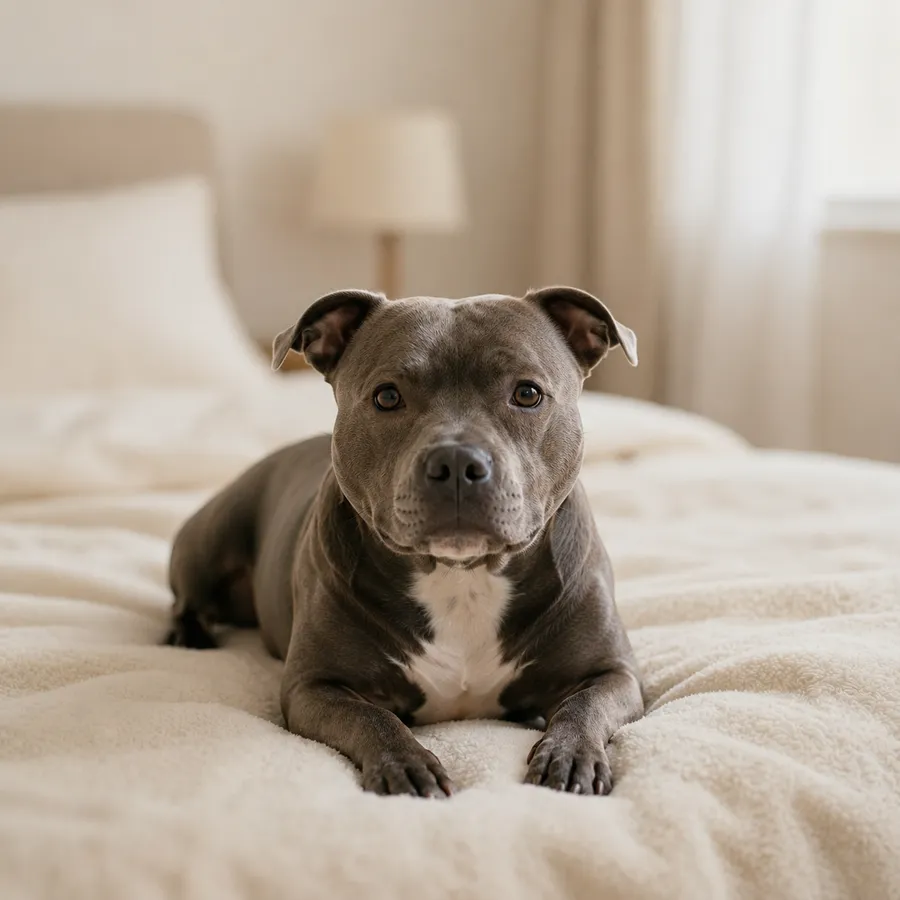
The quick answer
Generally yes — the Kennel Club includes affinity with children in the breed standard, and Staffies are known for being affectionate and patient with kids. That said, no dog should ever be left unsupervised with young children. The "nanny dog" nickname reflects their loving nature, not a substitute for adult supervision.
Ask anyone who's actually shared their sofa with a Staffordshire Bull Terrier and you'll hear the same thing: soppy, devoted, and utterly obsessed with their people. Yet the breed carries an unfair reputation that bears little resemblance to the dog snoring on the rug. So let's look at the facts, fairly, and answer the real question — are Staffies good family dogs?
The "nanny dog" reputation, honestly explained
Staffies are often called "nanny dogs" because of their genuine fondness for children. The Kennel Club is unusually direct about it: affinity with children and a love of people are written into the official breed standard, and the breed is described as a reliable, affectionate family companion. The Blue Cross, which works hard to defend bull breeds, agrees they can make wonderful family pets.
The one caveat worth being honest about: the "nanny dog" nickname is affectionate folklore, not a licence to leave any dog unsupervised with a child. No breed should be treated as a babysitter. A Staffie's patience is real, but supervision around young children is non-negotiable — for the child's sake and the dog's. The temperament is loving; the responsibility is yours.
Affectionate, but strong and full of beans
Staffies are compact but seriously sturdy and powerful for their size. They're not a large breed — the Kennel Club classes them as small and happy in a smaller home — but they're muscular, bouncy and enthusiastic. That energy needs an outlet: budget for up to an hour of exercise a day, plus games and brain work. A bored, under-exercised Staffie is a wriggly, mouthy Staffie.
The upside is that they're highly intelligent and genuinely want to please, which makes training rewarding. Reward-based methods suit their eager, food-motivated nature beautifully. Their strength means good lead manners and basic recall really matter — not because they're aggressive, but because an unschooled, over-excited dog of any breed is a handful.
The honest bit: other dogs
This is where fairness means not sugar-coating. Staffies descend from a fighting history, and while that does not make them dangerous to people, some individuals can be dog-selective — meaning they don't always get along with unfamiliar dogs. It varies hugely from dog to dog. Early, positive socialisation makes an enormous difference, and many Staffies live perfectly happily alongside other dogs and cats. But go in with eyes open: introduce new dogs carefully, supervise, and don't assume every Staffie will want to be best friends at the park.
They really, really hate being alone
If there's one deal-breaker, it's this. Staffies are famously people-dependent. The Blue Cross notes they struggle in kennel life precisely because they crave human company so much. Left alone for long stretches, many become distressed or destructive. This is a breed for households where someone is around for much of the day, or where the dog can come along for the ride. They are not a leave-them-to-it dog.
Countering the "dangerous" stereotype
Let's be clear and factual. The Staffordshire Bull Terrier is not a banned breed in the UK — it is a recognised, legal pedigree, often confused with the prohibited "pit bull type" under the Dangerous Dogs Act. They are entirely different. Welfare organisations actively work to dispel the stereotype: the Blue Cross runs RespectaBULL workshops in schools and colleges precisely because bull breeds are so unfairly judged, and Staffies are repeatedly among the most overlooked dogs in rescue purely because of looks. The aggression myth doesn't hold up against how the breed is described by the people who know them best — affectionate, courageous, and devoted.
So, who suits a Staffie?
A Staffie thrives with an active, present family who'll commit to training and socialisation, enjoy a dog that wants to be part of everything, and won't leave them home alone all day. They're brilliant with children in the right, supervised home, and their cuddly devotion is genuinely hard to beat. They're less ideal for households out all day, or for owners hoping the dog will simply tolerate every other dog without effort.
Get the basics right — exercise, training, company, sensible introductions — and you get one of the most loyal, loving, fun family dogs around. The reputation is a stereotype. The dog is a sweetheart.
Sources
- The Kennel Club (Royal Kennel Club): Staffordshire Bull Terrier breed information — temperament, exercise and breed standard. royalkennelclub.com
- Blue Cross: "Do Staffordshire bull terriers make good family pets?" and RespectaBULL campaign — bluecross.org.uk
- Blue Cross: "It's only skin deep — Staffies are the most unwanted dog breed" — bluecross.org.uk
- Animal Friends: "Myth-busting: Staffordshire Bull Terriers" — aggression studies and legal status — animalfriends.co.uk
Common questions
Are Staffordshire Bull Terriers good with children?
Generally yes — the Kennel Club includes affinity with children in the breed standard, and Staffies are known for being affectionate and patient with kids. That said, no dog should ever be left unsupervised with young children. The "nanny dog" nickname reflects their loving nature, not a substitute for adult supervision.
Are Staffies dangerous or banned in the UK?
No. The Staffordshire Bull Terrier is a fully legal, recognised pedigree breed and is not banned under the Dangerous Dogs Act — they are often confused with the prohibited "pit bull type", which is a different dog. Studies cited by welfare bodies find Staffies show no increased aggression compared with other breeds.
Do Staffordshire Bull Terriers get on with other dogs?
It depends on the individual. Some Staffies are dog-selective and may not get on with unfamiliar dogs, a trait linked to their history. Early, positive socialisation makes a big difference, and many live happily with other dogs and cats. Introduce new dogs carefully and supervise rather than assuming instant friendship.
How much exercise does a Staffie need?
Up to around an hour a day, according to the Kennel Club, plus play and mental stimulation. They're compact but muscular and energetic, so a mix of walks, games and training works best. A well-exercised Staffie is a far calmer, happier housemate.
Can you leave a Staffordshire Bull Terrier alone all day?
It's not recommended. Staffies are intensely people-oriented — the Blue Cross notes they struggle even in kennels because they crave human company. Left alone for long periods, many become distressed or destructive. They suit households where someone is around for much of the day.
About the author
Matt Garnett — founder, Giddy Pets
Matt started Giddy Pets to make getting pets the good stuff simpler and fairer. Everything in these guides comes from real life with pets and a lot of trial and error — it's practical guidance, not veterinary advice. If a guide gets something wrong, tell him directly.
Advice & planning
Free tools & more guides
Practical calculators and trusted guides relevant to this product.
Read next
Are Staffordshire Bull Terriers Dangerous? An Honest Guide
An evidence-based look at whether Staffies are dangerous — their real temperament, legal status, and what responsible ownership involves.
How Long Do Staffordshire Bull Terriers Live? Lifespan & Health
How long Staffies live, the DNA-testable inherited conditions to know about, and how to help yours stay well for years.
How Much Exercise Does a Staffy Need?
A healthy adult Staffy needs a minimum of an hour of exercise a day, split across a few outings rather than one big slog. They're muscular little powerhouses who love tug, fetch and strength play, but they overheat easily and puppies' joints need protecting. Here's how much exercise a Staffy really
Staffordshire Bull Terrier Health Problems
Staffies are famously sturdy little dogs, and a big UK study backs that up — but two inherited conditions, hereditary cataracts and L-2-HGA, are worth knowing about. The good news? Both are DNA-testable, so you can rule them out before you ever bring a puppy home. Here's what to look for and what to