


Are Golden Retrievers Good Family Dogs?
Golden Retrievers earn their reputation as one of Britain's favourite family dogs — gentle, patient and endlessly friendly. But they're big, energetic gundogs that shed, need two hours of exercise a day and hate being left alone. Here's the honest picture of whether one suits your family.

The quick answer
Yes — they're known for being gentle, patient and tolerant, which makes them a popular choice for families. But their size and bouncy energy as puppies and adolescents mean they can knock small children over by accident, so always supervise interactions and teach both dog and child how to behave around each other.
Few breeds are as closely tied to the idea of "the family dog" as the Golden Retriever. Walk through any UK park and you'll spot that soft golden coat and waggy, good-natured grin. They consistently rank among the country's best-loved breeds — and for good reason. But loving the look of a Golden and living happily with one are two different things. Here's an honest, lived-experience look at whether they really suit family life.
The short answer: yes, with caveats
Golden Retrievers are, by temperament, about as family-friendly as dogs come. The Kennel Club classes them as a gundog and describes the breed as kindly, friendly and confident — bred originally to retrieve game gently to hand, which left them with a soft mouth and an even softer nature. They're rarely aggressive, they bond deeply with their people, and they tend to take noise, chaos and visitors in their stride. The caveat is everything around that temperament: their size, their energy and the work they need. Get those right and they're wonderful. Get them wrong and a bored, under-exercised Golden becomes a large, hairy handful.
Temperament: the classic gentle softie
This is where Goldens earn their reputation. PDSA describes them as "real big softies" with calm natures and high intelligence. They're patient, tolerant and sociable — happy to be at the centre of a busy household. They generally greet strangers as friends rather than threats, which makes them poor guard dogs but lovely companions. That eagerness to please is the thread that runs through the whole breed: they genuinely want to be involved in family life, which is exactly why they thrive in homes where someone is usually around.
With children and other pets
Goldens can be fantastic with children when they're well socialised — calm, gentle and tolerant of the rough and tumble of family life. That said, no dog should ever be left unsupervised with young children, and a Golden's sheer size matters here: an excited adolescent that hasn't learned not to jump can easily knock a toddler over without meaning any harm. They also tend to get on well with other dogs and, with proper introductions, with cats too. Early, positive socialisation is what turns a friendly breed into a genuinely reliable family pet.
Exercise and space
This is the part people underestimate. PDSA advises that Golden Retrievers need a minimum of two hours of good exercise every day — walks, running, off-lead play and training — spread across the day, not crammed into one outing. They were bred to work all day in the field, and that working stamina hasn't gone anywhere. They also love water, so swimming is brilliant for them. On top of physical exercise they need mental stimulation: a bright, easily-bored gundog with nothing to do will find its own (usually unhelpful) entertainment. They suit a home with a garden and easy access to green space far better than a small flat.
Grooming and shedding
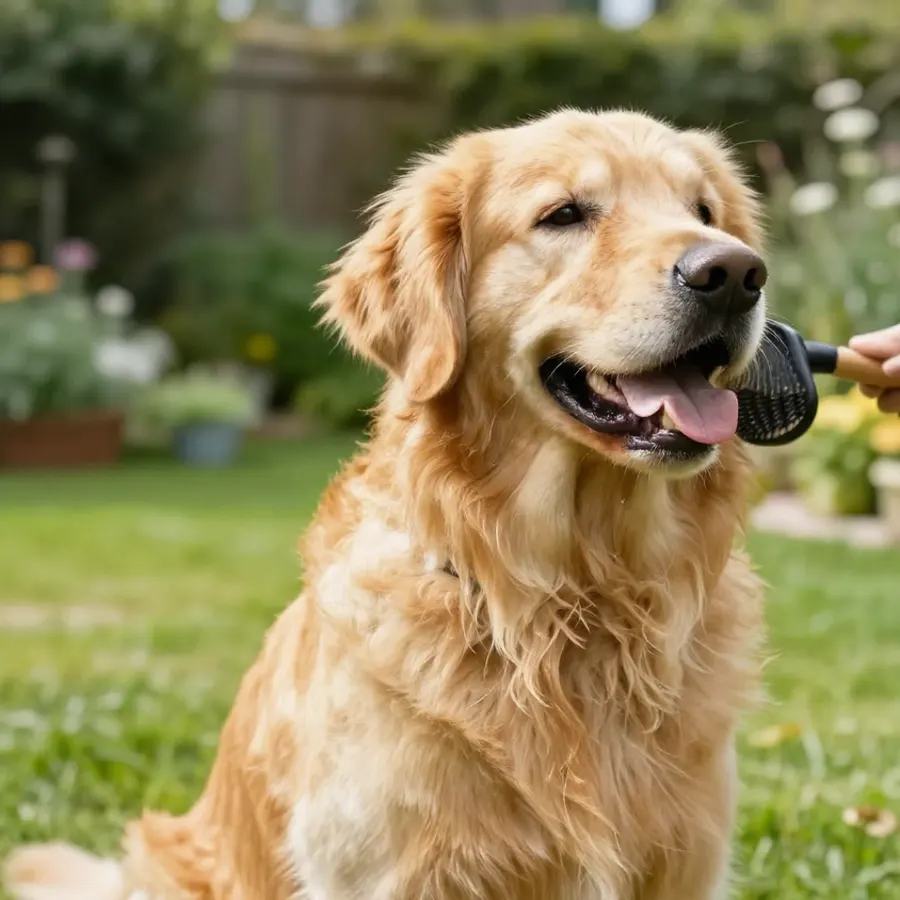
That beautiful double coat comes at a price. Goldens shed steadily all year and blow their coat heavily once or twice a year. PDSA recommends brushing or combing at least three times a week, rising to daily during a coat change. As they put it, this is "not a dog to take on if you hate hoovering." Factor in muddy feathering on the legs and belly after wet walks, plus regular ear checks (those drop ears can trap moisture), and grooming becomes a genuine weekly commitment.
Trainability
Goldens are among the most trainable breeds going — intelligent, food-motivated and desperate to please. Positive, reward-based methods work beautifully and they pick things up fast. The flip side of that intelligence is boredom: without consistent training and enrichment they can become mouthy, bouncy and mischievous, especially as adolescents.
The honest realities
- Size and energy as they grow: the puppy and adolescent stage is a lot of dog — strong, fast-growing and clumsy until training catches up.
- Shedding: constant, everywhere, on everything.
- Health costs: the breed is prone to hip and elbow dysplasia and several eye conditions, and Goldens have notably high cancer rates. Buy from health-tested parents and budget for insurance and vet care. Typical lifespan is around 10–12 years.
- They hate being alone: Goldens form strong attachments and PDSA advises never leaving them alone for more than four hours. This is not a breed for a home that's empty all day.
Who they suit
Golden Retrievers are best for active families with time, space and someone usually at home — people who'll enjoy the daily walks, don't mind the hair, and want a dog firmly in the middle of family life. Give them that, and you get one of the gentlest, most devoted companions there is.
Sources
- The Kennel Club (royalkennelclub.com) — Retriever (Golden) breed information, Breeds A to Z
- PDSA — Golden Retriever breed guide (exercise, grooming, time alone, health)
- Blue Cross — Separation-related behaviour and time-alone guidance for dogs
- RSPCA — Separation-related behaviour in dogs
Common questions
Are Golden Retrievers good with young children?
Yes — they're known for being gentle, patient and tolerant, which makes them a popular choice for families. But their size and bouncy energy as puppies and adolescents mean they can knock small children over by accident, so always supervise interactions and teach both dog and child how to behave around each other.
How much exercise does a Golden Retriever need?
PDSA recommends a minimum of two hours of good exercise every day, spread across the day, including walks, running and off-lead play, plus mental stimulation. They were bred as working gundogs and love swimming, so they need an active household, not a couple of short strolls.
Do Golden Retrievers shed a lot?
Yes, considerably. They have a double coat that sheds all year and "blows" heavily once or twice a year. PDSA advises brushing at least three times a week, rising to daily during a coat change. If hair on your clothes and furniture would bother you, this isn't the breed for you.
Can Golden Retrievers be left alone during the day?
Not for long. Goldens bond closely with their families and PDSA advises never leaving them alone for more than four hours. Left alone too long they can become stressed and develop separation-related behaviours, so they suit homes where someone is usually around.
What health problems are common in Golden Retrievers?
The breed is prone to hip and elbow dysplasia and several eye conditions, and has notably high cancer rates compared with many breeds. Typical lifespan is around 10–12 years. Always buy from health-tested parents and budget for insurance and ongoing vet care.
About the author
Matt Garnett — founder, Giddy Pets
Matt started Giddy Pets to make getting pets the good stuff simpler and fairer. Everything in these guides comes from real life with pets and a lot of trial and error — it's practical guidance, not veterinary advice. If a guide gets something wrong, tell him directly.
Advice & planning
Free tools & more guides
Practical calculators and trusted guides relevant to this product.
Read next
Golden Retriever Shedding & Grooming: Managing the Coat
How much Golden Retrievers shed, how often to brush and bathe, why you should never shave the double coat, and the grooming kit that helps.

How Long Do Golden Retrievers Live? Lifespan & Health
How long Golden Retrievers typically live, the health conditions the breed is prone to, and how to help yours reach a long, comfortable old age.
How Much Exercise Does a Golden Retriever Need?
Goldens are working gundogs at heart, so they need a proper amount of daily exercise — but the real skill is knowing how much, and how to protect those growing joints while they're young. Here's a practical, life-stage guide.
Golden Retriever Health Problems: What to Watch For
Goldens are wonderfully healthy-natured dogs, but the breed does carry a few well-known risks worth understanding before you bring one home. Here's a calm, practical guide to hip and elbow dysplasia, cancer, eye and heart conditions, allergies and weight — plus the UK health tests to look for in a g