
Are German Shepherds Good Family Dogs?
German Shepherds can be superb family dogs in the right home — but they're a large working breed that needs training, socialisation and exercise. An honest guide.
The quick answer
In the right home, yes — they're loyal, intelligent, protective and often wonderful with their own children. But they're a large working breed whose temperament depends heavily on early socialisation, consistent training and plenty of exercise. They suit active, committed households rather than first-time owners wanting a low-effort pet.
German Shepherds are loyal, intelligent and protective — and in the right home they make superb family dogs. But they're also a large, powerful, working breed that needs proper training, socialisation and exercise, and they're not the right choice for everyone. Here's an honest look at what German Shepherds are like to live with as a family dog.
Are German Shepherds good family dogs?
Yes — for the right family. A well-bred, well-raised German Shepherd is devoted, gentle with its own family, intelligent and naturally protective, and many are wonderful, patient companions for children. The important word is *raised*: this is a breed whose temperament depends heavily on early socialisation, consistent training and enough physical and mental work. Get those right and you have a loyal, dependable family guardian; neglect them and a powerful, under-stimulated dog can become anxious, reactive or hard to manage.
Are they good with children?
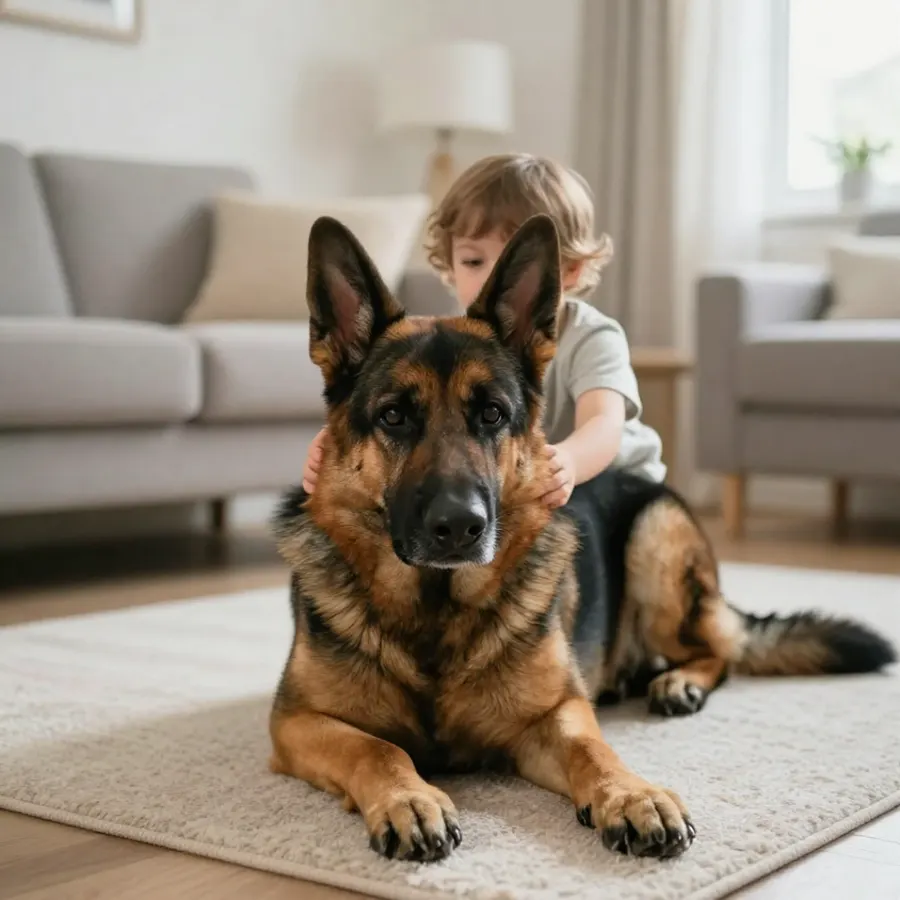
Generally, yes — German Shepherds are typically affectionate and tolerant with the children in their own family, and often protective of them. The caveats are practical: they're big and strong, especially as boisterous adolescents, so supervise them around small children, teach kids to respect the dog's space, and channel that energy with training. Their herding heritage can occasionally show as gentle "shepherding" of family members. Early, positive exposure to children and household life sets them up to be brilliant with kids.
The protective instinct and socialisation
German Shepherds are naturally alert and protective — part of why they're so valued as guard and working dogs. That instinct is an asset, but it has to be shaped. Early, thorough socialisation — calm, positive exposure to lots of people, dogs, places and situations while they're young — is what produces a confident, discerning adult rather than a fearful or over-reactive one. Without it, the same protectiveness can tip into suspicion or reactivity. This is the single most important investment you'll make in a Shepherd puppy.
Training and intelligence
This is one of the most trainable breeds in the world — clever, eager to work and quick to learn, which is why they dominate police and assistance work. They need that brain engaged: ongoing training, problem-solving and a sense of purpose keep them balanced. Reward-based methods, started early and kept consistent, bring out the best in them. A trained German Shepherd is a joy; an untrained one is a lot of dog to handle.
Exercise and energy
German Shepherds are a high-energy working breed and need plenty of activity — generally around two hours a day, combining walks and off-lead running with training and mental stimulation. A bored, under-exercised Shepherd will often find its own outlets in chewing, digging or barking. Build in brain-work as well as miles, and protect growing puppies' joints by keeping their exercise age-appropriate.
Are German Shepherds right for your family?
Choose a German Shepherd if you're an active household that will commit to training and socialisation, has time and space for a large working dog, and wants a loyal, protective companion. They're not well suited to first-time owners who underestimate the commitment, homes that are out all day, or anyone wanting a low-effort pet. Matched to the right family, though, few breeds are more devoted or rewarding.
A note on shedding
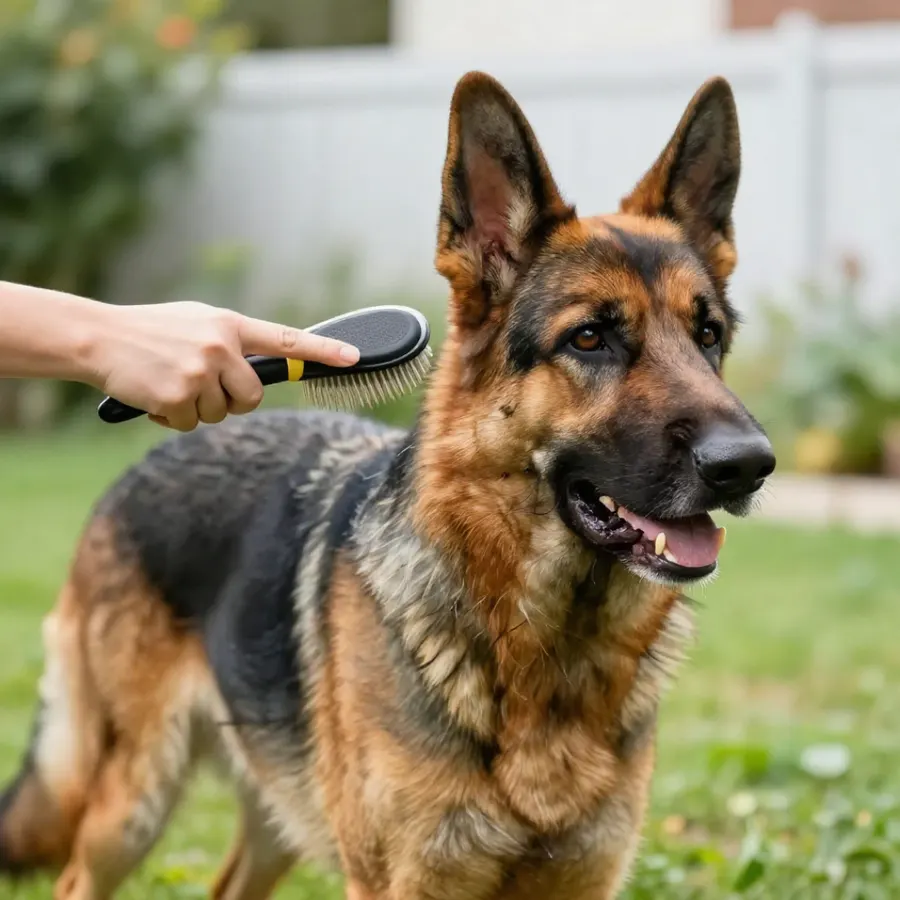
Be ready for hair. German Shepherds are heavy shedders — nicknamed "German shedders" — with a dense double coat that sheds year-round and moults heavily twice a year. Regular brushing several times a week keeps it manageable and is good bonding time too.
*This is general guidance. Every dog is an individual, and socialisation and training strongly shape temperament.*
Sources
- UK Kennel Club — German Shepherd Dog breed information and temperament (thekennelclub.org.uk).
- PDSA — German Shepherd care and behaviour (pdsa.org.uk).
- Blue Cross — socialising dogs and choosing the right breed (bluecross.org.uk).
Common questions
Are German Shepherds good family dogs?
In the right home, yes — they're loyal, intelligent, protective and often wonderful with their own children. But they're a large working breed whose temperament depends heavily on early socialisation, consistent training and plenty of exercise. They suit active, committed households rather than first-time owners wanting a low-effort pet. Raised well, a German Shepherd is a devoted and dependable family guardian.
Are German Shepherds aggressive?
Aggression is not a breed trait — well-bred, well-socialised German Shepherds are confident and stable, not aggressive. They are naturally alert and protective, which is different from aggression. Problems almost always trace back to poor breeding, lack of early socialisation, or inadequate training and exercise rather than the breed itself. Early socialisation and reward-based training are the keys to a balanced, discerning adult.
Are German Shepherds good guard dogs?
Yes — they're one of the classic guarding and protection breeds, which is why they're so widely used in police and security work. They're naturally alert, territorial and protective of their family. That said, a good family guardian is a well-trained, well-socialised dog with sound judgement, not an aggressive one. The protective instinct should be shaped through training, never encouraged into reactivity.
About the author
Matt Garnett — founder, Giddy Pets
Matt started Giddy Pets to make getting pets the good stuff simpler and fairer. Everything in these guides comes from real life with pets and a lot of trial and error — it's practical guidance, not veterinary advice. If a guide gets something wrong, tell him directly.
Free tools & more guides
Read next
How Long Do German Shepherds Live? Lifespan & Health
How long German Shepherds live, the joint, spinal and digestive conditions the breed is prone to, the bloat signs to know, and how to help yours thrive.

German Shepherd Health Problems: What to Watch For
German Shepherds are prone to hip and elbow dysplasia, bloat, DM, EPI and more. Learn the signs, the UK health tests to ask for, and how to lower the risk.
German Shepherd Shedding & Grooming
German Shepherds are famous 'German shedders' with a heavy double coat. Here's how to manage year-round shedding and seasonal moults, the tools to use, and why you should never shave the coat.
How to Train a German Shepherd
German Shepherds are one of the most trainable breeds in the world. Here's how to train one well: start early, socialise hard, build obedience and impulse control, and shape that protective instinct.