



Nova Scotia duck tolling retriever: breed guide
What it's really like to live with a toller, from temperament and exercise needs to the health checks a good breeder should offer
The quick answer
Many are, especially in active households, but they're typically more reserved with strangers than other retrievers and need supervision around very young children. They do best with families who can meet their high exercise needs and are willing to socialise them thoroughly as puppies.
If you've ever seen a small, fox-red dog throwing itself about on a riverbank as if its life depends on it, there's a good chance you've met a Nova Scotia duck tolling retriever. It's one of the least common retriever breeds in the UK, and one of the most misunderstood — people expect a miniature golden retriever and get something closer to a working collie in a retriever's coat.
Tollers are clever, driven and deeply attached to their families, but they're not an easy-going, low-maintenance breed. This guide covers where they come from, what they're like day to day, how much exercise and training they genuinely need, and the health conditions worth knowing about before you commit to one.
None of this is meant to put you off — plenty of tollers live happily with active families. But this is a breed where doing your homework first really does matter.
Where the toller comes from
The breed was developed in Nova Scotia, Canada, to "toll" — a term for luring — ducks within range of hunters. A toller plays and fetches sticks along the shoreline, and its movement and colouring draw curious waterfowl closer to shore, at which point the hunter can flush and shoot them. The dog then retrieves the birds from the water. This working role, closer to a decoy than a straightforward retriever, shaped almost everything about the breed: its stamina, its obsession with movement and repetition, and its need for a job to do.
The Kennel Club places the toller in the Gundog Group, and its breed standard describes the temperament as "kind, confident, intelligent, easy to train. Playful," with a build suited to swimming and sustained outdoor work (The Kennel Club). The Canadian Kennel Club recognised the breed in 1945, and it remains rare outside North America and the UK gundog community — which means fewer breeders, longer waiting lists, and a higher chance of ending up on a list for a puppy from working or show lines rather than a pet-only breeder.
What a toller looks like
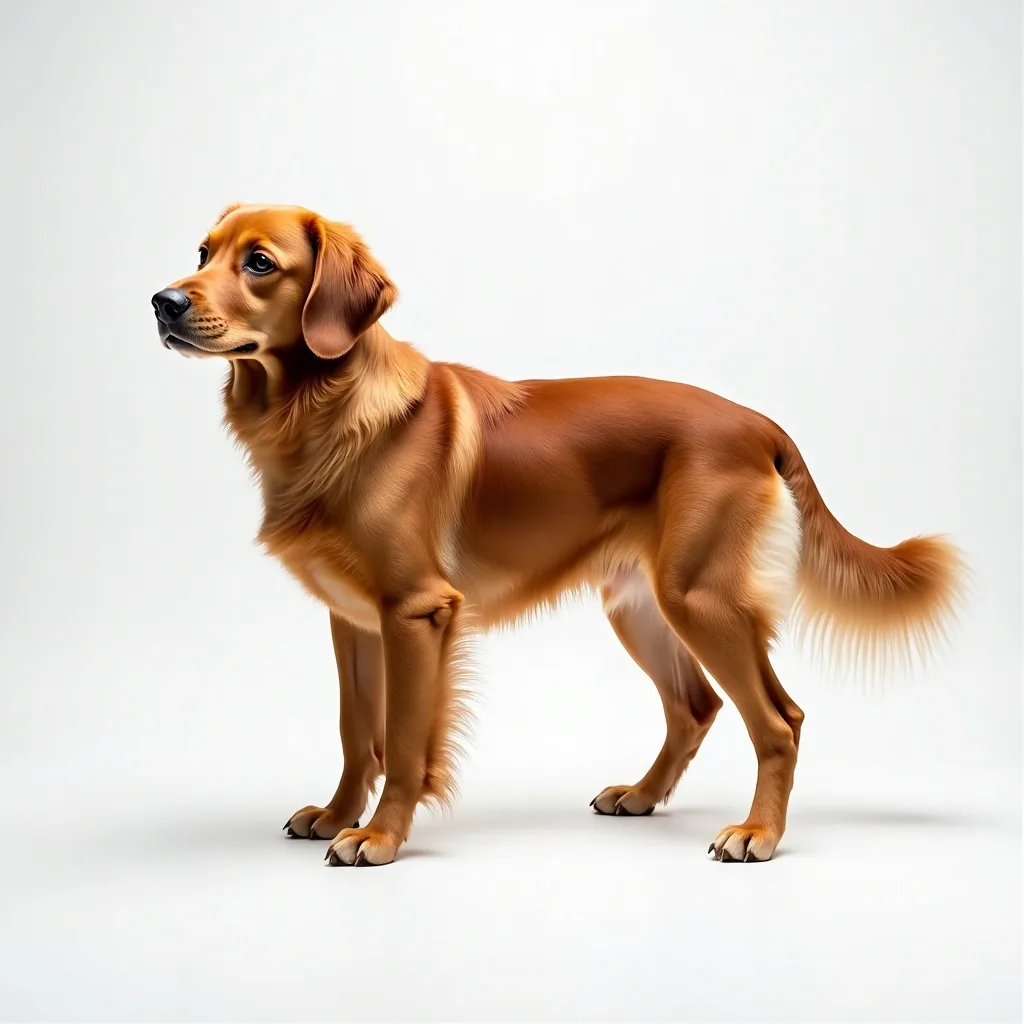
Tollers are the smallest of the retriever breeds recognised by the American Kennel Club, standing roughly 45–51cm at the shoulder (The Kennel Club; AKC). Their coat is a dense, water-repellent double coat in shades of red or orange, usually with white markings on the chest, feet, tail tip or face, and a slight wave along the back with feathering on the ears, chest and hindquarters. The overall look is often described as fox-like, and the coat sheds — expect a proper blow-out twice a year plus steady shedding the rest of the time.
Temperament: the "smiling dog" with a scream
Within their own family, tollers are warm, affectionate and often described as comedians — playful well into adulthood and keen to be involved in whatever's happening. With strangers, they tend to be more reserved and take longer to warm up than a typical golden or Labrador, a trait the AKC breed profile notes explicitly (AKC).
The breed's best-known quirk is the so-called "toller scream" — a high-pitched, piercing vocalisation that isn't a bark, produced when the dog is highly aroused by excitement, frustration or the anticipation of a retrieve. It's harmless but startling if you've never heard it before, and it's worth listening to a recording before you commit to the breed, particularly if you live somewhere with close neighbours.
Tollers were bred to lure, not just to retrieve — which is why so much of their behaviour, including the scream, is really a working display looking for an outlet.
Exercise needs: built to work all day
This is not a breed that's satisfied with a lead walk round the block. Tollers were built for a full day's work in cold water, and most need at least an hour of vigorous exercise a day as a baseline, with many owners and breed sources recommending closer to two hours across multiple sessions — walking, running, swimming and structured retrieving games (AKC; Vet Help Direct).
Swimming is close to ideal for the breed both physically and mentally — their webbed feet and water-repellent coat make them strong, enthusiastic swimmers, and a tired toller is a much easier toller. If you're planning daily walks and want a realistic sense of distance and duration for an athletic breed like this, our Dog Walking Calculator can help you plan sessions that actually meet their needs rather than guessing.
Under-exercised tollers don't just get restless — they tend to get vocal, destructive, or fixated on chasing anything that moves, from joggers to cyclists to the cat. If your daily routine can't stretch to real, sustained exercise most days of the week, this is one of the clearest signs the breed isn't the right fit.
Training and mental stimulation
Tollers are genuinely intelligent and learn quickly, but "intelligent and easy to train" isn't the same as "easy to live with untrained." They can be independent-minded and are prone to boredom, and the AKC's own breed advice recommends short, focused, reward-based training sessions rather than long drilling (AKC).
Early socialisation matters more with this breed than with a naturally outgoing retriever, given their wariness around new people. Puppy classes, varied exposure to people and environments, and consistent handling of their strong retrieve drive (including teaching a reliable "give" or "drop") all pay off. Scent work, gundog training, agility and flyball are all popular outlets for tollers precisely because they give the dog a job that resembles what it was bred to do.
Grooming and everyday care
Compared with their exercise and training needs, grooming is fairly straightforward. A weekly brush is usually enough outside of shedding season, stepping up to daily brushing during the spring and autumn coat blow. Feathering on the ears and legs can mat if left unchecked, and excess hair on the pads of the feet is worth trimming for grip, particularly on wet ground (AKC). Regular ear checks are sensible for any breed with drop ears that swims often, since damp ears are more prone to infection.
Living with a toller: families, children and other pets
Tollers are generally good with children in their own family and are frequently described as excellent family dogs for households that can meet their exercise needs, though supervision with very young children is still sensible given their size, energy and tendency to jump when excited (Vet Help Direct). Their strong retrieve and chase instincts mean early, careful introductions matter with cats and small pets, and recall around wildlife or livestock needs solid training given how driven they are to move and chase.
Because of their wariness with strangers, tollers aren't reliable guard dogs in the sense of being aggressive toward visitors — they're more likely to bark or vocalise and then warm up once they've assessed the situation. If you're weighing up whether an energetic, moderately reserved gundog breed fits your household and lifestyle, our Pet Ownership Quiz is a useful starting point before you contact a breeder.
Health issues to know about
As a numerically small breed, tollers have a handful of conditions that turn up more often than you'd see in the general dog population. None of this means every toller will be affected, but it's worth understanding before you buy, and worth asking any breeder about directly.
Collie eye anomaly (CEA)
CEA is an inherited eye condition affecting how the eye develops before birth. It ranges from mild changes with no effect on vision through to retinal detachment and blindness in more severe cases, and it cannot be reversed once present (VCA Animal Hospitals). Tollers are one of the breeds predisposed to it, alongside collies, Shetland sheepdogs and border collies. Reputable breeders screen puppies at 6–8 weeks with a veterinary ophthalmologist and use DNA testing on breeding stock, and the UK breed club recommends CEA/CH testing as a minimum standard for anyone breeding tollers (Toller Club (UK)).
Addison's disease
Addison's disease (hypoadrenocorticism) is significantly over-represented in tollers compared with dogs generally, including a juvenile-onset form linked to a recessive gene in the breed. Signs can be vague and intermittent — lethargy, vomiting, poor appetite — which is part of why it's sometimes missed early. The UK breed club lists it among the key conditions affecting the breed and recommends genetic screening of breeding stock, while noting that available tests don't yet fully predict which dogs will go on to develop the disease (Toller Club (UK)).
Immune-mediated conditions
Tollers as a breed show a notable predisposition to immune-mediated disease more broadly. This includes steroid-responsive meningitis-arteritis (SRMA), which typically affects dogs under two years old and causes fever, neck pain and reluctance to move, and usually responds well to steroid treatment; immune-mediated polyarthritis, which causes joint inflammation, most often in middle-aged dogs; and rarer immune-mediated blood disorders (Toller Club (UK)). Autoimmune thyroiditis, leading to an underactive thyroid, is also seen in the breed.
Hips, elbows and joints
Like most medium and larger working breeds, tollers can be affected by hip dysplasia, where the hip joint doesn't form correctly. The Kennel Club and British Veterinary Association run a joint hip scoring scheme, and breeders working to best-practice guidelines should be able to show hip (and ideally elbow) scores for both parents. Ask to see these documents rather than taking a breeder's word for it.
Is a toller the right dog for you?
Tollers suit people who genuinely want an outdoor-focused life with a dog alongside them — daily runs, swims, hikes, or organised dog sports — rather than a companion who's content with a couple of short walks. They do best with owners who have owned a driven breed before, or who are willing to invest heavily in training and socialisation from puppyhood. Flats, very sedentary households, and homes without easy access to safe water or open space for exercise are all poor matches for this breed, however appealing the look and the temperament might be.
If your lifestyle fits, though, owners consistently describe tollers as loyal, funny, deeply bonded companions who make the effort worthwhile. It's a breed best chosen with eyes open rather than on looks alone.
When to see your vet
Book a vet visit promptly if your toller shows any of the following: sudden lethargy, vomiting or loss of appetite that doesn't resolve quickly (potential signs of Addison's disease); a stiff neck, fever or clear pain on movement, especially in a dog under two (possible SRMA); cloudiness, bumping into things, or reluctance to move in dim light (possible eye disease); or persistent lameness or reluctance to exercise (possible joint problems). None of these signs are exclusive to tollers, but given the breed's known predispositions, it's worth erring on the side of an early check-up rather than waiting to see if things settle.
*This is general guidance, not a substitute for advice from your vet, who can assess your individual pet.*
Sources
- The Kennel Club — official breed standard for the Retriever (Nova Scotia Duck Tolling) (royalkennelclub.com).
- American Kennel Club — Nova Scotia Duck Tolling Retriever breed profile (akc.org).
- American Kennel Club — "Is the Nova Scotia Duck Tolling Retriever the Right Breed for You?" (akc.org).
- VCA Animal Hospitals — collie eye anomaly overview (vcahospitals.com).
- Toller Club (UK) — official UK breed club health information (toller-club.co.uk).
- Vet Help Direct — vet-written guide to Toller temperament and suitability as pets (vethelpdirect.com).
Common questions
Are Nova Scotia duck tolling retrievers good family dogs?
Many are, especially in active households, but they're typically more reserved with strangers than other retrievers and need supervision around very young children. They do best with families who can meet their high exercise needs and are willing to socialise them thoroughly as puppies.
How much exercise does a toller need?
Most tollers need at least an hour of vigorous exercise a day, and many owners find closer to two hours works better, split across walks, swimming and structured play. Under-exercised tollers tend to become vocal, destructive or fixated on chasing things.
What is the 'toller scream'?
It's a distinctive high-pitched vocalisation, unlike a normal bark, that tollers make when highly excited or frustrated, often around retrieving games. It's harmless but can be surprising if you haven't heard it before, so it's worth listening to a recording before choosing the breed.
Do Nova Scotia duck tolling retrievers shed a lot?
Yes. They have a dense double coat that sheds steadily year-round with a heavier seasonal blow-out in spring and autumn, when daily brushing helps manage loose hair. Weekly brushing is usually enough the rest of the year.
What health problems are tollers prone to?
The breed has a known predisposition to collie eye anomaly, Addison's disease, and several immune-mediated conditions including steroid-responsive meningitis-arteritis, alongside more general risks like hip dysplasia. Ask breeders for eye, hip and relevant DNA test results, and always speak to your vet about any symptoms.
About the author
Matt Garnett — founder, Giddy Pets
Matt started Giddy Pets to make getting pets the good stuff simpler and fairer. Everything in these guides comes from real life with pets and a lot of trial and error — it's practical guidance, not veterinary advice. If a guide gets something wrong, tell him directly.
Advice & planning
Free tools & more guides
Practical calculators and trusted guides relevant to this product.
Read next

Xoloitzcuintli: breed guide
A complete guide to the Xoloitzcuintli (Mexican hairless dog) — temperament, sizes, skin and dental care, exercise needs and whether it suits your home
Laziest dog breeds for apartment living
The calmest, lowest-energy dog breeds genuinely suited to flats and small homes, and the health trade-offs worth knowing first
The fluffiest dog breeds
A round-up of the fluffiest dog breeds, from Samoyeds to Bearded Collies, with real coat-care, shedding and heatstroke-risk advice for UK owners

How often should you walk a dog?
Exercise and walk-frequency guidance for dogs by life stage and breed size, with puppy-specific safety rules