






Dog wheelchairs: when they help and how to choose one
A practical guide to which conditions dog wheelchairs help with, the different types available, and how to choose, fit and introduce one safely

The quick answer
This is a decision to make with your vet, not on your own. It's usually considered when a dog has significant, ongoing weakness or paralysis in one or more limbs, from conditions such as arthritis, IVDD, or degenerative myelopathy, and other measures like pain relief and physiotherapy aren't keeping them comfortably mobile.
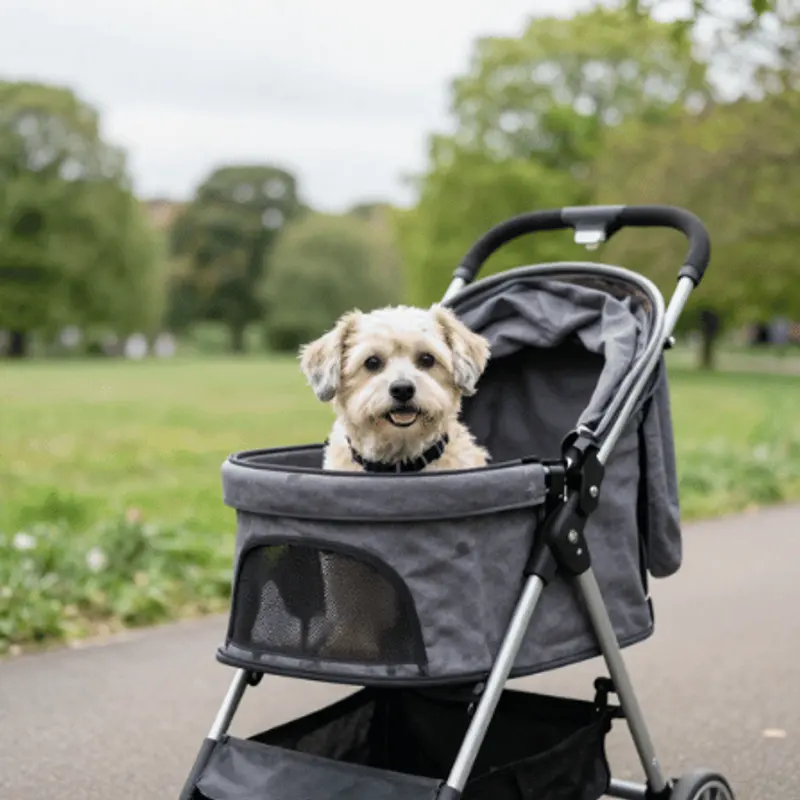
Seeing your dog struggle to walk, whether from arthritis, a back problem, or an injury, is worrying. A wheelchair (sometimes called a dog cart) is one of the tools that can help a dog with reduced mobility keep moving, keep exercising, and keep enjoying life. It isn't right for every dog or every stage of a condition, but for many it makes a real difference.
This guide covers the conditions where a wheelchair tends to help, the main types available, how to get the fit right, and how to introduce one to your dog without causing stress. As with any mobility aid, your vet should be involved in the decision, since the right choice depends on your dog's specific diagnosis, size and temperament.
Wheelchairs aren't a first resort. Most dogs with mobility problems start with simpler support such as ramps, non-slip flooring, supportive harnesses and pain management, and only move to a wheelchair if those aren't enough on their own.
When might my dog need a wheelchair?
A wheelchair is usually considered when a dog has lost significant use of one or more limbs, either temporarily or permanently. According to VCA Animal Hospitals, mobility problems in dogs sit on a spectrum, from general weakness through chronic joint disease to full paralysis and limb amputation, and the right support depends on where a dog sits on that spectrum. The conditions most commonly associated with wheelchair use include:
- Osteoarthritis, especially in older or larger dogs where pain relief and physiotherapy alone aren't keeping them comfortable and mobile.
- Intervertebral disc disease (IVDD), particularly in breeds prone to back problems, where the hind legs are weak or paralysed.
- Degenerative myelopathy, a progressive spinal cord disease seen in some breeds, including German Shepherds and Corgis.
- Hip or elbow dysplasia in its more advanced stages.
- Amputation, whether from injury, cancer, or a birth defect.
- Recovery from surgery or serious injury, where a wheelchair supports a dog while strength returns.
VCA notes that pets with rear-limb paralysis or profound weakness often learn to use a wheelchair that they pull behind them fairly quickly, and that modified designs exist for dogs whose front legs are also affected. The right time to start is a conversation for your vet, not a guess, because introducing support too early or too late can each cause problems of their own.
Arthritis and mobility support
Arthritis is an extremely common reason dogs lose mobility as they age. VCA Animal Hospitals states that osteoarthritis affects at least one in five dogs over a year old, and around 80% of dogs over the age of eight, and stresses that simple ageing is not, on its own, a cause of the condition; it develops from a combination of body structure, weight, joint development problems such as hip or elbow dysplasia, past injury, and previous surgery.
The charity Canine Arthritis Management (CAM) points out that the signs can be obvious or very subtle: stiffness after resting, slowing down on walks, a reduced interest in walks or play, hesitating on stairs, and changes in how your dog behaves around other dogs or people can all be early indicators. A vet diagnosing arthritis will typically take a detailed history, carry out an orthopaedic examination checking posture, muscle mass and mobility, manipulate the joints to check for restricted movement or crepitus (a crunching sensation), and may recommend blood tests, X-rays or a trial of anti-inflammatory medication to confirm the diagnosis.
For many arthritic dogs, a full management plan comes first: weight control, joint supplements, pain relief, physiotherapy, and environmental changes such as ramps, raised food bowls, padded bedding and non-slip flooring. A wheelchair tends to come into the picture when a dog reaches a point where these measures aren't enough to keep them comfortably mobile, particularly if the hind legs are significantly weakened. Taking the weight off inflamed joints while still allowing a dog to move under its own power, rather than being carried everywhere, can support both physical condition and quality of life.
Intervertebral disc disease (IVDD) and wheelchairs
IVDD is one of the conditions most strongly associated with dog wheelchairs, particularly in breeds prone to back problems. Cornell University's Riney Canine Health Center explains that IVDD happens when the cushioning discs between the vertebrae bulge or rupture, putting pressure on the spinal cord. Symptoms range from mild discomfort, such as reluctance to turn the head or jump, through to a wobbly gait, weakness in the back legs, and in severe cases full paralysis and loss of bladder or bowel control.
According to Cornell, Dachshunds are especially prone to IVDD, accounting for a large proportion of cases, alongside Toy and Miniature Poodles, Pekingese, Lhasa Apsos, German Shepherd Dogs, Doberman Pinschers, Beagles and Cocker Spaniels. Around two-thirds of cases affect the lower back (thoracolumbar region), with a smaller proportion affecting the neck alone or both areas together.
Treatment depends on severity. Mild cases may be managed with strict rest, pain relief and muscle relaxants, while more severe cases, especially those with significant neurological signs, often need surgery to remove the material pressing on the spinal cord. Recovery afterwards typically involves a period of crate rest followed by carefully controlled exercise, and may include treatments such as hydrotherapy or laser therapy under veterinary guidance.
This is where a wheelchair often has its biggest role. Some dogs use one for a short period while they rebuild strength after surgery or a conservative recovery; others, particularly those left with permanent hind-limb weakness, use one long-term. A cart that supports the back end while the dog walks with its front legs can reduce the strain of dragging or overcompensating with weaker limbs, which in turn helps protect the rest of the spine and joints from further injury.
Other conditions that can benefit
Wheelchairs aren't only for arthritis and IVDD. Degenerative myelopathy, a slow, progressive disease affecting the spinal cord, gradually weakens a dog's hind legs over months or years; a wheelchair can extend the time a dog can move around independently as the disease progresses. Amputees, whether dogs who have lost a limb to injury or cancer, sometimes use wheelchairs during their adjustment period, although many adapt extremely well to three legs without one. Dogs recovering from serious injury or major orthopaedic surgery may also use a cart temporarily, as a bridge between strict rest and a full return to normal walking.
In every case, the underlying decision is the same: does this dog have enough strength and coordination in the limbs that aren't supported to make a wheelchair usable and safe, and will it genuinely improve their day-to-day life rather than just prolong a difficult situation? That's a judgement best made with your vet, who can assess your dog's specific diagnosis and prognosis.
Types of dog wheelchair
Dog wheelchairs generally fall into three categories, and the right one depends on which limbs are affected:
- Rear-support (two-wheel) carts are the most common design, supporting the hind end while the dog walks on its front legs. These suit conditions like IVDD, hip dysplasia and rear-limb arthritis.
- Front-support carts support the front legs instead, for dogs with weakness or injury affecting the shoulders or front limbs.
- Quad-support (four-wheel) carts support all four limbs, used when a dog can't bear weight through either the front or back legs unaided.
Within these categories, wheelchairs vary in how adjustable they are (useful for growing puppies or dogs whose condition may change), whether they fold for storage and transport, and what kind of harness or sling system holds the dog in place.
Choosing and fitting a wheelchair
There's no single wheelchair design that suits every dog: the right choice depends on the specific condition, the dog's size, and how active they are day to day. Getting the fit right matters as much as picking the right type. Measurements typically needed include the height from the ground to the point of the hip, the length of the body, and the dog's weight, and most reputable suppliers or your vet's physiotherapy team can help take these accurately.
A good general check, once fitted, is being able to fit two fingers comfortably under any strap: too tight and it can cause pain, rubbing or sores; too loose and the wheelchair won't support the dog properly or may slip out of position. It's worth having the fit checked by a vet or veterinary physiotherapist rather than relying on measurements alone, particularly for dogs with an unusual body shape or a condition that's likely to change over time.
If your dog is still growing, or your dog's condition (such as degenerative myelopathy) is expected to progress, an adjustable design will save you from replacing the whole wheelchair as things change.
Getting your dog used to a wheelchair
Most dogs need a period of adjustment before they're comfortable and confident in a wheelchair, and rushing this stage can put a dog off using it altogether. PDSA's advice on introducing dogs to mobility devices, while written with owners who themselves use a wheelchair or scooter in mind, sets out a desensitisation approach that applies just as well to a dog wearing one: leave the device somewhere your dog can investigate it in their own time, let them sniff and explore it while it's switched off or stationary, and only move on to the next stage once your dog is relaxed. PDSA is clear that patience is the key part of the process, rather than trying to move things along too quickly.
In practice, that means for a dog learning to use their own wheelchair: let them see and sniff the empty cart first, then fit it for very short, calm sessions indoors on familiar flooring, using treats and praise throughout. Gradually increase the time and try it in the garden before attempting a proper walk. Some dogs take to it within days; others need a couple of weeks. If your dog seems distressed, freezes, or refuses to move at any stage, stop and go back a step rather than pushing through.
Caring for a dog in a wheelchair
Once your dog is using a wheelchair regularly, a few habits help keep them comfortable and the equipment working well:
- Check the skin daily where straps and padding sit, looking for redness, rubbing or early sores, especially in the first few weeks of use.
- Keep sessions supervised, rather than leaving a dog unattended in a wheelchair, particularly around stairs, steps or uneven ground.
- Clean the wheelchair regularly, since dogs with mobility issues are more prone to picking up dirt, mud or debris on the frame and wheels.
- Reassess fit periodically, particularly for growing dogs, those losing or gaining weight, or those with a progressive condition, since a wheelchair that fitted well six months ago may no longer be right.
- Keep up any prescribed physiotherapy, medication or supplements alongside wheelchair use rather than instead of it; the two typically work best together.
A wheelchair supports mobility, but it doesn't replace the rest of a management plan for arthritis, IVDD or another underlying condition. Weight management, joint supplements, prescribed pain relief and any physiotherapy your vet recommends all still matter.
Common mistakes to avoid
A few pitfalls come up repeatedly with new wheelchair users:
- Buying based on breed alone rather than individual measurements. Two dogs of the same breed can need different sizes.
- Skipping the introduction period. Forcing a nervous dog straight into a wheelchair on a busy walk often backfires and can make them fearful of it long-term.
- Ignoring changes in fit. A cart that isn't reassessed as a dog's weight or condition changes can start to cause discomfort or sores.
- Treating the wheelchair as the whole solution. Especially with arthritis, a cart works best as one part of a broader plan alongside pain relief, weight control and appropriate exercise.
- Overusing it in a single session. Even dogs that adapt well shouldn't be left in a wheelchair all day; build up gradually and give plenty of rest breaks, particularly early on.
When to see your vet
Speak to your vet before buying a wheelchair, not after. They can confirm the diagnosis, assess how much strength and coordination remains in the unaffected limbs, and advise on whether a wheelchair, another mobility aid, or a combination is the right next step. You should also contact your vet promptly if your dog shows any of the following: a sudden worsening of weakness or paralysis, new loss of bladder or bowel control, signs of pain that don't settle with prescribed medication, sores or rubbing from a wheelchair that isn't clearing up, or reluctance to use a wheelchair that was previously tolerated well, since this can signal discomfort or a change in the underlying condition.
If your dog is newly showing signs of stiffness, reluctance to exercise, or changes in gait, it's worth booking a check-up rather than assuming it's simply old age; as Canine Arthritis Management points out, many early signs of joint disease are subtle and easy to put down to normal ageing.
*This is general guidance, not a substitute for advice from your vet, who can assess your individual pet.*
Sources
- PDSA — advice on introducing dogs to mobility aids and desensitisation (pdsa.org.uk).
- Canine Arthritis Management (CAM) — diagnosing arthritis in dogs, signs and vet examination process (caninearthritis.co.uk).
- VCA Animal Hospitals — pets with disabilities overview, wheelchair use and adaptation (vcahospitals.com).
- VCA Animal Hospitals — arthritis in dogs, prevalence and management (vcahospitals.com).
- Cornell University Riney Canine Health Center — intervertebral disc disease in dogs, symptoms and treatment (vet.cornell.edu).
- American Kennel Club (AKC) — wheelchairs for dogs, types and fitting guidance (akc.org).
Common questions
How do I know if my dog needs a wheelchair?
This is a decision to make with your vet, not on your own. It's usually considered when a dog has significant, ongoing weakness or paralysis in one or more limbs, from conditions such as arthritis, IVDD, or degenerative myelopathy, and other measures like pain relief and physiotherapy aren't keeping them comfortably mobile. Your vet can assess how much strength remains in the unaffected limbs and whether a wheelchair is likely to help.
Will my dog be able to go to the toilet normally in a wheelchair?
Most dogs can still toilet normally while wearing a wheelchair, though some need to be taken out of the cart to do so comfortably, particularly males. This is worth discussing with your vet or the wheelchair supplier, since design and fit affect how easily a dog can adopt a normal toileting position.
How long can a dog wear a wheelchair each day?
There's no single answer, as it depends on the dog and their condition, but wheelchairs are generally intended for supervised exercise sessions rather than all-day wear. Build up gradually, give plenty of rest breaks, and follow guidance from your vet or a veterinary physiotherapist on what's appropriate for your dog.
Can puppies use a wheelchair?
Yes, puppies with conditions like congenital limb problems or early injuries can use wheelchairs, and an adjustable design is worth choosing so it can be resized as they grow. A vet should confirm the diagnosis and check that a wheelchair is appropriate before fitting one to a young, growing dog.
Is it kind to keep a dog mobile with a wheelchair, or should I consider other options?
For many dogs, a wheelchair genuinely improves quality of life by letting them move, exercise and take part in normal activities again. Whether it's the right choice depends on the individual dog, their diagnosis and prognosis, and how well they adapt, which is why this is best discussed openly and honestly with your vet rather than decided alone.
About the author
Matt Garnett — founder, Giddy Pets
Matt started Giddy Pets to make getting pets the good stuff simpler and fairer. Everything in these guides comes from real life with pets and a lot of trial and error — it's practical guidance, not veterinary advice. If a guide gets something wrong, tell him directly.
Advice & planning
Free tools & more guides
Practical calculators and trusted guides relevant to this product.