


Dog Stress Signals: Reading Calming Signals & Body Language
The quick answer
Dogs show stress through quiet body-language cues long before they growl or snap. The early signals include yawning when not tired, lip and nose licking, "whale eye" (whites showing), turning the head or body away, a lowered or tucked tail, pinned-back ears, panting when not hot, and sudden scratching, sniffing or shaking off. Spotting these early lets you give your dog space before the stress escalates.
Mentioned in this guide

Plush Snuffle Foraging Mat
A roll-up plush snuffle mat with cute animal designs. Hide treats in the folds and let your pet sniff and forage to find them - a rewarding enrichment game that beats boredom and slows feeding.
£13.99

Noise-Reducing Calming Snood for Dogs
A soft, stretchy fleece snood that gently muffles noise to help anxious dogs stay calm.
£7.99

Silicone Lick Mat Slow Feeder Bowl
A raised silicone bowl with a textured licking base for spreading paste, wet food or yogurt. Slows fast eaters and helps distract and calm anxious pets, then wipes clean in seconds.
£16.99

Stop Blooming Farting Treats Chicken Flavour 90 Tablets
A UK-made chicken-flavoured daily supplement from Pets Calm Down, 90 tablets per tub, aimed at dogs whose wind has become a settled feature of family life.
£22.99
Most dogs tell us they are uncomfortable long before anything goes wrong. The trouble is that the signals are quiet and easy to miss, so a lot of owners only notice stress at the growl or the snap - the loud end of a conversation the dog started minutes earlier. Learn the early cues and you can step in before your dog ever feels the need to shout.
This is a practical guide to reading canine stress and calming signals: what each one looks like, how to tell a stressed yawn from a sleepy one, a spot-it checklist you can keep on your phone, and the escalation ladder so you know how urgent a signal really is.
What "calming signals" actually means
The phrase *calming signals* comes from Norwegian trainer and canine ethologist Turid Rugaas, who described roughly 30 low-key behaviours dogs use to defuse tension, ask for space and avoid conflict. A dog who turns its head away, licks its lips or yawns as a person leans over it isn't being rude or stubborn - it's using the polite, built-in signals its species relies on to keep the peace.
That matters because these signals are directed at us as much as at other dogs. When your dog yawns as a stranger reaches to pet it, that's a message: *I'm not comfortable, please back off.* If nobody reads it, the dog has to either put up with the situation or escalate. Reading the signal and creating space is how you keep your dog feeling safe - and how you prevent bites.
One important caveat before the list: no single signal means much on its own. A dog licks its lips after dinner and yawns because it's sleepy. Context is everything. You're looking for these behaviours out of context (lip-licking with no food around, yawning when wide awake) and, crucially, in clusters - two or three appearing together in a situation the dog might find worrying.
The stress signals, from head to tail
Mouth and face
- Yawning out of context. A stress yawn tends to be slower, wider and more drawn-out than a tired one, and it appears in tense moments - at the vet, when a child crowds them, or during a training session that's gone on too long.
- Lip and nose licking. A quick tongue-flick across the nose or lips when there's no food about. It's a self-soothing behaviour, a bit like a child sucking their thumb.
- Panting when they aren't hot. Fast, shallow panting on a cool day or indoors, with no exercise to explain it, is a common stress sign.
- Tight, tense mouth - or the opposite, a wide "grin" pulled far back at the corners. An appeasement grin is a submissive, worried expression, not a happy smile, and it looks quite different from the relaxed open mouth of a content dog.
Eyes
- Whale eye. The dog keeps its head still or turned away but swivels its eyes to watch something, so you see a crescent of white (sclera) at the edge. This is a strong "I'm uneasy" signal and often means the dog feels cornered.
- Hard staring or, conversely, deliberately looking away and avoiding eye contact.
- Dilated pupils and rapid blinking.
Ears, head and body
- Ears pinned back flat against the head (allowing for the fact that ear shape varies hugely between breeds).
- Turning the head or the whole body away. One of the most common calming signals of all - a clear request for space.
- A lowered, crouched posture, weight shifted back, or trying to make themselves small.
- Tail tucked under, or held low with a fast, stiff wag. A wagging tail is not automatically a happy tail - the *height* and *stiffness* tell the real story.
- Raised hackles (the ridge of hair along the back standing up). This signals arousal, which can be fear as much as excitement.
Displacement behaviours
These are normal behaviours that pop up at odd moments because the dog is conflicted and needs an outlet for the tension:
- Sudden scratching as if they've an itch, mid-situation.
- A quick shake-off as though wet, when they're bone dry.
- Abruptly sniffing the ground for no obvious reason.
- Paw lifting - one front paw held up while sitting or standing.
Behaviour and the bigger picture
- Moving away, hiding, or trying to get behind you or an object.
- Freezing - going completely still and stiff. This is easy to mistake for "being good", but a frozen dog is often a highly stressed dog.
- Refusing food they'd normally take, or snatching a treat far more roughly than usual.
- Off-colour signs over longer periods: pacing, restlessness, trembling, drooling, loss of appetite, low energy, or toileting indoors when house-trained.
Read the whole dog, not one body part. A wagging tail on a stiff, forward-leaning body with a hard stare is a very different message from a wag on a loose, wiggly dog. Always take ears, eyes, mouth, posture and the situation together.
Your spot-it checklist
Keep this handy - if you tick two or more in a situation your dog might find stressful, it's time to give them space and change something.
- [ ] Yawning when clearly not tired
- [ ] Licking lips or nose with no food around
- [ ] Whale eye - whites of the eyes showing
- [ ] Turning the head or body away from something
- [ ] Ears pinned back and flat
- [ ] Panting when not hot or exercised
- [ ] Tail tucked or held low and stiff
- [ ] Crouched, low or shrinking posture
- [ ] Sudden scratching, sniffing or shaking off
- [ ] Lifting one front paw
- [ ] Freezing or going very still
- [ ] Refusing a treat they'd normally take
- [ ] Trying to move away, hide, or get behind you
The ladder of stress: how urgent is the signal?
Behaviourists often describe canine communication as a ladder (sometimes called the ladder of aggression or ladder of communication). Dogs generally start at the bottom with subtle, polite signals. If those are ignored - or the dog learns from experience that they get ignored - they climb the rungs towards growling, snapping and finally biting. The whole point of reading the early rungs is that you rarely need to see the top ones.
| Rung | What you see | What it means |
|---|---|---|
| 1 | Yawning, blinking, nose-licking | Mild unease, trying to release tension |
| 2 | Turning the head away, looking away | "I'd rather not engage" |
| 3 | Turning the body away, sitting, pawing | Actively asking for space |
| 4 | Walking away | Removing themselves from the situation |
| 5 | Creeping forward, ears back | Worried but still trying to cope |
| 6 | Crouched body, tail tucked | Feeling very unsure, trying to calm things |
| 7 | Lying down, belly exposed | Appeasement - "please, I'm no threat" |
| 8 | Stiffening, hard stare | Fight-flight-freeze kicking in |
| 9 | Growling | A clear, fair warning: back off |
| 10 | Snapping | A near-miss warning bite |
| 11 | Biting | Last resort when everything else failed |
The most important thing this ladder teaches: never punish a growl. A growl is honest, valuable information - your dog telling you it needs space. Tell it off and you don't remove the fear, you just teach the dog that the warning gets it into trouble. The next time, it may skip straight to a bite with no warning at all. If your dog growls, calmly give it room, remove whatever is worrying it, and then work out how to avoid or change that trigger.
What to do when you spot the signals
1. Create space immediately. The fastest fix is almost always distance - move your dog (or the trigger) away, or give it an easy exit. Don't force it to "say hello" or stay put. 2. Take the pressure off. Stop leaning over the dog, stop the crowding, ask children or strangers to step back. If you're at the vet or groomer, tell the staff your dog is struggling. 3. Set up a safe space at home - a quiet spot, a covered crate or a bed in a low-traffic corner where the dog can retreat and won't be disturbed. A genuinely calming dog bed can help here, though the location and "leave them alone" rule matter more than any product. 4. Keep your own energy calm. Dogs read our tone and body language. A steady, quiet handler helps far more than a fussing or frustrated one. 5. Reduce the triggers you can control. Predictable routines, gentle exposure at a distance the dog can cope with, and reward-based training all lower a dog's baseline stress over time. Our guide to calming an anxious dog walks through this in detail.
For recurring flashpoints, targeted help works well. Many owners find a well-fitted, escape-proof harness for anxious dogs gives more control and less throat pressure on stressful walks, and some dogs settle with the gentle wrap pressure of a dog onesie or anxiety wrap. If you're considering supplements, read our honest look at whether calming treats actually work first - they're a support, never a substitute for managing the trigger. And for the two situations that catch most owners out, we've a dedicated guide to reducing vet and groomer stress.
Common mistakes owners make
- Reading one signal in isolation. A single lip-lick is nothing; a lip-lick plus whale eye plus a turned head is a dog asking for help.
- Mistaking a stress yawn or grin for tiredness or a smile. Look at the rest of the body and the situation.
- Calling a frozen dog "well-behaved". Stillness under pressure is often shutdown, not contentment.
- Assuming a wagging tail means happy. Height and stiffness matter more than movement.
- Punishing growls. As above - this removes your early-warning system.
- Pushing through "just say hello". Forcing a nervous dog into greetings teaches it that its signals don't work, which is exactly how bites happen.
When to get professional help
If your dog seems anxious a lot of the time, or the stress is escalating, start with your vet. Pain and illness can quietly change behaviour, so ruling out a medical cause comes first. From there, ask for a referral to a qualified, accredited behaviourist - in the UK, look for someone registered with the Animal Behaviour and Training Council (ABTC) or a member of the Association of Pet Behaviour Counsellors (APBC), so you know they use humane, evidence-based methods. Avoid anyone promising quick fixes through dominance or punishment; that approach makes fear-based behaviour worse.
Read your dog's quiet signals, respect them, and you build the thing every anxious dog needs most: the confidence that its person is listening.
Sources
Common questions
What are the first signs a dog is stressed?
The earliest signs are subtle: yawning when not tired, licking the lips or nose with no food around, turning the head or body away, and "whale eye" (showing the whites of the eyes). These quiet cues come well before a dog growls or snaps, so catching them early lets you give your dog space before its stress escalates.
Is my dog yawning because it's tired or stressed?
Look at the context and the rest of the body. A sleepy yawn is relaxed and usually comes with drowsy, loose body language. A stress yawn is often slower, wider and more drawn-out, and it appears in tense moments - at the vet, when someone leans over the dog, or during a long or difficult training session. If the dog is clearly wide awake, treat the yawn as a possible stress signal.
What is whale eye in dogs?
Whale eye is when a dog keeps its head still or turned away but swivels its eyes to watch something, so you see a crescent of white at the edge of the eye. It usually means the dog feels uneasy or cornered and would like more space. It's a strong signal to stop whatever is happening and give the dog room.
Does a wagging tail always mean a dog is happy?
No. A wag simply means the dog is aroused, and that can be fear or tension as much as joy. Read the whole tail: a high, stiff, fast wag on a rigid body is very different from a loose, low, sweeping wag on a wiggly, relaxed dog. Always judge the tail alongside the ears, eyes, mouth and overall posture.
Should I punish my dog for growling?
No. A growl is an honest warning that your dog feels threatened and needs space - it's valuable information. Punishing it doesn't remove the fear, it just teaches the dog that warning gets it into trouble, so it may stop growling and go straight to a bite next time. Instead, calmly give the dog space, remove the trigger, and address the underlying worry.
What is the ladder of aggression or ladder of communication?
It's a way of describing how dogs escalate their signals. They start with mild, polite cues - yawning, blinking, nose-licking, looking away - then move up through turning away, crouching and stiffening, and only reach growling, snapping and biting if the earlier signals are repeatedly ignored. Reading and responding to the lower rungs means you rarely see the top ones.
When should I see a vet or behaviourist about my dog's stress?
See your vet if your dog is anxious much of the time, or the stress is getting worse, so any pain or illness can be ruled out first. Then ask for a referral to an accredited behaviourist - in the UK, someone registered with the Animal Behaviour and Training Council (ABTC) or the Association of Pet Behaviour Counsellors (APBC) - who uses humane, reward-based methods.
About the author
Matt Garnett — founder, Giddy Pets
Matt started Giddy Pets to make getting pets the good stuff simpler and fairer. Everything in these guides comes from real life with pets and a lot of trial and error — it's practical guidance, not veterinary advice. If a guide gets something wrong, tell him directly.
Advice & planning
Free tools & more guides
Practical calculators and trusted guides relevant to this product.
Read next
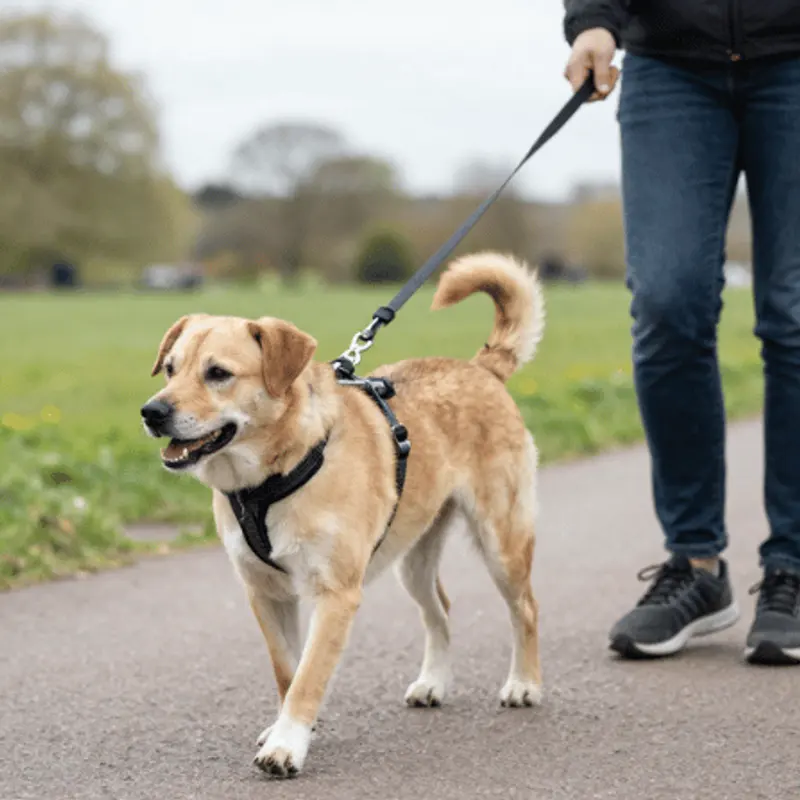
What does it mean when a dog smiles?
Why dogs bare their teeth in a grin, and how to tell a genuinely happy smile from a submissive or stressed one
Does Music Calm Dogs? What the Research Actually Shows
Should you sedate a dog for air travel?
Why vets and airlines advise against sedating a dog for flights, and safer ways to calm an anxious traveller
Can CBD help dogs with pain and anxiety?
What the evidence, UK law, and vets actually say about using CBD for canine joint pain and anxiety, and safer alternatives to try first