







Dog DNA Testing UK: Is It Worth It? Costs & Accuracy

The quick answer
A dog DNA test can be worth it if you want to understand a mixed-breed dog's likely ancestry or screen a purebred or breeding dog for known inherited conditions. Breed percentages are estimates and vary between companies, and health results show genetic risk, not a diagnosis. Never make a medical or breeding decision on a raw result alone; confirm findings with your vet.
Dog DNA tests have gone from a novelty to a shelf staple, and plenty of UK owners now swab their dog out of pure curiosity about the breeds in the mix. That curiosity is fair enough, but the tests do two very different jobs, and the honest answer to "is it worth it?" depends entirely on which one you actually need. Here's how they work, what they get right, where they fall down, what they cost in the UK, and when a test earns its keep.
Two very different tests share one swab
Almost every kit is marketed as a single product, but you're really buying one or both of two things:
- Breed ancestry — an estimate of which breeds make up your dog, based on matching their DNA against the company's reference library of known breeds.
- Health screening — checks for specific mutations linked to inherited conditions, plus traits like coat type, adult size and medication sensitivity.
These are not the same science, and they don't carry the same weight. Breed ancestry is a statistical best guess. Health screening looks for a defined genetic marker and reports whether your dog carries it. Mixing the two up is where most disappointment (and the occasional bad decision) comes from.
How breed ancestry actually works
The lab reads hundreds of thousands of genetic markers across your dog's genome and compares the pattern against reference samples from dogs of confirmed breed. The closer the match, the higher the breed percentage you're shown. It's clever, but it has hard limits.
The biggest is the reference database. A test can only find breeds it has good reference data for. If your rescue's ancestry includes a rare, regional or landrace type the company hasn't sampled well, the algorithm reaches for the nearest thing it does know and can throw up an odd result. That's why an unmistakably British street mongrel sometimes comes back with a splash of some breed nobody expected.
The second limit is that different companies give different answers for the same dog. Independent testing has shown this repeatedly, and a 2024 study in the *Journal of the American Veterinary Medical Association* put six direct-to-consumer companies to a proper test using twelve registered purebred dogs. Five of the six correctly named the registered breed as the main ancestry, but they disagreed on the secondary breeds they added into the mix. More striking, the researchers deliberately swapped the dogs' photos during registration. One company's results tracked the photo rather than the DNA — a Chinese crested submitted with a spaniel photo came back as part border collie and part golden retriever. As the University of Colorado team behind the study put it, there is no scientific reason a photo should be needed to read DNA at all.
The practical takeaway: treat breed percentages as a well-informed estimate, not a birth certificate. They're most reliable for purebred or first-generation cross dogs, and fuzzier the more mixed and generations-deep the ancestry gets.
How health screening works — and its big catch
Health screening is genuinely useful, but only if you understand what the results mean. Most tests report inherited conditions as one of three statuses, the same system the Royal Kennel Club uses for its official schemes:
- Clear — your dog doesn't carry the mutation.
- Carrier — your dog has one copy of a recessive mutation. Usually unaffected themselves, but can pass it on.
- Affected / at risk — your dog has two copies and may develop the condition.
Here's the catch that trips people up. For most conditions, "affected" means genetic risk, not certainty, and not a diagnosis. Genes vary in penetrance — how reliably a mutation actually leads to disease. Some markers are strongly predictive; others rarely cause problems at all.
The cautionary tale in the field is a 13-year-old pug called Petunia. She began struggling to walk, tested positive on a consumer panel for a mutation linked to a fatal neurodegenerative condition (degenerative myelopathy), and was put to sleep. The trouble is that only a small fraction of dogs carrying that mutation ever develop the disease, and Petunia's symptoms could easily have come from a different, treatable problem. The case was one of several that led veterinary geneticists writing in *Nature* to warn that consumer pet-genomics results were being used to make life-and-death decisions the tests were never validated for.
The rule that follows is simple and non-negotiable: a raw DNA result is a starting point for a conversation with your vet, never the end of one. If a screen flags something serious, your vet can confirm it with clinical testing and tell you whether it actually explains what you're seeing.
What it costs in the UK
UK pricing sits comfortably below the eye-watering figures you sometimes see quoted in US dollars. Prices below are indicative and move around with frequent sales, so check on the day.
| Test | What you get | Typical UK price |
|---|---|---|
| Wisdom Panel Essential | 430+ breeds, coat and trait insights, 25+ health tests, relative matching | ~£75–£105 |
| Wisdom Panel Premium | 430+ breeds, 260+ health tests, 50+ traits, at-risk genetic consultation | ~£100–£145 |
| Wisdom Panel Breed Discovery | Breed screen plus MDR1 medication-sensitivity test | ~£80 |
| Embark Breed + Health | Breed ancestry plus 250+ health conditions and traits | ~£130–£180 |
| Royal Kennel Club / Weatherbys breeder scheme | Breed-relevant inherited-disorder panel, results published on the dog's KC record | Varies by breed panel |
The standout point for UK owners: the Royal Kennel Club's DNA Testing Services, run with Weatherbys, are a different animal from the consumer breed-ancestry kits. They don't tell you "40% Labrador" — they screen for the specific inherited conditions that matter in your dog's breed and publish clear/carrier/affected results on the dog's official record, which is exactly what a responsible breeder or puppy buyer wants to see. The scheme covers official testing for more than 80 breeds.
The UK legal point nobody mentions
This one matters and rarely appears in the glossy reviews. A dog DNA test is not legal proof of breed or type in the UK. Under the Dangerous Dogs Act, whether a dog is a banned "type" (such as the XL Bully, added to the list from early 2024) is judged on physical conformation and measurements, not a DNA percentage. A consumer test showing your dog is "part" or "not" a given breed carries no legal standing.
It cuts the other way too. Because breed-list policies from some insurers and landlords still exist, a misfired breed result — a mixed dog wrongly tagged as "pit bull" or "wolf hybrid" — has caused real headaches for owners in the studies. If you have a blocky-headed rescue, a DNA test won't settle any legal question and could create a paperwork problem where none existed. Handle results privately and sensibly.
When a test is genuinely worth it
After all the caveats, there are real cases where I'd say yes without hesitation:
- You've adopted a mixed-breed rescue and want a care head-start. Knowing the likely mix flags breed-linked risks worth watching, helps you predict adult size for a puppy, and makes sense of quirks. Treat it as useful context, not gospel.
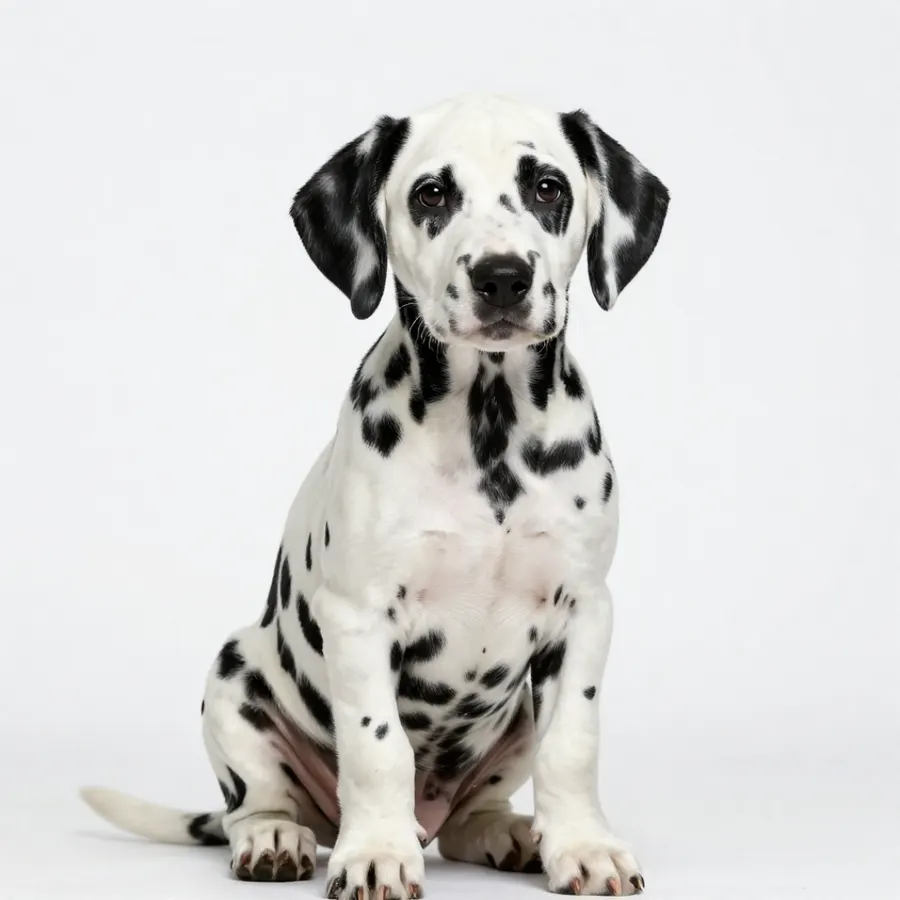
- You have a breed prone to a known, testable condition. If your breed has a validated single-gene test — degenerative myelopathy, certain forms of progressive retinal atrophy, and so on — a targeted screen is worthwhile. For some issues a dedicated clinical test beats a DNA panel entirely: deafness in Dalmatians, for instance, is checked with a BAER hearing test, not a swab.
- You're breeding, or buying a puppy from a breeder. This is the strongest case of all. Screening breeding pairs and avoiding mating two carriers is how inherited conditions get bred out. Ask to see the parents' results on the Kennel Club record.
- You want the MDR1 medication-sensitivity result. Herding types and their crosses (Collies, Australian Shepherds, and mixes) can carry an MDR1 mutation that makes some common drugs dangerous at standard doses. This is one genuinely actionable, vet-relevant result an ancestry-plus-traits test can hand you.
And where it's mostly for fun: a well-mixed rescue where you simply want to know the story. Nothing wrong with that — just buy it as entertainment, not medicine.
Common mistakes to avoid
- Treating breed percentages as exact. They're estimates that vary by company. If it matters to you, don't hang decisions on a single number.
- Acting on a health flag without your vet. Remember Petunia. "At risk" is a prompt to investigate, not a diagnosis.
- Expecting a temperament prediction. DNA tells you very little reliable about how your individual dog will behave. Environment, training and socialisation do the heavy lifting there.
- Ignoring data privacy. You're handing a company your dog's genome and your details. Skim the privacy policy and check whether data is shared or sold.
- Assuming it replaces insurance or a vet. It doesn't. Knowing a risk exists still means paying to manage it — worth weighing alongside whether pet insurance is worth it for you.
A quick decision guide
| Your situation | Worth a test? | Which type |
|---|---|---|
| Curious about a mixed rescue's ancestry | Yes, as informed fun | Breed ancestry (+ traits) |
| Breeding, or vetting a breeder's pups | Strongly yes | Kennel Club / breed health scheme |
| Purebred with a known breed-specific risk | Yes | Targeted health screen |
| Herding breed or cross, planning surgery/meds | Yes | Any test including MDR1 |
| Trying to prove or disprove a banned "type" | No | No legal standing |
| Hoping to predict behaviour | No | Not what DNA does well |
Spending sensibly on your dog is a running theme — the same clear-eyed question applies to whether dental chews are worth it or washable dog beds are worth it. A DNA test can be money well spent. Just buy the right one for the right reason, read the result as risk and probability rather than fact, and loop in your vet before anything important hangs on it.
Sources
- Royal Kennel Club – DNA testing
- Royal Kennel Club – DNA Testing Services (with Weatherbys)
- Wisdom Panel UK – dog DNA test kits and pricing
- Rando et al. (2024), JAVMA – Direct-to-consumer canine genetic tests can identify the breed of purebred dogs
- University of Colorado Anschutz – How trustworthy is your dog's DNA test?
- Moses, Niemi & Karlsson (2018), Nature – Pet genomics medicine runs wild
Common questions
How accurate are dog DNA tests for breed?
For purebred and first-generation cross dogs they're fairly reliable, and a 2024 veterinary study found five of six major tests correctly named a registered purebred's main breed. Accuracy drops for deeply mixed dogs, and companies often disagree on the smaller breed percentages. Treat the result as a strong estimate, not a certainty.
How much does a dog DNA test cost in the UK?
Consumer breed-and-health kits typically run from around £75 for a basic breed-and-traits test up to roughly £145–£180 for a full breed-plus-health panel, with frequent sales. The Royal Kennel Club's breed-specific health schemes with Weatherbys are priced separately by breed panel.
Can a DNA test tell me if my dog has a health problem?
It can flag genetic risk for certain inherited conditions, but that's not a diagnosis. Many mutations only cause disease in a fraction of dogs that carry them. If a test flags something serious, confirm it with your vet through clinical testing before making any decisions.
Is a dog DNA test proof of breed for UK law or insurance?
No. Under the Dangerous Dogs Act, banned 'type' is judged on physical characteristics and measurements, not DNA percentages, so a test has no legal standing. A stray or wrong breed result can also cause problems with breed-list insurers or landlords, so handle results privately.
Which is better, Wisdom Panel or Embark?
Both are well-regarded and use large reference databases. Wisdom Panel screens 430+ breeds with tiered health options; Embark offers deep breed ancestry plus 250+ health conditions. Pick based on the health screening depth you want and the price on the day, as results between any two companies can still differ.
Is a dog DNA test worth it for a rescue mongrel?
It's worth it as informed fun and for a general care head-start — flagging breed-linked risks to watch and predicting adult size. Just don't treat the exact percentages as fact, and don't use the result to answer any legal question about breed or type.
What's the difference between a consumer kit and the Kennel Club scheme?
Consumer kits focus on breed ancestry plus a broad health-and-traits panel for pet owners. The Royal Kennel Club scheme, run with Weatherbys, screens for the specific inherited disorders relevant to your dog's breed and publishes clear/carrier/affected results on the dog's official record — the version breeders and puppy buyers should look for.
About the author
Matt Garnett — founder, Giddy Pets
Matt started Giddy Pets to make getting pets the good stuff simpler and fairer. Everything in these guides comes from real life with pets and a lot of trial and error — it's practical guidance, not veterinary advice. If a guide gets something wrong, tell him directly.
Advice & planning
Free tools & more guides
Practical calculators and trusted guides relevant to this product.
Read next

Is Pet Insurance Worth It?
An honest, impartial look at whether pet insurance is worth it — the size of real vet bills, the self-insure-by-saving alternative, and who tends to benefit most.
Dalmatian Deafness & BAER Testing Explained
Why Dalmatians are prone to congenital deafness, how the BAER hearing test works, and how to live happily with a deaf or partially deaf dog.
Parasite Prevention for Dogs & Cats in the UK: Fleas, Ticks, Worms & Lungworm