






Dog dementia: signs and how to help your senior dog
How to spot the signs of canine cognitive dysfunction in an ageing dog, what causes it, and how to help at home
The quick answer
The earliest signs are often subtle and easy to miss, such as a dog seeming briefly confused in a familiar room, being slower to respond to known commands, or sleeping at slightly different times than usual. These tend to worsen gradually over months, so it's worth mentioning even small changes to your vet early rather than waiting.
Watching an older dog become forgetful, restless at night, or suddenly unsure of their own home is one of the harder parts of caring for a senior pet. It can feel sudden, even though the changes have usually been building slowly for months. The good news is that this is a recognised condition with a name, a known set of signs, and things you can genuinely do to help.
Dog dementia, properly called canine cognitive dysfunction (CCD) or cognitive dysfunction syndrome, is an age-related decline in brain function that affects memory, learning, awareness, and behaviour. It shares a lot in common with Alzheimer's disease in people, and like Alzheimer's, it can't be cured. But it can often be slowed, and your dog's day-to-day comfort can usually be improved a great deal once it's recognised.
This guide walks through what CCD actually is, the signs to look for, how vets diagnose it, and the practical steps that make the biggest difference at home.
What is canine cognitive dysfunction?
Canine cognitive dysfunction is a progressive brain condition that develops in some dogs as they age. According to PDSA, it's linked to a build-up of a harmful protein called beta amyloid in the brain, alongside reduced blood flow — changes that are similar to those seen in human Alzheimer's disease. These changes gradually interfere with memory, learning, perception, and decision-making.
It's important to understand that CCD is a diagnosis of exclusion. Vets Now explains that cognitive dysfunction is "an inappropriate loss of mental function which is not associated with any other medical condition" — in other words, a vet needs to first rule out other illnesses that can cause similar symptoms before confirming CCD. This matters because several very treatable conditions, from thyroid problems to urinary infections, can look a lot like dementia in an older dog.
How common is it in senior dogs?
CCD is a genuinely common condition in older dogs, not a rare curiosity. A peer-reviewed study of 804 senior dogs (in the final quarter of their expected lifespan, median age 12) found that 45% displayed some sign of cognitive impairment, with 43% showing mild impairment and 2% showing severe impairment. The same research found a strong, positive correlation between a dog's age and their level of cognitive decline, meaning the older a dog gets, the more likely — and often more pronounced — the signs become.
The same study found that dogs with other age-related health problems, particularly musculoskeletal and neurological issues such as joint pain, mobility difficulties, or sensory decline, tended to show more pronounced cognitive impairment too. This is a useful reminder that a senior dog's physical and mental health are closely linked, and general ill health can make cognitive signs look, or become, worse.
If you're trying to work out where your dog sits in terms of "dog years" and life stage, our Dog Age Calculator can help put their age into context, since smaller and larger breeds age at quite different rates.
The main signs to watch for
CCD symptoms tend to start subtly and worsen gradually, which is why owners often describe a dog as having "changed" over a period of months rather than overnight. Vets commonly group the signs into a few overlapping categories.
Disorientation and confusion
This is one of the most recognisable signs. According to PDSA, affected dogs can become confused or disorientated even in familiar surroundings — for example, getting "trapped" in a room because they've forgotten how to get back out, staring blankly at walls or into space, or seeming lost in the garden or on a walk they've done hundreds of times before.
Changes to sleep patterns
Many dogs with CCD develop a reversed or disrupted sleep-wake cycle. They may sleep much more during the day but become restless, pace, or vocalise during the night. This is one of the most exhausting signs for owners to live with, and it's worth mentioning to your vet specifically, as there are ways to help settle it.
Loss of house training
A previously reliably house-trained dog may begin having accidents indoors, or ask to go out at unusual times, or simply forget the routine altogether. PDSA is clear that this isn't a behavioural lapse or stubbornness — it's a genuine sign of the underlying cognitive change, and it shouldn't be punished.
Memory and learning difficulties
Dogs with CCD often become slower to respond to commands they've known for years, or stop responding altogether. They may also struggle to learn anything new, and can seem to "forget" family members, other pets, or normal household routines.
Social and behavioural changes
Look out for reduced interest in interacting with you, other pets, or visitors; new anxieties or fears that weren't there before (including things like noise sensitivity or separation-related distress); increased or repetitive vocalisation, especially at night; and occasionally, changes in temperament including irritability. Vets Now specifically lists decreased interaction with people and animals, and new anxieties, among the core signs to watch for.
Early signs of cognitive decline are often very subtle — if you've noticed even small changes in your dog's behaviour, it's always worth mentioning to your vet rather than waiting to see if it gets worse.
What causes cognitive dysfunction?
The exact cause of CCD isn't fully understood, but the leading explanation involves the build-up of beta-amyloid protein deposits in the brain, similar to the plaques seen in human Alzheimer's disease, combined with reduced blood flow to the brain and general age-related oxidative damage to brain cells. Because this is a gradual, cumulative process, CCD is overwhelmingly a condition of older dogs — it's rare to see it in young or middle-aged animals, and risk rises steadily with age.
Body size may also play a role. The same peer-reviewed study on senior dogs found a weak but measurable correlation between smaller body weight and greater cognitive impairment, alongside the much stronger link with age itself.
How vets diagnose CCD
There's no single blood test or scan that confirms canine cognitive dysfunction on its own. Instead, your vet will typically build a picture using several strands of information.
- A detailed history. Your vet will ask when the symptoms started, how they've progressed, and what specifically you've noticed — this is often the single most important part of diagnosis, so it helps to keep a simple written note of odd behaviours as you spot them.
- A full physical examination, to check for signs of pain, mobility problems, sensory decline (hearing and vision loss are common in older dogs and can look like disorientation), or other age-related illness.
- Blood and urine tests, mainly to rule out other medical conditions that can cause similar symptoms — Vets Now specifically mentions diabetes, liver or kidney disease, and an underactive thyroid (hypothyroidism) as common look-alikes that need to be excluded first.
- In some cases, further imaging or specialist referral, particularly if a vet suspects a brain tumour or other structural problem rather than general cognitive decline.
Only once these other explanations have been reasonably excluded, and the pattern of signs fits, will a vet consider a working diagnosis of cognitive dysfunction syndrome.
What you can do to help at home
While CCD can't be reversed, there's a lot of evidence-informed groundwork owners can do to support a dog's remaining cognitive function and keep them comfortable and confident.
Keep routines and environments stable. Sudden changes to furniture layout, routine, or environment can be disorientating for a dog whose spatial memory is already under strain. Keeping food, water, beds, and favourite resting spots in consistent places helps reduce confusion.
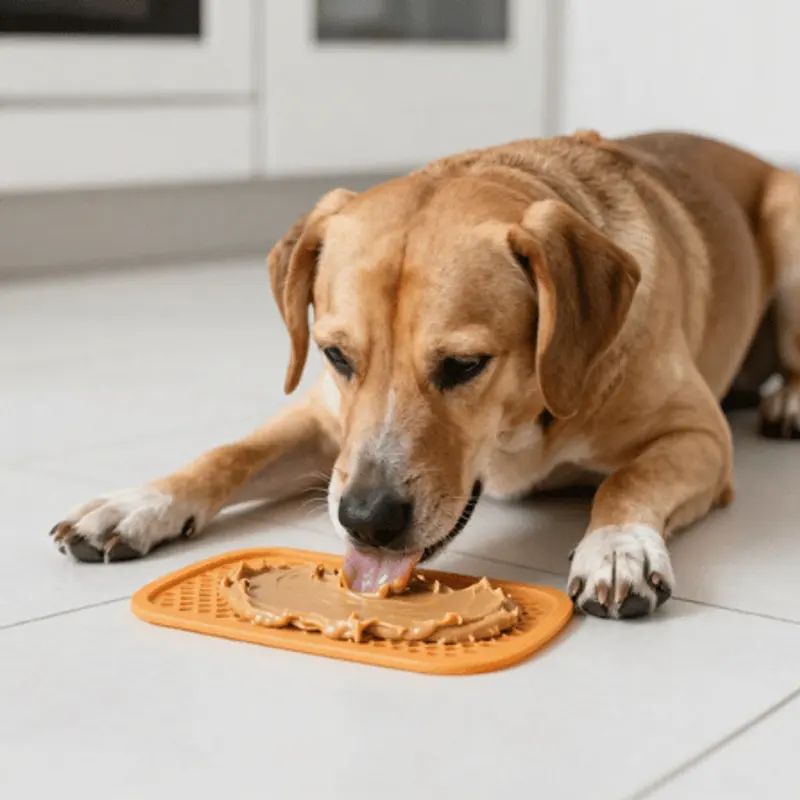
Provide gentle mental stimulation. Short training refreshers using simple, familiar commands, food-puzzle toys, and varied (but not overwhelming) walking routes can help keep a dog's brain engaged without causing stress. If your dog is still keen and physically able, regular gentle walks also support general health — our Dog Walking Calculator can help you judge a sensible amount of exercise for their age and condition.
Make the home safer. Consider blocking access to stairs, ponds, or other hazards if disorientation is a concern, and consider using nightlights if your dog seems more confused after dark.
Support their sleep-wake cycle. Encouraging more activity and light exposure during the day, and keeping the evening routine calm and predictable, can sometimes help settle a reversed sleep pattern, though persistent night-time restlessness is worth discussing with your vet as it may respond to medication.
Be patient with house-training lapses. Since this is a symptom of the condition rather than a behavioural choice, punishment will only add stress and confusion. More frequent toilet breaks and easy access to the garden can help.
Keep them calm. Many CCD symptoms are worse when a dog is anxious or overstimulated, so calm, predictable company and gentle routines around visitors, other pets, or busy households can make a real difference to how settled they seem day to day.
Diet, supplements and medication
Your vet may recommend one or more of the following, depending on your dog's individual signs and overall health:
- Prescription medication. There are veterinary medicines licensed to help manage the symptoms of cognitive dysfunction in dogs and potentially slow progression; these are only available via prescription following a vet assessment, and PDSA notes that starting treatment earlier tends to give better results.
- Therapeutic diets. Some commercial diets are formulated with antioxidants, omega-3 fatty acids, and other nutrients thought to support brain health in ageing dogs.
- Supplements. Antioxidant supplements are sometimes recommended alongside diet and medication, though these should be used under veterinary guidance rather than picked independently, since not all products have the same quality of evidence behind them.
- Behavioural support. In more complex cases, referral to a clinical animal behaviourist can help with specific problem behaviours such as new anxieties or disrupted sleep.
None of these approaches will reverse the underlying brain changes, but used together they can meaningfully slow decline and improve a dog's day-to-day quality of life, which is ultimately the goal.
When to see your vet
You should book a vet appointment if you notice any combination of confusion, disorientation, house-training lapses, altered sleep patterns, new anxieties, or reduced responsiveness in an older dog — particularly if these appear as a new pattern rather than a one-off. It's especially important to get a vet check promptly (rather than assuming it's "just old age") because several treatable conditions, including thyroid disease, urinary tract infections, diabetes, and pain from arthritis, can produce very similar symptoms and are far easier to manage the earlier they're caught. If your dog is eating noticeably more or drinking noticeably less than usual alongside behavioural changes, that combination is also worth flagging specifically, as it can point towards a different underlying issue rather than cognitive dysfunction alone.
*This is general guidance, not a substitute for advice from your vet, who can assess your individual pet.*
Sources
- PDSA — dementia in dogs (cognitive dysfunction): causes, signs and treatment (pdsa.org.uk).
- PDSA — dementia in pets: signs and management advice (pdsa.org.uk).
- Vets Now — dog dementia: signs, diagnosis and treatment (vets-now.com).
- Peer-reviewed study (PMC/NCBI) — the relationship between signs of medical conditions and cognitive decline in senior dogs, 804-dog cohort (pmc.ncbi.nlm.nih.gov).
Common questions
What are the earliest signs of dog dementia?
The earliest signs are often subtle and easy to miss, such as a dog seeming briefly confused in a familiar room, being slower to respond to known commands, or sleeping at slightly different times than usual. These tend to worsen gradually over months, so it's worth mentioning even small changes to your vet early rather than waiting.
At what age do dogs start showing signs of cognitive dysfunction?
Cognitive dysfunction is a condition of older age and is rare in young or middle-aged dogs. Research on senior dogs (median age 12) found that around 45% showed some sign of cognitive impairment, with the likelihood and severity increasing steadily as dogs get older.
Can dog dementia be cured?
No, canine cognitive dysfunction cannot be cured or reversed. However, a combination of prescription medication, a suitable diet, environmental changes and behavioural support can often slow its progression and meaningfully improve your dog's day-to-day quality of life, especially if started early.
Is it dementia or something else treatable?
Many conditions can look like dementia in an older dog, including thyroid disease, diabetes, urinary tract infections, arthritis pain and vision or hearing loss. Vets diagnose cognitive dysfunction by first ruling these out with a physical exam and blood or urine tests, so a vet visit is essential before assuming it's dementia.
How can I help my dog with dementia at home?
Keep their environment and routine as stable and predictable as possible, offer gentle mental stimulation such as short training sessions or food puzzles, make the home safer around stairs or hazards, and stay calm and patient around house-training lapses, which are a symptom rather than a behavioural choice. Your vet can also advise on diet, supplements or medication.
About the author
Matt Garnett — founder, Giddy Pets
Matt started Giddy Pets to make getting pets the good stuff simpler and fairer. Everything in these guides comes from real life with pets and a lot of trial and error — it's practical guidance, not veterinary advice. If a guide gets something wrong, tell him directly.
Advice & planning
Free tools & more guides
Practical calculators and trusted guides relevant to this product.